
Browse "Military"
-
Memory Project Archive
Bill Ryan (Primary Source)
Bill Ryan served with the Royal Canadian Artillery during the Second World War. Read and listen to his testimony below. Please be advised that Memory Project primary sources may deal with personal testimony that reflect the speaker’s recollections and interpretations of events. Individual testimony does not necessarily reflect the views of the Memory Project and Historica Canada.
"https://d3d0lqu00lnqvz.cloudfront.net/The-Memory-Project/image/9887_original.jpg" // resources/views/front/categories/view.blade.php
https://d3d0lqu00lnqvz.cloudfront.net/The-Memory-Project/image/9887_original.jpg
-
Memory Project Archive
Bill Tindall (Primary Source)
Bill Tindall joined the Governor General’s Horse Guards in 1940, but was then transferred to the Royal Canadian Engineers. He was sent overseas and was assigned to the Canadian Chief Engineer Works, 21st Army Group Headquarters, where he was the quartermaster. He landed in Normandy, and assisted in the rebuilding of the Carpiquet airfield. The unit moved up through northwest Europe, ultimately stopping in Brussels for the remainder of the war.Please be advised that Memory Project primary sources may deal with personal testimony that reflect the speaker’s recollections and interpretations of events. Individual testimony does not necessarily reflect the views of the Memory Project and Historica Canada.
"https://thecanadianencyclopedia.ca/images/tce_placeholder.jpg?v=e9dca980c9bdb3aa11e832e7ea94f5d9" // resources/views/front/categories/view.blade.php
https://thecanadianencyclopedia.ca/images/tce_placeholder.jpg?v=e9dca980c9bdb3aa11e832e7ea94f5d9
-
Memory Project Archive
Bill Tom (Primary Source)
Bill Tom served in the Royal Canadian Navy during the Second World War. Read and listen to his testimony below. Please be advised that Memory Project primary sources may deal with personal testimony that reflect the speaker’s recollections and interpretations of events. Individual testimony does not necessarily reflect the views of the Memory Project and Historica Canada.
"https://d3d0lqu00lnqvz.cloudfront.net/The-Memory-Project/image/8770_original.jpg" // resources/views/front/categories/view.blade.php
https://d3d0lqu00lnqvz.cloudfront.net/The-Memory-Project/image/8770_original.jpg
-
Memory Project Archive
Bill Warshick (Primary Source)
Bill Warshick served with the 1st Canadian Corps. during the Second World War. Read and listen to his testimony below. Please be advised that Memory Project primary sources may deal with personal testimony that reflect the speaker’s recollections and interpretations of events. Individual testimony does not necessarily reflect the views of the Memory Project and Historica Canada.
"https://d3d0lqu00lnqvz.cloudfront.net/The-Memory-Project/image/8821_original.jpg" // resources/views/front/categories/view.blade.php
https://d3d0lqu00lnqvz.cloudfront.net/The-Memory-Project/image/8821_original.jpg
-
Memory Project Archive
Bill Watterson (Primary Source)
In 2009, The Memory Project interviewed Bill Watterson, a veteran of the Second World War. The following recording (and transcript) is an excerpt from this interview. Born in Ireland in 1924, Watterson emigrated to Canada with his parents. He enlisted in the 48th Highlanders, a militia regiment formed in 1891 in Toronto, Ontario, and then went to Camp Borden near Barrie, Ontario, which was then the largest military training facility in Canada. In Watterson’s testimony, he mentions his journey from Borden to England, France, the Netherlands, Germany, and Italy. Although Watterson returned to Canada unharmed, he describes the death of one of his friends during battle. The “Moaning Minnie” Watterson mentions was a nickname for a nebelwerfer, or smoke launcher – this was a type of German rocket artillery which made an extremely loud sound when launched. Upon his return home, Watterson trained to become a barber. He died in Scarborough, Ontario, on 26 April 2010. Please be advised that Memory Project primary sources may deal with personal testimony that reflect the speaker’s recollections and interpretations of events. Individual testimony does not necessarily reflect the views of the Memory Project and Historica Canada.
"https://d3d0lqu00lnqvz.cloudfront.net/The-Memory-Project/image/452_original.jpg" // resources/views/front/categories/view.blade.php
https://d3d0lqu00lnqvz.cloudfront.net/The-Memory-Project/image/452_original.jpg
-
Memory Project Archive
Bing Chew Wong (Primary Source)
Bing Chew Wong served during the Second World War. Read and listen to Bing Chew Wong's testimony below.Please be advised that Memory Project primary sources may deal with personal testimony that reflect the speaker’s recollections and interpretations of events. Individual testimony does not necessarily reflect the views of the Memory Project and Historica Canada.
"https://d3d0lqu00lnqvz.cloudfront.net/The-Memory-Project/image/2550_original.jpg" // resources/views/front/categories/view.blade.php
https://d3d0lqu00lnqvz.cloudfront.net/The-Memory-Project/image/2550_original.jpg
-
Memory Project Archive
Bob Ducharme (Primary Source)
"It didn’t look very promising for any crops to have grown up in there in the future. Everything was torn apart, the houses, the farms, roads, bridges." See below for Mr. Ducharme's entire testimony. Please be advised that Memory Project primary sources may deal with personal testimony that reflect the speaker’s recollections and interpretations of events. Individual testimony does not necessarily reflect the views of the Memory Project and Historica Canada.
"https://d3d0lqu00lnqvz.cloudfront.net/MemoryProject/BobDucharme/9881_original.jpg" // resources/views/front/categories/view.blade.php
https://d3d0lqu00lnqvz.cloudfront.net/MemoryProject/BobDucharme/9881_original.jpg
-
Memory Project Archive
Bob Hull (Primary Source)
Serving with the Second Tactical Air Force, Bob Hull undertook supply missions which aided underground organizations in Occupied Europe as well as resupplying the forces which fought the ill-fated Operation Market Garden.Please be advised that Memory Project primary sources may deal with personal testimony that reflect the speaker’s recollections and interpretations of events. Individual testimony does not necessarily reflect the views of the Memory Project and Historica Canada.
"https://thecanadianencyclopedia.ca/images/tce_placeholder.jpg?v=e9dca980c9bdb3aa11e832e7ea94f5d9" // resources/views/front/categories/view.blade.php
https://thecanadianencyclopedia.ca/images/tce_placeholder.jpg?v=e9dca980c9bdb3aa11e832e7ea94f5d9
-
Memory Project Archive
Bob Ross (Primary Source)
"Then I looked down, my leg was off. Holy mackerel. Shrapnel must have hit my leg. I says, “God, my leg is gone.”" See below for Mr. Ross's entire testimony. Please be advised that Memory Project primary sources may deal with personal testimony that reflect the speaker’s recollections and interpretations of events. Individual testimony does not necessarily reflect the views of the Memory Project and Historica Canada.
"https://d3d0lqu00lnqvz.cloudfront.net/MemoryProject/BobRoss/10028_538.jpg" // resources/views/front/categories/view.blade.php
https://d3d0lqu00lnqvz.cloudfront.net/MemoryProject/BobRoss/10028_538.jpg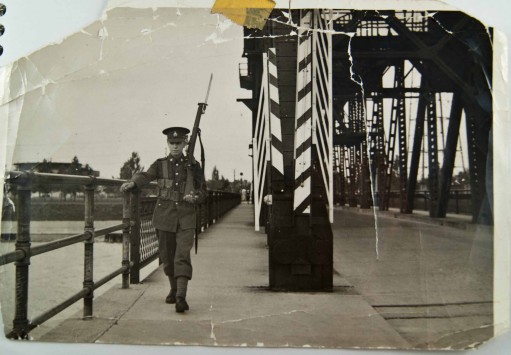
-
Memory Project Archive
Brian Frederick Douglas Holliday (Primary Source)
Please be advised that Memory Project primary sources may deal with personal testimony that reflect the speaker’s recollections and interpretations of events. Individual testimony does not necessarily reflect the views of the Memory Project and Historica Canada.
"https://d3d0lqu00lnqvz.cloudfront.net/The-Memory-Project/image/1534_original.jpg" // resources/views/front/categories/view.blade.php
https://d3d0lqu00lnqvz.cloudfront.net/The-Memory-Project/image/1534_original.jpg
-
Memory Project Archive
Bruce Little (Primary Source)
"One night, I was awakened by a thunderous noise. I was laying in water. Had we been torpedoed? The ship was leaning far to the starboard, and a wall of water shot by our cabin door" See below for Mr. Little's entire testimony. Please be advised that Memory Project primary sources may deal with personal testimony that reflect the speaker’s recollections and interpretations of events. Individual testimony does not necessarily reflect the views of the Memory Project and Historica Canada.
"https://d3d0lqu00lnqvz.cloudfront.net/MemoryProject/BruceLittle/255_original.jpg" // resources/views/front/categories/view.blade.php
https://d3d0lqu00lnqvz.cloudfront.net/MemoryProject/BruceLittle/255_original.jpg
-
Memory Project Archive
Bruce MacKenzie (Primary Source)
"During the previous campaigns we had lost at least 50% of our experienced flying personnel; some had been shot down, while others had finished their tours." Bruce MacKenzie served in the Royal Canadian Air Force during the Second World War. See below for Mr. MacKenzie's entire testimony. Please be advised that Memory Project primary sources may deal with personal testimony that reflect the speaker’s recollections and interpretations of events. Individual testimony does not necessarily reflect the views of the Memory Project and Historica Canada.
"https://d3d0lqu00lnqvz.cloudfront.net/MemoryProject/BruceMacKenzie/1335_538.jpg" // resources/views/front/categories/view.blade.php
https://d3d0lqu00lnqvz.cloudfront.net/MemoryProject/BruceMacKenzie/1335_538.jpg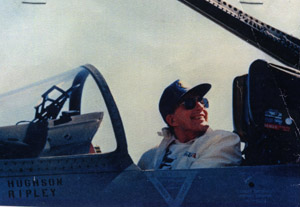
-
Memory Project Archive
Bruce McDonald (Primary Source)
"Why don’t I take the PIAT and I’ll shoot it at the first house. And he said, it’ll give an awful roar and a surprise factor and then we go rushing down towards the place." See below for Mr. McDonald's entire testimony. Please be advised that Memory Project primary sources may deal with personal testimony that reflect the speaker’s recollections and interpretations of events. Individual testimony does not necessarily reflect the views of the Memory Project and Historica Canada.
"https://d3d0lqu00lnqvz.cloudfront.net/MemoryProject/BruceMcDonald/7538_538.jpg" // resources/views/front/categories/view.blade.php
https://d3d0lqu00lnqvz.cloudfront.net/MemoryProject/BruceMcDonald/7538_538.jpg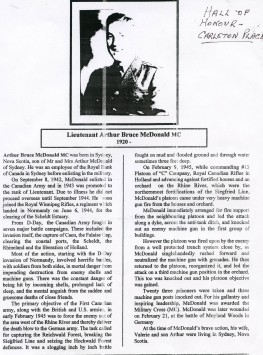
-
Memory Project Archive
Bruce Underwood (Primary Source)
Bruce Underwood served as a Radar Technician with the Royal Canadian Air Force. Radar technology was closely guarded during the Second World War and he served primarily in Great Britain. This did not mean that he avoided the dangers of war, as enemy aircraft and V-1 flying bombs struck into England.Please be advised that Memory Project primary sources may deal with personal testimony that reflect the speaker’s recollections and interpretations of events. Individual testimony does not necessarily reflect the views of the Memory Project and Historica Canada.
"https://thecanadianencyclopedia.ca/images/tce_placeholder.jpg?v=e9dca980c9bdb3aa11e832e7ea94f5d9" // resources/views/front/categories/view.blade.php
https://thecanadianencyclopedia.ca/images/tce_placeholder.jpg?v=e9dca980c9bdb3aa11e832e7ea94f5d9
-
Memory Project Archive
William Bruce Wetherall (Primary Source)
In April 2012, The Memory Project interviewed William Bruce Wetherall, a veteran of the Second World War. The following recording (and transcript) is an excerpt from this interview. Born on 11 June 1924, Wetherall was living on his family’s farm in Waterdown, Ontario, when he joined the merchant navy. He served on Parks-class ships from 1941 to 1945. In this testimony, he recalls his experiences in the merchant navy, including a violent storm in the Gulf of St. Lawrence and losses to U-boat attacks (see Battle of the Atlantic). Wetherall was on a wireless operators’ course in Toronto, Ontario, when his ship, the SS Point Pleasant Park, was torpedoed by German submarine U-510 in February 1945. After the war, Wetherall worked for Ford Canada, retiring in 1985. He died on 16 September 2012. Please be advised that Memory Project primary sources may deal with personal testimony that reflect the speaker's recollections and interpretations of events. Individual testimony does not necessarily reflect the views of the Memory Project and Historica Canada.
"https://thecanadianencyclopedia.ca/images/tce_placeholder.jpg?v=e9dca980c9bdb3aa11e832e7ea94f5d9" // resources/views/front/categories/view.blade.php
https://thecanadianencyclopedia.ca/images/tce_placeholder.jpg?v=e9dca980c9bdb3aa11e832e7ea94f5d9