
Browse "Communities & Sociology"
-
Article
Vancouver Feature: Joe Fortes Saves Lives, Wins Hearts
The following article is a feature from our Vancouver Feature series. Past features are not updated. Vancouver’s “Citizen of the Century” was a portly Barbadian-born barman named Joe Fortes. Living in a small cottage near the bandstand in Alexandra Park, Fortes was the first official lifeguard at English Bay beach. He taught hundreds of Vancouverites how to swim.
"https://thecanadianencyclopedia.ca/images/tce_placeholder.jpg?v=e9dca980c9bdb3aa11e832e7ea94f5d9" // resources/views/front/categories/view.blade.php
https://thecanadianencyclopedia.ca/images/tce_placeholder.jpg?v=e9dca980c9bdb3aa11e832e7ea94f5d9
-
Editorial
Vancouver Feature: Mayor McGeer Reads the Riot Act
The following article is a feature from our Vancouver Feature series. Past features are not updated. The labour camp strikers who assembled in Victory Square on April 23, 1935 wanted financial assistance from the city. Battered by the Depression and angry at conditions in the camps, the crowd of 2,000 demanded change. Mayor Gerry McGeer gave them an ultimatum instead.
"https://thecanadianencyclopedia.ca/images/tce_placeholder.jpg?v=e9dca980c9bdb3aa11e832e7ea94f5d9" // resources/views/front/categories/view.blade.php
https://thecanadianencyclopedia.ca/images/tce_placeholder.jpg?v=e9dca980c9bdb3aa11e832e7ea94f5d9
-
Article
Veronica Foster
Veronica Foster Guerrette, Second World War icon, model, vocalist (born 2 January 1922 in Montreal, Quebec; died 4 May 2000 in Toronto, Ontario). Foster worked for the John Inglis Company assembling Bren light machine guns during the Second World War. She was featured on propaganda posters that encouraged women to serve Canada by working in munitions factories. Foster became a Canadian icon representing female workers in the manufacturing industry. After the war, she was lead singer with the dance band Mart Kenney and His Western Gentlemen.
"https://d3d0lqu00lnqvz.cloudfront.net/media/new_article_images/VeronicaFoster/Veronica Foster_Bren Gun.jpg" // resources/views/front/categories/view.blade.php
https://d3d0lqu00lnqvz.cloudfront.net/media/new_article_images/VeronicaFoster/Veronica Foster_Bren Gun.jpg
-
Article
Victoria Chung
Victoria Chung (Chung Toy Mea), doctor (born 19 August 1897 in Victoria, BC; died 17 May 1966 in Jiangmen, China). Victoria Chung was likely the first documented Asian person to graduate medical school in Canada. (See Medical Education.) She overcame major barriers faced by Chinese women in Canada to have a long, successful career in medicine. She served as a missionary doctor in Southern China and spent the rest of her life providing medical services there, including during the Japanese occupation.
"https://d3d0lqu00lnqvz.cloudfront.net/VictoriaChung/Victoria-Chung-Graduate.jpg" // resources/views/front/categories/view.blade.php
https://d3d0lqu00lnqvz.cloudfront.net/VictoriaChung/Victoria-Chung-Graduate.jpg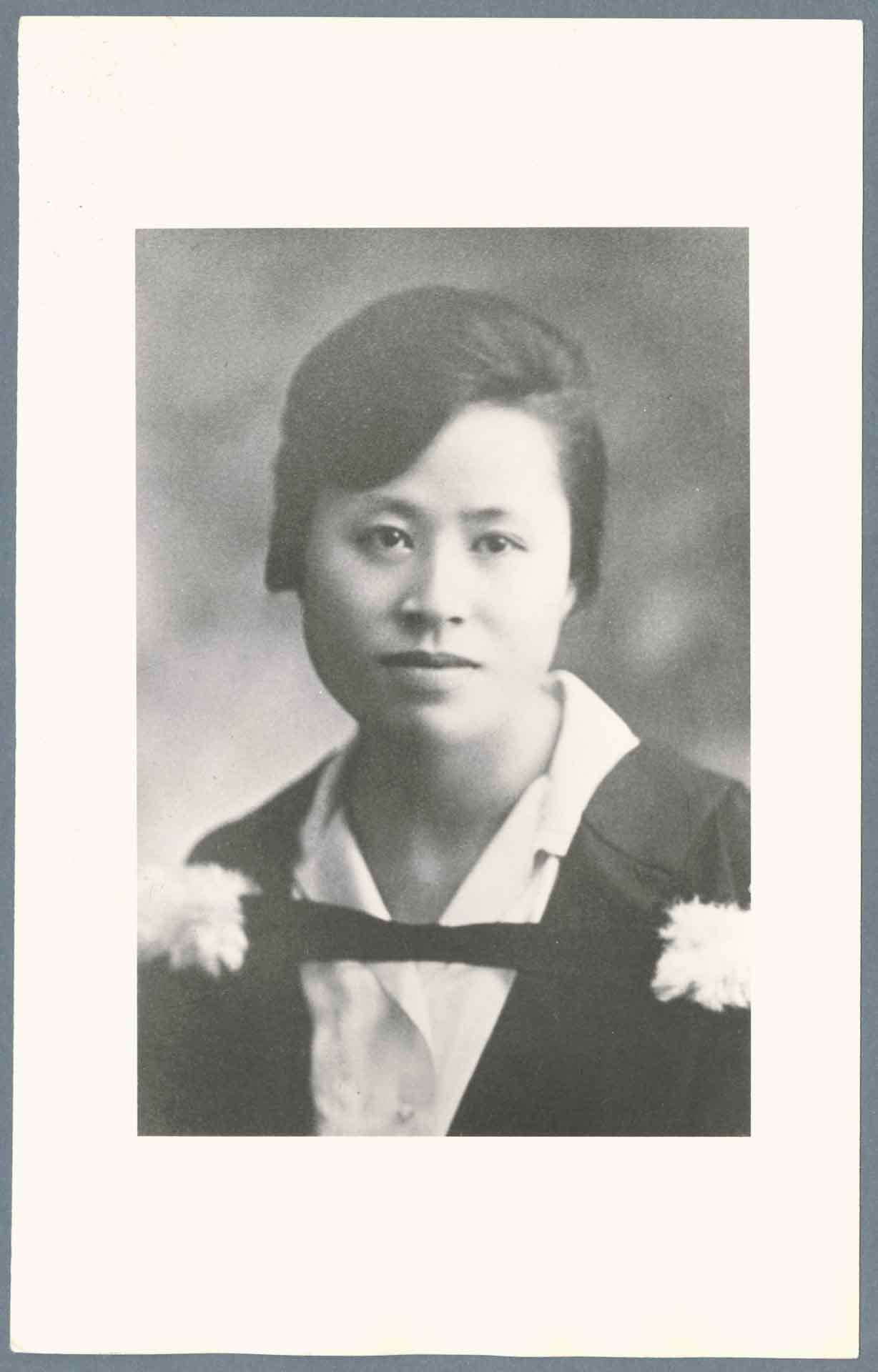
-
Article
Viola Léger
Viola P. Léger, OC, ONB, senator, actor, director, teacher (born 29 June 1930 in Fitchburg, Massachusetts; died 28 January 2023 in Dieppe, NB). Viola Léger served in the Senate from 2001 to 2005. She is perhaps best known for her career as an actor and for her performance as La Sagouine in Antonine Maillet’s play of the same name. Léger performed the role 3,000 times between 1971 and 2016. Widely considered the greatest Acadian actress of all time, she was also a prominent advocate and global ambassador for Acadian people and Acadian culture. She was made a Chevalier de l’Ordre des Arts et des Lettres de la France and a Member of the Ordre des Francophones d’Amérique. She also received the Governor General’s Performing Arts Award for Lifetime Artistic Achievement in theatre.
"https://thecanadianencyclopedia.ca/images/tce_placeholder.jpg?v=e9dca980c9bdb3aa11e832e7ea94f5d9" // resources/views/front/categories/view.blade.php
https://thecanadianencyclopedia.ca/images/tce_placeholder.jpg?v=e9dca980c9bdb3aa11e832e7ea94f5d9
-
Article
Vivine Scarlett
Vivine Scarlett, dancer, choreographer, administrator (born in London, United Kingdom). Vivine Scarlett is the founder, executive director and curator of dance Immersion, a Toronto-based organization that produces, presents and supports dancing of the African diaspora. She is also an award-winning choreographer and a renowned instructor. Scarlett has received a K.M. Hunter Artist Award for dance from the Ontario Arts Foundation, the Muriel Sherrin Award from the Toronto Arts Foundation and a Lifetime Achievement Award from Dance Ontario.
"https://thecanadianencyclopedia.ca/images/tce_placeholder.jpg?v=e9dca980c9bdb3aa11e832e7ea94f5d9" // resources/views/front/categories/view.blade.php
https://thecanadianencyclopedia.ca/images/tce_placeholder.jpg?v=e9dca980c9bdb3aa11e832e7ea94f5d9
-
Article
Vladimir Orloff
Vladimir (Vadim) Orloff (Orlov), cellist, teacher (born 26 May 1928 in Odessa; died 1 April 2019); naturalized Canadian 1977; first prize (Bucharest Cons) 1947.
"https://thecanadianencyclopedia.ca/images/tce_placeholder.jpg?v=e9dca980c9bdb3aa11e832e7ea94f5d9" // resources/views/front/categories/view.blade.php
https://thecanadianencyclopedia.ca/images/tce_placeholder.jpg?v=e9dca980c9bdb3aa11e832e7ea94f5d9
-
Article
Voyageurs
Voyageurs were independent contractors, workers or minor partners in companies involved in the fur trade. They were licensed to transport goods to trading posts and were usually forbidden to do any trading of their own. The fur trade changed over the years, as did the groups of men working in it. In the 17th century, voyageurs were often coureurs des bois — unlicensed traders responsible for delivering trade goods from suppliers to Indigenous peoples. The implementation of the trading licence system in 1681 set voyageurs apart from coureurs des bois, who were then considered outlaws of sorts. Today, the word voyageur, like the term coureur des bois, evokes the romantic image of men canoeing across the continent in search of furs. Their life was full of perilous adventure, gruelling work and cheerful camaraderie.
"https://d3d0lqu00lnqvz.cloudfront.net/media/media/50d0c290-345d-4655-b501-3cfa471dfdb7.jpg" // resources/views/front/categories/view.blade.php
https://d3d0lqu00lnqvz.cloudfront.net/media/media/50d0c290-345d-4655-b501-3cfa471dfdb7.jpg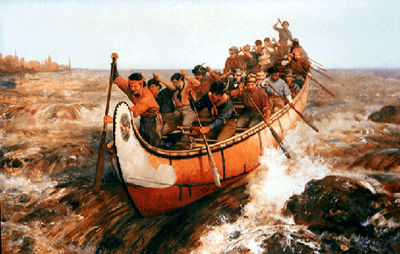
-
Article
Walking Buffalo (Tatanga Mani)
Walking Buffalo (born Tatanga Mani, also known as George McLean), Stoney-Nakoda leader, statesman, philosopher (born 20 March 1870 in the Bow River Valley near Morley, AB; died 27 December 1967 in Banff, AB). Walking Buffalo was present at the signing of Treaty 7 (1877) and later served as a respected leader in Bearspaw First Nation until his death. Walking Buffalo preached world peace and, in 1959, journeyed around the globe to spread this word. He was a strong advocate for protecting the environment and Indigenous rights and culture.
"https://d3d0lqu00lnqvz.cloudfront.net/media/media/ef31eb4f-564e-42bf-891d-61e5a4da5f87.jpg" // resources/views/front/categories/view.blade.php
https://d3d0lqu00lnqvz.cloudfront.net/media/media/ef31eb4f-564e-42bf-891d-61e5a4da5f87.jpg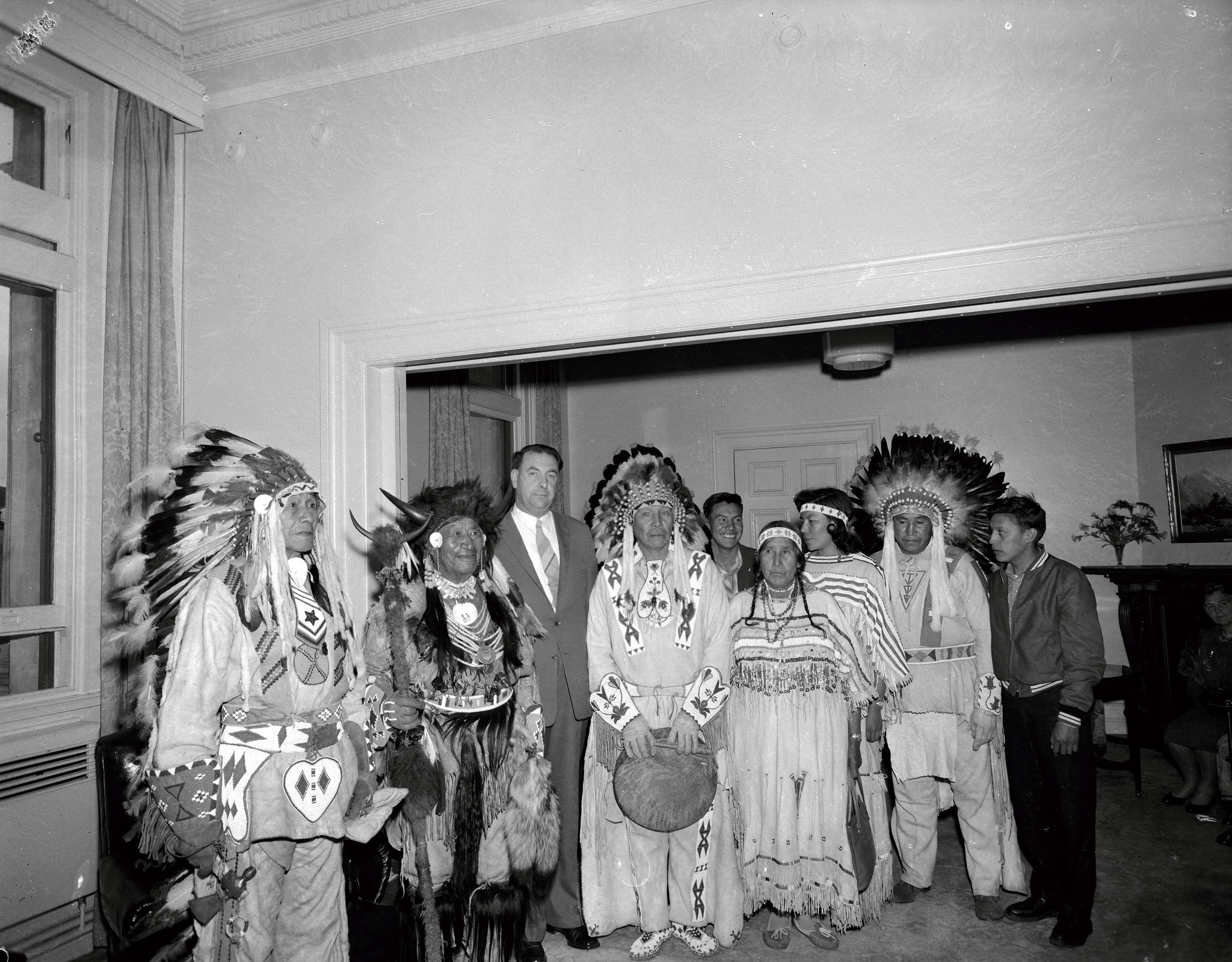
-
Article
Walter Deiter
Walter Deiter, OC, Chief, Indigenous rights advocate (born 31 May 1916 on Peepeekisis Reserve, SK; died 7 September 1988 in Regina, SK). Walter Deiter was active in the development of Indigenous political organizations in the 1960s. His work helped to establish the National Indian Brotherhood (now Assembly of First Nations) and has resulted in him being appointed to the Order of Canada.
"https://thecanadianencyclopedia.ca/images/tce_placeholder.jpg?v=e9dca980c9bdb3aa11e832e7ea94f5d9" // resources/views/front/categories/view.blade.php
https://thecanadianencyclopedia.ca/images/tce_placeholder.jpg?v=e9dca980c9bdb3aa11e832e7ea94f5d9
-
Article
Wayne Adams
F. Wayne Adams, CM, ONS, politician, activist, journalist, entrepreneur (born 1943 in Halifax, NS). Wayne Adams has been an entrepreneur, a broadcast journalist, a municipal and provincial politician, and an environmental activist. He was the first Black Canadian elected to the Nova Scotia legislature and to serve in its cabinet. He was made a Member of the Order of Canada and has received the Order of Nova Scotia.
"https://thecanadianencyclopedia.ca/images/tce_placeholder.jpg?v=e9dca980c9bdb3aa11e832e7ea94f5d9" // resources/views/front/categories/view.blade.php
https://thecanadianencyclopedia.ca/images/tce_placeholder.jpg?v=e9dca980c9bdb3aa11e832e7ea94f5d9
-
Article
William Andrew White
William Andrew White, Baptist minister and army chaplain (born 16 June 1874 in King and Queen Court House, VA; died 9 September 1936 in Halifax, NS). White was a leading member of the African Nova Scotian community. He was chaplain for the No. 2 Construction Battalion, making him one of the few Black officers in the Canadian Expeditionary Force during the First World War.
"https://d3d0lqu00lnqvz.cloudfront.net/media/home-page-images/Captain-William-A-White.jpg" // resources/views/front/categories/view.blade.php
https://d3d0lqu00lnqvz.cloudfront.net/media/home-page-images/Captain-William-A-White.jpg
-
Article
Arthur Goss
Arthur Goss documented the poor living conditions of immigrant families and the impact of poverty on the health and welfare of children in impoverished areas of Toronto like St. John’s Ward for the Department of Public Health.
"https://d3d0lqu00lnqvz.cloudfront.net/media/media/5d58a4ea-2655-4ca6-a32f-f1844db74f96.jpg" // resources/views/front/categories/view.blade.php
https://d3d0lqu00lnqvz.cloudfront.net/media/media/5d58a4ea-2655-4ca6-a32f-f1844db74f96.jpg
-
Article
William Pearly Oliver
William Pearly Oliver, CM, minister, army chaplain and community organizer (born 11 February 1912 in Wolfville, Nova Scotia; died 26 May 1989 in Lucasville). Oliver was a social activist, educator and minister. He cofounded the Nova Scotia Association for the Advancement of Coloured People (NSAACP) and the Black United Front (BUF). He was also instrumental in the creation of the Black Cultural Society and the Black Cultural Centre for Nova Scotia.
"https://d3d0lqu00lnqvz.cloudfront.net/WilliamPearlyOliver/WilliamPearlyOliver_1934.png" // resources/views/front/categories/view.blade.php
https://d3d0lqu00lnqvz.cloudfront.net/WilliamPearlyOliver/WilliamPearlyOliver_1934.png
-
Article
Willie Adams
Willie Adams, OC, Liberal senator, businessman, electrician (born 22 June 1934 in Kuujjuaq [then Fort Chimo] in Nunavik, Quebec). As Canada’s first Inuit senator, Adams frequently sought greater federal government support for his people in education, health care, infrastructure, land claims, fishery allocations and affordable food, housing and fuel. He was actively involved in the creation of Nunavut and supported Inuit language rights, art and culture, and traditional hunting methods such as sealing.
"https://d3d0lqu00lnqvz.cloudfront.net/media/new_article_images/WillieAdams/willie_adams.jpg" // resources/views/front/categories/view.blade.php
https://d3d0lqu00lnqvz.cloudfront.net/media/new_article_images/WillieAdams/willie_adams.jpg