
Browse "Communities & Sociology"
-
Article
Thomas Albert Moore
Thomas Albert Moore, Methodist minister, moderator of United Church of Canada (b at Acton, Canada W 29 June 1860; d at Toronto 31 Mar 1940).
"https://thecanadianencyclopedia.ca/images/tce_placeholder.jpg?v=e9dca980c9bdb3aa11e832e7ea94f5d9" // resources/views/front/categories/view.blade.php
https://thecanadianencyclopedia.ca/images/tce_placeholder.jpg?v=e9dca980c9bdb3aa11e832e7ea94f5d9
-
Article
Thomas D'Arcy McGee
Thomas D’Arcy McGee, journalist, politician, poet (born 13 April 1825 in Carlingford, County Louth, Ireland; died 7 April 1868 in Ottawa, ON). Thomas D’Arcy McGee was dedicated to the cause of Irish national liberation. This pushed him towards revolutionary anti-British doctrine in his early years. However, he matured to become a staunch defender of British constitutional monarchy and a Father of Confederation. He was an advocate for minority rights at a time when the politics of ethnic and religious identity were intensely fraught. He was an incredibly eloquent public speaker and a passionate advocate for Canadian interests. However, his political transformation ultimately damaged his popularity with Irish nationalists, particularly the Fenians. He was assassinated in 1868.
"https://d3d0lqu00lnqvz.cloudfront.net/media/media/4a74eaf5-4691-4b89-9d50-e98da872ed41.jpg" // resources/views/front/categories/view.blade.php
https://d3d0lqu00lnqvz.cloudfront.net/media/media/4a74eaf5-4691-4b89-9d50-e98da872ed41.jpg
-
Article
Thomas Peters
Thomas Peters (also Petters), Black community leader, soldier (born circa 1738 in West Africa; died 25 June 1792 in Freetown, Sierra Leone). During the American Revolution, Peters escaped enslavement and joined the Black Pioneers, a unit of the British army. After the war, he and thousands of other Black Loyalists were transported to Nova Scotia and New Brunswick. Peters became a spokesperson for Black Loyalists, who were frustrated that they hadn’t received the provisions and land promised by British officials. He eventually helped recruit Black settlers for the West African colony of Sierra Leone, where he died in 1792.
"https://d3d0lqu00lnqvz.cloudfront.net/media/media/be13527b-b76d-408a-afca-30acbd4f7bfc.png" // resources/views/front/categories/view.blade.php
https://d3d0lqu00lnqvz.cloudfront.net/media/media/be13527b-b76d-408a-afca-30acbd4f7bfc.png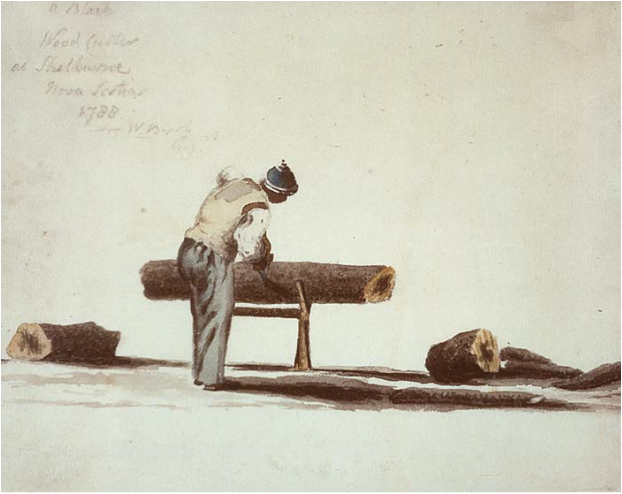
-
Article
Early Inuit (Thule) Winter House
The early Inuit (Thule) were an Indigenous people who began to occupy the Arctic, from Alaska to Greenland, around 1000 CE. In the winter, the early Inuit used a house built partially into the ground to keep them warm for long periods of time. One striking feature of this structure was the roof, which was sometimes made of whalebone. (See also Architectural History of Indigenous Peoples in Canada.)
"https://d3d0lqu00lnqvz.cloudfront.net/ThuleHouse.jpg" // resources/views/front/categories/view.blade.php
https://d3d0lqu00lnqvz.cloudfront.net/ThuleHouse.jpg
-
Article
Tilly Rolston
Tilly Jean Rolston, Canadian politician (born 23 February 1887 in Vancouver, BC; died 12 October 1953 in Vancouver, BC). Rolston was best known for her service as education minister for the province of British Columbia in the Social Credit government of W.A.C. Bennett in the early 1950s. She has the distinction of being the second woman cabinet minister elected in that province, but the first with a portfolio in all of Canada. Rolston was instrumental in developing a new financing formula for the funding of BC’s public schools, and also instituted the province’s first sex education curriculum. She is noted for being the first woman in British Columbia to receive a state funeral upon her death.
"https://d3d0lqu00lnqvz.cloudfront.net/TillyRolston/TillyRolston2_TweetOnly.jpg" // resources/views/front/categories/view.blade.php
https://d3d0lqu00lnqvz.cloudfront.net/TillyRolston/TillyRolston2_TweetOnly.jpg
-
Article
Tlicho (Dogrib)
Tlicho (Tłı̨chǫ), also known as Dogrib, are an Indigenous people in Canada. They fall within the broader designation of Dene, who are Indigenous peoples of the widespread Athapaskan (or Athabascan) language family. Their name for themselves is Doné, meaning "the People." To distinguish themselves from their Dene neighbours, including the Denesuline, Slavey, Sahtu Got'ine and K'asho Got'ine, they have come to identify themselves as Tlicho, a Cree word meaning “dog's rib,” referring to a creation story. In 2005, the Tlicho Agreement, which saw the Tlicho gain control of 39,000 km2 of their traditional lands, became the first combined self-government agreement and comprehensive land claim in the Northwest Territories. According to the Northwest Territories Bureau of Statistics (2019), the population of the Tlicho region of the territory was 2,983.
"https://d3d0lqu00lnqvz.cloudfront.net/Tłı̨chǫ_girls-1.jpg" // resources/views/front/categories/view.blade.php
https://d3d0lqu00lnqvz.cloudfront.net/Tłı̨chǫ_girls-1.jpg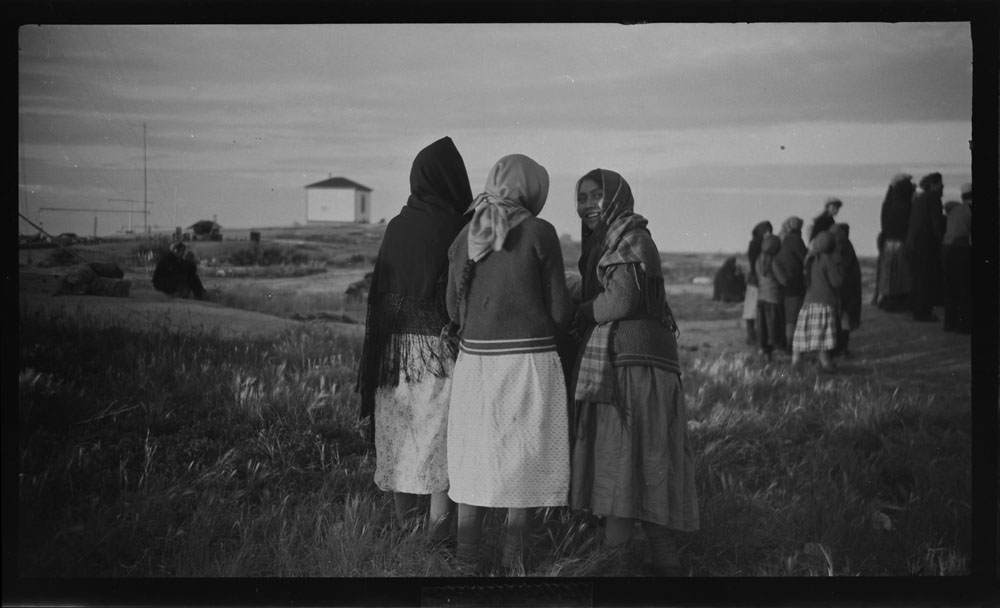
-
Article
Together Today for Our Children Tomorrow
Together Today for Our Children Tomorrow was a document that set out land claim grievances in Yukon and recommended an approach to settlement. The Council of Yukon Indians, the organization that authored the document, presented it to then Prime Minister Pierre Elliott Trudeau in Ottawa on 14 February 1973. The document told the story of traditional Indigenous ways in the territory. It chronicles ways in which life changed with the arrival of the “Whiteman.” It identifies some of the contemporary challenges the local First Nations faced at the time. Additionally, it proposes solutions and offers a roadmap forward. Finally, it sets out a vision for the future that sees control and authority for decision-making returned to the First Nations of the territory. Fifty years later, it continues to be a guiding force for First Nation and non-First Nation Yukoners. It promotes “walking together down the same road.” In other words, it suggests participating equitably as partners in the fabric and governance of Yukon society.
"https://d3d0lqu00lnqvz.cloudfront.net/TCE_placeholder.png" // resources/views/front/categories/view.blade.php
https://d3d0lqu00lnqvz.cloudfront.net/TCE_placeholder.png
-
Article
Tommy Prince
Thomas George Prince, war hero, Indigenous advocate (born 25 October 1915 in Petersfield, MB; died 25 November 1977 in Winnipeg, MB). Tommy Prince of the Brokenhead Ojibway Nation is one of the most-decorated Indigenous war veterans in Canada, having been awarded a total of 11 medals for his service in the Second World War and the Korean War. When he died, he was honoured at his funeral by his First Nation, the province of Manitoba, Canada and the governments of France, Italy and the United States. ( See also Indigenous Peoples and the World Wars.)
"https://d3d0lqu00lnqvz.cloudfront.net/media/media/807e5d85-0d60-4180-8400-b1badabf3486.jpg" // resources/views/front/categories/view.blade.php
https://d3d0lqu00lnqvz.cloudfront.net/media/media/807e5d85-0d60-4180-8400-b1badabf3486.jpg
-
Article
Toronto's Chinatowns
Toronto’s Chinatown, one of the largest in North America, is an ever-evolving neighbourhood defined by numerous cohorts of Chinese immigrants with a diversity of culture, traditions and languages. (See Chinese Canadians.) Also known as Chinatown West, it is one of three Chinatowns in Toronto, more of the large Chinese settlements are included from the inner suburbs, like Scarborough and North York, and outer suburbs, like Markham, Mississauga and Richmond Hill.
"https://d3d0lqu00lnqvz.cloudfront.net/!feature-img-thumbnails/tor-cn-feat.jpg" // resources/views/front/categories/view.blade.php
https://d3d0lqu00lnqvz.cloudfront.net/!feature-img-thumbnails/tor-cn-feat.jpg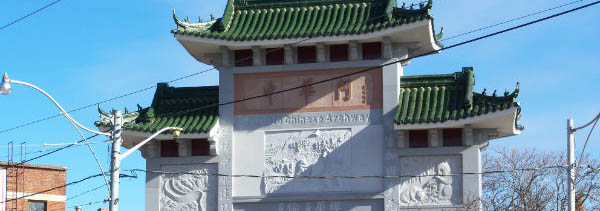
-
List
Trailblazing Black Canadian Athletes
Athletic success, we’re told, takes grit and determination. With these strengths, an athlete can overcome any obstacle and, if they’re good enough, become the best in their sport, regardless of the challenges ahead of them. But what if the goalposts keep moving? What if the finish lines are drawn farther, the hurdles set higher, and the windows of opportunity sealed shut? The athletes in this exhibit were not only the best in their fields, but among the best in history. They were the fastest sprinters, the most agile skaters, the hardest hitters and, in many cases, the first to succeed at a high level. But though they earned the respect of their elite peers and the awestruck admiration of onlookers, there were barriers to their success — a colour bar blocking their way. Nevertheless, these courageous Black men and women persevered, and in so doing, cleared a path for future generations.
"https://d3d0lqu00lnqvz.cloudfront.net/media/media/59201294-dbe8-482f-b464-585f218993eb.png" // resources/views/front/categories/view.blade.php
https://d3d0lqu00lnqvz.cloudfront.net/media/media/59201294-dbe8-482f-b464-585f218993eb.png
-
Article
Truth and Reconciliation Commission of Canada: Calls to Action
The Truth and Reconciliation Commission of Canada (TRC) was officially launched in 2008 as part of the Indian Residential Schools Settlement Agreement. This multi-faceted agreement was intended to compensate survivors for the harms they suffered in residential schools, and to work towards a more just and equitable future for Indigenous peoples. The TRC was also meant to lay the foundation for lasting reconciliation across Canada. The TRC’s six-volume final report was released on 15 December 2015. It argued that the residential school program resulted in cultural genocide and outlined 94 Calls to Action.
"https://d3d0lqu00lnqvz.cloudfront.net/media/media/a042133-v6.jpg" // resources/views/front/categories/view.blade.php
https://d3d0lqu00lnqvz.cloudfront.net/media/media/a042133-v6.jpg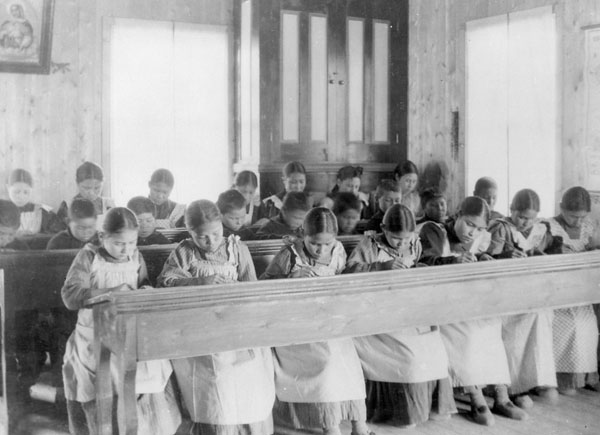
-
Article
Tsetsaut
The Tsetsaut (also known as the Wetaɬ) were a Dene people who lived inland from the Tlingit (Łingít) along the western coast of British Columbia and Southeastern Alaska. Apart from Nisga’a oral tradition and the linguistic research of anthropologist Franz Boas, who lived among the Tsetsaut in the 1890s, little is known about them. The Tsetsaut were decimated by war and disease in the 1800s, their numbers reduced to just 12 by the end of the century. It was once believed that the last of the Tsetsaut people died in 1927 and that their ancient language was no longer spoken. However, as of 2019, there are approximately 30 people from the Tsetsaut/Skii km Lax Ha Nation identifying as Tsetsaut in British Columbia.
"https://d3d0lqu00lnqvz.cloudfront.net/media/media/cce8b2c9-3dd1-46a4-9e5a-8bf2b73404b5.jpg" // resources/views/front/categories/view.blade.php
https://d3d0lqu00lnqvz.cloudfront.net/media/media/cce8b2c9-3dd1-46a4-9e5a-8bf2b73404b5.jpg
-
Article
Tupiq
Historically, Inuit used a simple tent, known as a tupiq (the plural form is tupiit), while travelling or hunting during the summer months. Today, the traditional tupiq is rarely used (because modern variations have largely replaced it), but some Inuit elders and communities are working to keep the tupiq, and other Inuit traditions, alive. (See also Architectural History of Indigenous Peoples in Canada.)
"https://d3d0lqu00lnqvz.cloudfront.net/Tupiq/InuitFamilyTupiq1915.JPG" // resources/views/front/categories/view.blade.php
https://d3d0lqu00lnqvz.cloudfront.net/Tupiq/InuitFamilyTupiq1915.JPG
-
Article
Yuułuʔiłʔatḥ (Ucluelet) First Nation
Yuułuʔiłʔatḥ (formerly known as Ucluelet, Yuu-tluth-aht and Yu’lu’il’ath) are a Nuu-chah-nulth nation from west Barkley Sound, Vancouver Island. As of November 2025, there were 690 registered members, 458 of whom live off reserve. The Yuułuʔiłʔatḥ, along with several other Nuu-chah-nulth nations, have signed the Maa-nulth treaty, which has provided them with self-governance since April 2011.
"https://d3d0lqu00lnqvz.cloudfront.net/media/media/b5caad81-4e11-4466-8ae0-d9e61f5f9f5c.jpg" // resources/views/front/categories/view.blade.php
https://d3d0lqu00lnqvz.cloudfront.net/media/media/b5caad81-4e11-4466-8ae0-d9e61f5f9f5c.jpg
-
Article
Nunavimiut (Ungava Inuit)
The term Ungava, meaning "towards the open water," was used to designate the Inuit band established at the mouth of the Arnaud (Payne) River.
"https://thecanadianencyclopedia.ca/images/tce_placeholder.jpg?v=e9dca980c9bdb3aa11e832e7ea94f5d9" // resources/views/front/categories/view.blade.php
https://thecanadianencyclopedia.ca/images/tce_placeholder.jpg?v=e9dca980c9bdb3aa11e832e7ea94f5d9