
Browse "Communities & Sociology"
-
Article
The Coloured Corps: Black Canadians and the War of 1812
The Coloured Corps (also known as Runchey's Company of Coloured Men, or Black Corps) was a militia company of Black men raised during the War of 1812.
"https://d3d0lqu00lnqvz.cloudfront.net/media/media/ee6791f8-0e4e-40a0-b993-ad09823228ad.jpg" // resources/views/front/categories/view.blade.php
https://d3d0lqu00lnqvz.cloudfront.net/media/media/ee6791f8-0e4e-40a0-b993-ad09823228ad.jpg
-
Editorial
Editorial: The Courage of Terry Fox
The following article is an editorial written by The Canadian Encyclopedia staff. Editorials are not usually updated. Terry Fox was the boy who never gave up. His short life was devoted to achieving his goals. Obstacles just made him try harder. When he learned he had cancer and would lose his leg, he resolved to do something to help other cancer victims. When the disease claimed him on 28 June 1981, he left a legacy of hope that inspired millions to continue his cause.
"https://d3d0lqu00lnqvz.cloudfront.net/media/media/38455a56-df5d-43f1-86be-7cba02458402.jpg" // resources/views/front/categories/view.blade.php
https://d3d0lqu00lnqvz.cloudfront.net/media/media/38455a56-df5d-43f1-86be-7cba02458402.jpg
-
Article
The Four Kings of Canada
The Four Kings of Canada were prominent leaders from the Haudenosaunee Confederacy who traveled to London to request a British invasion of French Canada in 1710 during the War of the Spanish Succession (Queen Anne’s War). They presented Queen Anne with wampum and received numerous gifts, including the Queen Anne communion silver that is housed today in two Mohawk Chapels Royal. The high-profile reception of the Four Kings of Canada strengthened the military alliance between the Haudenosaunee Confederacy and Britain and shaped British perceptions of North American Indigenous peoples in the early 18th century.
"https://d3d0lqu00lnqvz.cloudfront.net/Four-Kings/onigoheriago-lac-c092417.jpg" // resources/views/front/categories/view.blade.php
https://d3d0lqu00lnqvz.cloudfront.net/Four-Kings/onigoheriago-lac-c092417.jpg
-
Editorial
Editorial: Baldwin, LaFontaine and Responsible Government
The following article is an editorial written by The Canadian Encyclopedia staff. Editorials are not usually updated. The Baldwin–LaFontaine government of 1848 has been called the “great ministry.” In addition to establishing responsible government, it had an incomparable record of legislation. It established a public school system and finalized the founding of the University of Toronto. It set up municipal governments and pacified French-Canadian nationalism after a period of unrest. Responsible government did not transform Canada overnight into a fully developed democracy. But it was an important milestone along the road to political autonomy. Most importantly, it provided an opportunity for French Canadians to find a means for their survival through the British Constitution. The partnership and friendship between Baldwin and LaFontaine were brilliant examples of collaboration that have been all too rare in Canadian history.
"https://d3d0lqu00lnqvz.cloudfront.net/media/media/ba6bdff6-574a-4697-ac95-afdcc5ddfcc9.jpg" // resources/views/front/categories/view.blade.php
https://d3d0lqu00lnqvz.cloudfront.net/media/media/ba6bdff6-574a-4697-ac95-afdcc5ddfcc9.jpg
-
Article
The History of Canadian Women in Sport
For hundreds of years, very few sports were considered appropriate for women, whether for reasons of supposed physical frailty, or the alleged moral dangers of vigorous exercise. Since the late 19th century, however, women in Canada have participated in a growing list of sports — not only those deemed graceful and feminine, but also the sweaty, rough-and-tumble games traditionally played only by men (e.g., hockey, boxing, soccer, rugby)
"https://d3d0lqu00lnqvz.cloudfront.net/media/media/9c27e9a9-7620-4f38-b10f-d79a6c7956ce.jpg" // resources/views/front/categories/view.blade.php
https://d3d0lqu00lnqvz.cloudfront.net/media/media/9c27e9a9-7620-4f38-b10f-d79a6c7956ce.jpg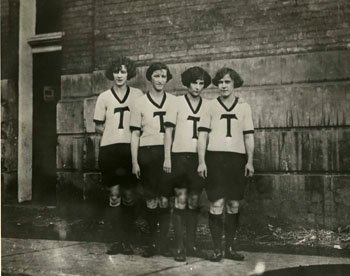
-
Timelines
The Indian Act
The Indian Act is the principal law through which the federal government administers Indian status, local First Nations governments and the management of reserve land and communal monies. The Indian Act does not include Métis or Inuit peoples. The Act came into power on 12 April 1876. It consolidated a number of earlier colonial laws that sought to control and assimilate Indigenous peoples into Euro-Canadian culture. The Indian Act has been amended many times over...
"https://d3d0lqu00lnqvz.cloudfront.net/media/media/cbcd31d1-03f6-4fba-a45d-96ee89c4617d.jpg" // resources/views/front/categories/view.blade.php
https://d3d0lqu00lnqvz.cloudfront.net/media/media/cbcd31d1-03f6-4fba-a45d-96ee89c4617d.jpg
-
Article
The Journey of Nishiyuu (The Journey of the People)
Between 16 January and 25 March 2013, six Cree youths and their guide walked 1,600 km from Whapmagoostui First Nation, the northernmost Cree village in Quebec on Hudson Bay, to Parliament Hill in Ottawa in support of the Idle No More movement. They called the trek “The Journey of Nishiyuu,” which is Cree for “people.” Known as the Nishiyuu Walkers, the group attracted national media attention and inspired Indigenous youth to be the force of change in their lives and communities. (See also Indigenous Women Activists in Canada and Indigenous Political Organization and Activism in Canada.)
"https://d3d0lqu00lnqvz.cloudfront.net/media/media/00339332-5ac9-4b3b-8578-b7200b7db6fc.jpg" // resources/views/front/categories/view.blade.php
https://d3d0lqu00lnqvz.cloudfront.net/media/media/00339332-5ac9-4b3b-8578-b7200b7db6fc.jpg
-
Interview
The Legacy of Terry Fox: An Interview with Bill Vigars
Bill Vigars discusses Terry Fox’s inspiration for the Marathon of Hope in a 2015 interview with Historica Canada
"https://thecanadianencyclopedia.ca/images/tce_placeholder.jpg?v=e9dca980c9bdb3aa11e832e7ea94f5d9" // resources/views/front/categories/view.blade.php
https://thecanadianencyclopedia.ca/images/tce_placeholder.jpg?v=e9dca980c9bdb3aa11e832e7ea94f5d9
-
Interview
The Legacy of Terry Fox: An Interview with Darrell Fox
Darrell Fox discusses his brother’s determination in a 2015 interview with Historica Canada
"https://d3d0lqu00lnqvz.cloudfront.net/media/media/c09ae4d7-7552-44c7-968c-de7f901a7b29.jpg" // resources/views/front/categories/view.blade.php
https://d3d0lqu00lnqvz.cloudfront.net/media/media/c09ae4d7-7552-44c7-968c-de7f901a7b29.jpg
-
Interview
The Legacy of Terry Fox: An Interview with Leslie Scrivener
Leslie Scrivener describes meeting Terry for the first time and being struck by his optimism and focus in an April 2015 interview with Historica Canada.
"https://d3d0lqu00lnqvz.cloudfront.net/media/media/64904706-0bb1-4d9f-9ad5-5b26e41dcea7.jpeg" // resources/views/front/categories/view.blade.php
https://d3d0lqu00lnqvz.cloudfront.net/media/media/64904706-0bb1-4d9f-9ad5-5b26e41dcea7.jpeg
-
Editorial
The Life and Meaning of Everett Klippert
The following article is an editorial written by The Canadian Encyclopedia staff. Editorials are not usually updated. Everett George Klippert (1926–1996) was a popular Calgary bus driver who was jailed for homosexuality from 1960 to 1964, and from 1965 to 1971. An unlikely martyr, he shunned the spotlight. Klippert was once described as “Canada’s most famous homosexual” due to his unjust prison sentences, which ultimately led to the decriminalization of homosexuality in Canada.
"https://d3d0lqu00lnqvz.cloudfront.net/media/media/d5d0ce81-9f5e-4938-8c53-1fdaee0b6c39.jpg" // resources/views/front/categories/view.blade.php
https://d3d0lqu00lnqvz.cloudfront.net/media/media/d5d0ce81-9f5e-4938-8c53-1fdaee0b6c39.jpg
-
Article
The New Canadian
The New Canadian (1938–2001) was an English-language newspaper published by and for the Japanese Canadian community. Initially, the newspaper was founded as a forum for second-generation Japanese Canadians to express and foster their identity as English-speaking Canadians and to support a mission of “cultural, economic, and political assimilation.” (See also Canadian English; Languages in use in Canada.) The newspaper became the primary source of both English- and Japanese-language news for Japanese Canadians during their forced uprooting from the west coast in the 1940s (see Internment of Japanese Canadians). It continued to be published in the postwar years, with its English-language content shifting towards social and community news while its Japanese-language section grew in importance for pre-war and postwar Japanese immigrants. The newspaper was sold to Japan Communications in 1990 and its final edition was published in 2001.
"https://d3d0lqu00lnqvz.cloudfront.net/thenewcanadian/thenewcanadian.jpg" // resources/views/front/categories/view.blade.php
https://d3d0lqu00lnqvz.cloudfront.net/thenewcanadian/thenewcanadian.jpg
-
Article
The Penner Report
The Penner Report was a report prepared by the Special Committee of the House of Commons on Indian Self-Government. It was issued in November 1983. Named after committee chairman Keith Penner, the report made a series of recommendations. These recommendations promoted the concept of self-governing First Nations. First Nations, in this legal context, are classified as status Indians under the Indian Act.
"https://d3d0lqu00lnqvz.cloudfront.net/media/media/1eef3d08-4031-40d3-bbd4-6443822cd128.jpg" // resources/views/front/categories/view.blade.php
https://d3d0lqu00lnqvz.cloudfront.net/media/media/1eef3d08-4031-40d3-bbd4-6443822cd128.jpg
-
Article
The Underground Railroad (Plain-Language Summary)
The Underground Railroad was a secret organization. It was made up of people who helped African Americans escape from slavery in the southern United States. The people in this organization set up a system of routes that escaped slaves could travel to find freedom in the northern United States and Canada. In the 1800s (the 19th century) between 30,000 and 40,000 escaped slaves travelled to British North America (Canada) through the Underground Railroad. (This article is a plain-language summary of the Underground Railroad in Canada. If you are interested in reading about this topic in more depth, please see our full-length entry on The Underground Railroad.)
"https://d3d0lqu00lnqvz.cloudfront.net/media/media/62778b7a-e28f-4fe4-96c6-ec4011ee3af2.jpg" // resources/views/front/categories/view.blade.php
https://d3d0lqu00lnqvz.cloudfront.net/media/media/62778b7a-e28f-4fe4-96c6-ec4011ee3af2.jpg
-
Article
Thelma Chalifoux
Thelma Julia Chalifoux, senator, entrepreneur, activist (born 8 February 1929 in Calgary, AB; died 22 September 2017 in St. Albert, AB). Chalifoux was the first Métis woman appointed to the Senate of Canada. As a senator, she was concerned with a range of issues, including Métis housing, drug company relations with the federal government, and environmental legislation. An ardent advocate for women’s and Indigenous rights, Chalifoux was involved in organizations such as the Aboriginal Women’s Business Development Corporation and the Métis Women’s Council. She was also known for her work in the protection of Métis culture, having served in the Alberta Métis Senate and Michif Cultural and Métis Resource Institute (now Michif Cultural Connections).
"https://d3d0lqu00lnqvz.cloudfront.net/IndiLeaderStamps/thelma-chalifoux-stamp.jpg" // resources/views/front/categories/view.blade.php
https://d3d0lqu00lnqvz.cloudfront.net/IndiLeaderStamps/thelma-chalifoux-stamp.jpg