Browse "Communities & Sociology"
-
Article
Pit House
A pit house is a type of dwelling historically used by various Indigenous peoples living in the Plateau region of Canada. Partially built into the ground, pit houses provided warmth and shelter during the winter season. While pit houses no longer serve as common dwellings, they retain cultural significance for many Indigenous peoples. Archeological remains and replicas of pit houses can be found in various parts of Canada. (See also Architectural History of Indigenous Peoples in Canada.)
"https://d3d0lqu00lnqvz.cloudfront.net/media/media/f78eb160-4435-47f0-b8d4-d0694aa6ac55.jpg" // resources/views/front/categories/view.blade.php
https://d3d0lqu00lnqvz.cloudfront.net/media/media/f78eb160-4435-47f0-b8d4-d0694aa6ac55.jpg
-
Article
Plamondon Libel Case
The Plamondon Libel Case was a landmark legal case lasting from 1910 until 1914. The case was likely the first attempt to fight antisemitism in court in Canada. Two Jewish residents of Quebec City, Louis Lazarovitch and Benjamin Ortenberg, initiated the libel suit against Jacques-Édouard Plamondon. The latter had given an antisemitic speech, which caused a wave of antisemitic violence directed at Quebec City’s small Jewish community. The events occurred during a period of strong, often nationalistic, antisemitism in Quebec.
"https://d3d0lqu00lnqvz.cloudfront.net/Samuel-William-Jacobs-cropped.jpg" // resources/views/front/categories/view.blade.php
https://d3d0lqu00lnqvz.cloudfront.net/Samuel-William-Jacobs-cropped.jpg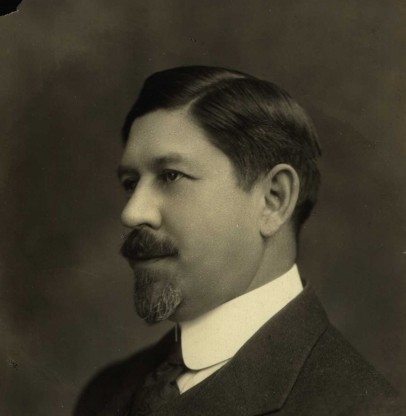
-
Article
Plank House
Historically, plank houses were structures built by various Indigenous peoples on the Northwest Coast of Canada, such as the Coast Salish, Kwakwaka’wakw, Nuu-chah-nulth, Nuxalk, Haida, Tsimshian, Gitxsan and Nisga'a. Plank houses varied in size and design, depending on the community. Plank houses still exist in some communities and are used mainly for community and ceremonial purposes. (See also Architectural History of Indigenous Peoples in Canada.)
"https://d3d0lqu00lnqvz.cloudfront.net/PlankHouse/SalishPlankHouse1907.jpg" // resources/views/front/categories/view.blade.php
https://d3d0lqu00lnqvz.cloudfront.net/PlankHouse/SalishPlankHouse1907.jpg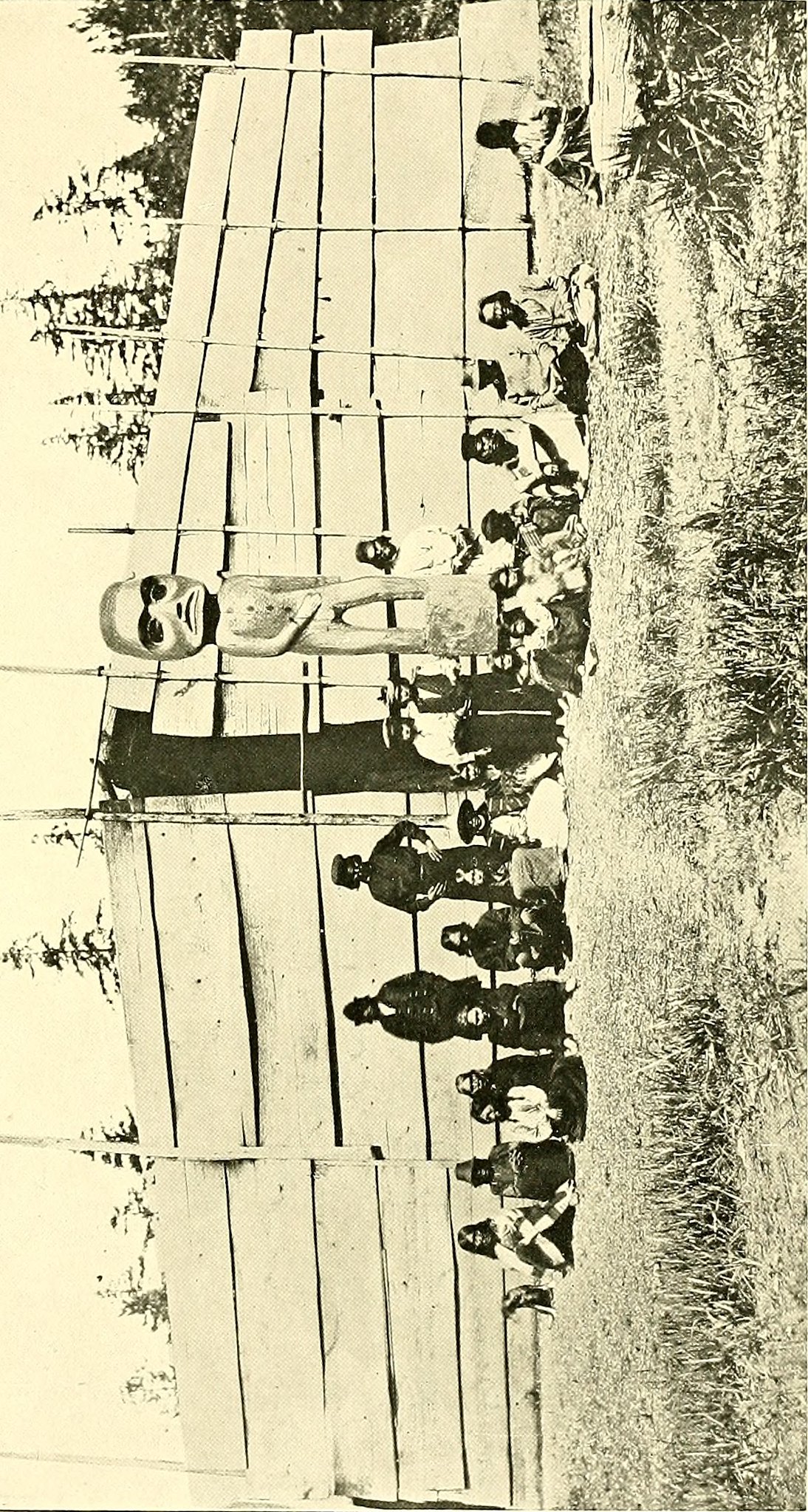
-
Article
Polish Canadians
Polish immigrants began to arrive in Canada shortly after the First Partition of Poland in the late 1700s. According to the 2021 census, in Canada, 982,820 people claimed full or partial Polish ancestry, and 176,010 people speak Polish as a mother tongue language.
"https://d3d0lqu00lnqvz.cloudfront.net/media/media/cce4c6dc-8b1d-48bb-b285-3ebf65f0bad0.jpg" // resources/views/front/categories/view.blade.php
https://d3d0lqu00lnqvz.cloudfront.net/media/media/cce4c6dc-8b1d-48bb-b285-3ebf65f0bad0.jpg
-
Article
Obwandiyag (Pontiac)
Obwandiyag (Pontiac), Odawa chief (born c. 1720 along the Detroit River; died 20 April 1769 in Cahokia, Illinois Country). Obwandiyag was the leader of a loose coalition of Indigenous nations that opposed British rule in what became known as Pontiac’s War (1763–66). The uprising is regarded by many as a historical antecedent to more contemporary Indigenous rights movements.
"https://d3d0lqu00lnqvz.cloudfront.net/media/media/f3d5c6d6-8340-49cb-84e9-433b460ee3a5.jpg" // resources/views/front/categories/view.blade.php
https://d3d0lqu00lnqvz.cloudfront.net/media/media/f3d5c6d6-8340-49cb-84e9-433b460ee3a5.jpg
-
Article
Portuguese Canadians
Portuguese explorers were among the first Europeans to lay eyes on what is now Canadian soil. Some early Portuguese settlers also lived on the Atlantic coast and in New France. In the 20th century, Portuguese immigration intensified in the 1950s and into the 1980s. In the 2021 Canadian census, 448,305 people reported being of Portuguese origin. In 2021, 266,555 people reported having Portuguese as their mother tongue language.
"https://d3d0lqu00lnqvz.cloudfront.net/media/new_article_images/PortugueseCanadians/Combined Portuguese_Canadian_Flag.jpg" // resources/views/front/categories/view.blade.php
https://d3d0lqu00lnqvz.cloudfront.net/media/new_article_images/PortugueseCanadians/Combined Portuguese_Canadian_Flag.jpg
-
Article
Pitikwahanapiwiyin (Poundmaker)
Pitikwahanapiwiyin (Poundmaker), Cree chief (born circa 1842 in central SK; died 4 July 1886 in Blackfoot Crossing, AB). Remembered as a great leader, Pitikwahanapiwiyin strove to protect the interests of his people during the negotiation of Treaty 6. Considered a peacemaker, he did not take up arms in the North-West Resistance. However, a young and militant faction of his band did participate in the conflict, resulting in Pitikwahanapiwiyin’s arrest and imprisonment for treason. His legacy as a peacemaker lives on among many Cree peoples, including the Poundmaker Cree Nation in Saskatchewan.
"https://d3d0lqu00lnqvz.cloudfront.net/!feature-img-thumbnails/poundmaker-th.jpg" // resources/views/front/categories/view.blade.php
https://d3d0lqu00lnqvz.cloudfront.net/!feature-img-thumbnails/poundmaker-th.jpg
-
Article
Powley Case
R. v. Powley was a legal case concerning Métis hunting rights in Canada. In 1993, the province of Ontario charged Steve and Roddy Powley with illegal hunting. The Powleys disputed their conviction, arguing that the Aboriginal rights enshrined in section 35 of the Constitution Act, 1982 protected their hunting rights as Métis people. The case concluded in 2003, when the Supreme Court of Canada ruled that the Powleys were, in fact, exercising lawful Métis hunting rights. The Powley case established criteria on who can legally qualify for Métis rights. It outlined 10 specific criteria, known as the Powley Test, which applies to Métis communities across Canada. The case also clarified that the Métis are a distinct people, separate from First Nations and Inuit peoples in Canada. Some legal experts believe the Powley case might lead to expanded Métis rights, including harvesting and fishing rights and possibly self-government.
"https://d3d0lqu00lnqvz.cloudfront.net/media/media/4de10db1-6b8b-45ef-a60a-55998c7afca0.jpg" // resources/views/front/categories/view.blade.php
https://d3d0lqu00lnqvz.cloudfront.net/media/media/4de10db1-6b8b-45ef-a60a-55998c7afca0.jpg
-
Article
Pre-Dorset
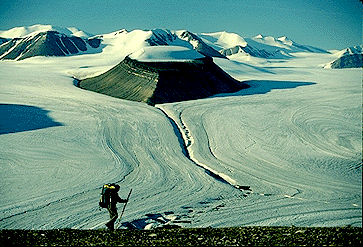
Based on archaeological evidence, the earliest permanent human habitation in the Eastern North American Arctic began roughly 5,000 years ago. These first humans of the North American Arctic are referred to as the “Palaeo-Inuit.” They likely crossed the Bering Strait from Chukotka (northeastern Siberia). Inuit oral histories call the earliest people of the Arctic “Tuniit”. The Palaeo-Inuit lived for thousands of years until roughly 700 years ago. They are culturally and genetically distinct from early Inuit. Early Inuit are sometimes called “Thule” and are direct ancestors of modern Inuit. However, research on the Palaeo-Inuit and Inuit is ongoing and may change.
"https://d3d0lqu00lnqvz.cloudfront.net/PreDorset/Figure3RaisedBeachRidgeIllustration.jpg" // resources/views/front/categories/view.blade.php
https://d3d0lqu00lnqvz.cloudfront.net/PreDorset/Figure3RaisedBeachRidgeIllustration.jpg
-
Article
Prem Watsa
V. Prem Watsa, CM, businessman, investor (born 7 August 1950, in Hyderabad, India). Watsa emerged from modest beginnings to found and develop one of the most prominent financial holding companies in Canada, Fairfax Financial Holdings Ltd., of which he is chairman and chief executive officer. Fairfax is engaged in property and casualty insurance and reinsurance, as well as investment management. Among the companies Fairfax either owns, or owns enough shares to give it controlling interest, are Sporting Life, William Ashley, and Prime Restaurants, which has many chains including East Side Mario’s. Fairfax also has investments and owns insurance and other companies in Canada, the United States, Great Britain, Brazil, Poland, Malaysia, Singapore, Barbados and Hong Kong. In 2016, it had revenues of $12.3 billion and held $58.3 billion in assets. Watsa is sometimes called Canada’s Warren Buffett for his shrewd investment practices. According to Forbes, he had an estimated net worth of over $1.08 billion (as of 2017) and was ranked the 31st wealthiest Canadian.
"https://d3d0lqu00lnqvz.cloudfront.net/media/media/943ac83e-6ec9-43dd-abe4-65b1c8c10001.jpg" // resources/views/front/categories/view.blade.php
https://d3d0lqu00lnqvz.cloudfront.net/media/media/943ac83e-6ec9-43dd-abe4-65b1c8c10001.jpg
-
Article
Preston Pablo
Preston Pablo, singer, songwriter (born 30 April 2001 in Timmins, ON). Filipino Canadian pop and R&B star Preston Pablo is perhaps best known for his quadruple platinum hit song “Flowers Need Rain.” It earned him the 2023 Juno Award for Breakthrough Artist of the Year, as well as nominations for Single of the Year and the TikTok JUNO Fan Choice award. Pablo was also featured in the global Punjabi hit “Admirin’ You” by singer-songwriter Karan Aujla and the charity recording of Serena Ryder’s “What I Wouldn’t Do (North Star Calling).”
"https://d3d0lqu00lnqvz.cloudfront.net/Preston_Pablo.jpg" // resources/views/front/categories/view.blade.php
https://d3d0lqu00lnqvz.cloudfront.net/Preston_Pablo.jpg
-
Article
Princess Alice Countess of Athlone
Her Royal Highness Princess Alice Mary Victoria Augusta Pauline of Albany, Countess of Athlone, viceregal consort of Canada from 1940 to 1946 (born 25 February 1883 in Berkshire, United Kingdom; died 3 January 1981 in London, United Kingdom). Princess Alice promoted Canadian culture and women’s contributions to the Second World War. She was the last surviving grandchild of Queen Victoria and the last member of the royal family to serve as viceregal consort of Canada.
"https://d3d0lqu00lnqvz.cloudfront.net/media/media/5a83a9d8-0a85-44ec-8588-86613a13befd.jpg" // resources/views/front/categories/view.blade.php
https://d3d0lqu00lnqvz.cloudfront.net/media/media/5a83a9d8-0a85-44ec-8588-86613a13befd.jpg
-
Article
Sheila Na Geira
According to legend, Sheila Na Geira (also spelled NaGeira and Nagira) was an Irish aristocrat or princess who, 300 or 400 years ago, while travelling between France and Ireland, was captured by a Dutch warship and then rescued by British privateers. She fell in love and was married to one of the privateers, Lieutenant Gilbert Pike. They settled at western Conception Bay. By the early 20th century, the legend was being told as part of Newfoundland’s oral tradition, and has since been popularized by poems, novels, scholarly articles and several plays.
"https://d3d0lqu00lnqvz.cloudfront.net/dreamstime_resize_33120989-2.jpg" // resources/views/front/categories/view.blade.php
https://d3d0lqu00lnqvz.cloudfront.net/dreamstime_resize_33120989-2.jpg
-
Article
Qaqaq Ashoona
Qaqaq Ashoona (also known as Kaka), hunter, sculptor (born 18 August 1928 in Ikerrasak camp, Baffin Island, NT [now NU]; died 2 November 1996 in Cape Dorset, NT [now Kinngait, NU]). Elder son of Inuit artist Pitseolak Ashoona, Qaqaq Ashoona is a central figure in this remarkable creative family which includes his brothers Kiawak and Kumwartok (sculptors), sister Napatchie Pootoogook (graphic artist), as well as wife Mayureak (sculptor and graphic artist) and son Ohitok (sculptor). He began his artistic career at age 18. His sculptures have achieved recognition for the sense of monumentality and strength he gave to animal and human subjects alike.
"https://d3d0lqu00lnqvz.cloudfront.net/media/media/c0bb89a2-48a0-45f0-a18f-afa7c6424682.JPG" // resources/views/front/categories/view.blade.php
https://d3d0lqu00lnqvz.cloudfront.net/media/media/c0bb89a2-48a0-45f0-a18f-afa7c6424682.JPG
-
Article
Qitdlarssuaq
Qitdlarssuaq (also known as Qillarsuaq or Qillaq), Inuit leader and angakkuq (shaman) (born in southeastern Baffin Island, NT; died in 1875 near Cape Herschel, NT).
"https://d3d0lqu00lnqvz.cloudfront.net/media/media/5176d9ce-bf5f-4fdf-9453-c0f71b3128e6.jpg" // resources/views/front/categories/view.blade.php
https://d3d0lqu00lnqvz.cloudfront.net/media/media/5176d9ce-bf5f-4fdf-9453-c0f71b3128e6.jpg