
Browse "Communities & Sociology"
-
Article
Peace and Friendship Treaties
Between 1725 and 1779, Britain signed a series of treaties with various Mi’kmaq, Wolastoqiyik (Maliseet), Abenaki, Penobscot and Passamaquoddy peoples living in parts of what are now the Maritimes and Gaspé region in Canada and the northeastern United States. Commonly known as the Peace and Friendship Treaties, these agreements were chiefly designed to prevent war between enemies and to facilitate trade. While these treaties contained no monetary or land transfer provisions, they guaranteed hunting, fishing and land-use rights for the descendants of the Indigenous signatories. The Peace and Friendship Treaties remain in effect today. In 2026, the Government of Canada recognized the 1726 Peace and Friendship Treaty as a National Historic Event.
"https://d3d0lqu00lnqvz.cloudfront.net/media/Twitter_Cards/Native land 4.png" // resources/views/front/categories/view.blade.php
https://d3d0lqu00lnqvz.cloudfront.net/media/Twitter_Cards/Native land 4.png
-
Article
Peguis
Peguis, Saulteaux chief (born c 1774 near Sault Ste Marie, ON; died 28 September 1864 at Red River, MB). Chief Peguis was a prominent leader of his people and is well known for signing treaty with Lord Selkirk that allowed European settlers to move into what is now southern Manitoba. Additionally, Peguis and his people aided the Selkirk settlers in moving to the newly formed colony.
"https://d3d0lqu00lnqvz.cloudfront.net/media/media/8cf52d00-ab33-4c7b-b490-4c4fb9fb328c.jpg" // resources/views/front/categories/view.blade.php
https://d3d0lqu00lnqvz.cloudfront.net/media/media/8cf52d00-ab33-4c7b-b490-4c4fb9fb328c.jpg
-
Article
Pennefather Treaties
In the summer of 1859, Superintendent General of the Indian Department Richard T. Pennefather signed three separate but essentially identical treaties with Batchewana First Nation (Treaty 91 [A]), Garden River First Nation (Treaty 91 [B]) and Thessalon First Nation (Treaty 91 [C]). The three treaties were part of a series of land surrenders that occurred after the 1850 Robinson Treaties. The Pennefather treaties opened additional acres for settlement and resource exploitation. (See also Treaties with Indigenous Peoples in Canada.)
"https://d3d0lqu00lnqvz.cloudfront.net/media/new_article_images/Nebenaigoching/Chippewa_Indian_Chiefs_At_Montreal_1849_image.jpg" // resources/views/front/categories/view.blade.php
https://d3d0lqu00lnqvz.cloudfront.net/media/new_article_images/Nebenaigoching/Chippewa_Indian_Chiefs_At_Montreal_1849_image.jpg
-
Macleans
People of Haida Gwaii Fight for Their Past, Future
This article was originally published in Maclean’s magazine on October 20, 2003. Partner content is not updated. For long months Andy Wilson and a floating band of helpers have laboured over a contraption of his own design. Usually they work on the front deck of his home in the Haida village of Skidegate on B.C.'s Queen Charlotte Islands, drawing the curiosity of passers-by.
"https://thecanadianencyclopedia.ca/images/tce_placeholder.jpg?v=e9dca980c9bdb3aa11e832e7ea94f5d9" // resources/views/front/categories/view.blade.php
https://thecanadianencyclopedia.ca/images/tce_placeholder.jpg?v=e9dca980c9bdb3aa11e832e7ea94f5d9
-
Article
Perry Bellegarde
Perry Bellegarde, national chief of the Assembly of First Nations (AFN), administrator, business leader (born 29 August 1962 in Fort Qu’Appelle, SK). A member of the Little Black Bear First Nation, Bellegarde has been involved in politics since 1986. On 10 December 2014, Bellegarde was elected as the 12th national chief of the Assembly of First Nations, following the resignation of Shawn Atleo. (See also Indigenous Political Organization and Activism in Canada.)
"https://d3d0lqu00lnqvz.cloudfront.net/media/media/42b07144-6118-49ea-b252-501690fca51d.jpg" // resources/views/front/categories/view.blade.php
https://d3d0lqu00lnqvz.cloudfront.net/media/media/42b07144-6118-49ea-b252-501690fca51d.jpg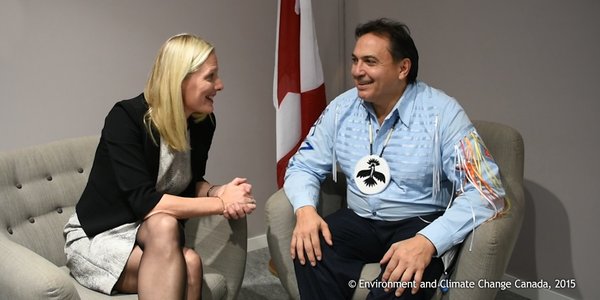
-
Article
Persons Case
The Persons Case (Edwards v. A.G. of Canada) was a constitutional ruling that established the right of women to be appointed to the Senate. The case was initiated by the Famous Five, a group of prominent women activists. In 1928, the Supreme Court of Canada ruled that women were not “persons” according to the British North America Act (now called the Constitution Act, 1867). Therefore, they were ineligible for appointment to the Senate. However, the Judicial Committee of the Privy Council reversed the Court’s decision on 18 October 1929. The Persons Case enabled women to work for change in both the House of Commons and the Senate. It also meant that women could no longer be denied rights based on a narrow interpretation of the law.
"https://d3d0lqu00lnqvz.cloudfront.net/media/media/65699b89-06c0-4518-aa06-4eea43f2ec74.jpg" // resources/views/front/categories/view.blade.php
https://d3d0lqu00lnqvz.cloudfront.net/media/media/65699b89-06c0-4518-aa06-4eea43f2ec74.jpg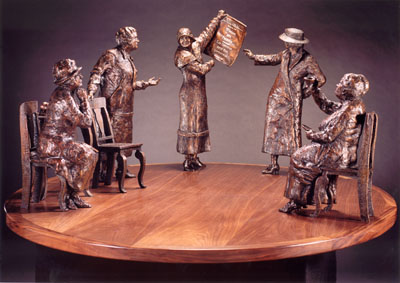
-
Article
Peter Jepson-Young
Peter William Jepson-Young, MD, AIDS activist, television diarist (born 8 June 1957 in New Westminster, British Columbia; died 15 November 1992 in Vancouver, British Columbia). Peter Jepson-Young was a medical doctor who presented the Dr. Peter Diaries, short weekly segments on CBC television that shared his experience with AIDS, in order to educate people about the disease and give hope to others. Diagnosed in 1986, he was regarded as one of the longest-surviving victims of the disease at the time of his death in 1992. Shortly before he died, he established the Dr. Peter AIDS Foundation, which later opened the Dr. Peter Centre, a residential care and day health centre for people living with HIV/AIDS.
"https://d3d0lqu00lnqvz.cloudfront.net/media/media/f322d310-d29f-40db-b237-862ed4ed99d6.jpg" // resources/views/front/categories/view.blade.php
https://d3d0lqu00lnqvz.cloudfront.net/media/media/f322d310-d29f-40db-b237-862ed4ed99d6.jpg
-
Article
Peter Vasilevich Verigin
Peter Vasilevich Verigin, Doukhobor leader (born 1859 in Slavianka, Russia; died October 1924 near Grand Forks, British Columbia). Exiled in Russia, Verigin immigrated to Canada in 1902. There, he became a powerful and controversial Doukhobor leader in Western Canada. Verigin died when the train in which he was travelling exploded, leading some to believe he was assassinated.
"https://d3d0lqu00lnqvz.cloudfront.net/PeterVeregin.jpg" // resources/views/front/categories/view.blade.php
https://d3d0lqu00lnqvz.cloudfront.net/PeterVeregin.jpg
-
Article
Tionontati (Petun)
Tionontati (also known as Petun) are an Iroquoian-speaking Indigenous people, closely related to the Huron-Wendat. The French called them Petun because they were known for cultivating tobacco or petún. The people call themselves Tionontati. After war with the Haudenosaunee in the mid-1600s, Tionontati and some other survivors, including the Attignawantan (a Huron-Wendat people) and the Wenrohronon (or Wenro), joined to become the Wendat, now known as the Wyandotte (or Wyandot) Nation. Today, the Wyandotte Nation is a federally recognized tribe of Oklahoma in the United States. There are also Wyandotte communities in Michigan (Wyandot of Anderdon Nation) and Kansas (Wyandot Nation of Kansas).
"https://d3d0lqu00lnqvz.cloudfront.net/petun1.jpg" // resources/views/front/categories/view.blade.php
https://d3d0lqu00lnqvz.cloudfront.net/petun1.jpg
-
Article
Phil Fontaine
Larry Phillip (Phil) Fontaine, OC, OM, National Chief of AFN, activist, advisor on Indigenous relations (born 20 September 1944 in Sagkeeng First Nation on the Fort Alexander Reserve, MB). Phil Fontaine served as National Chief of the Assembly of First Nations (AFN) for an unprecedented three terms. Under his leadership the AFN negotiated both the Kelowna Accord and the Indian Residential Schools Settlement Agreement. Fontaine has received many honours and awards, including the National Aboriginal Achievement Award, the Order of Canada, and numerous honorary doctorates. In 2017, he launched Recognition2Action, a campaign to legally recognize Indigenous peoples as Founding Nations of Canada.
"https://d3d0lqu00lnqvz.cloudfront.net/media/media/60649c93-5cc7-46e5-8577-1d5cbb6f68ce.jpg" // resources/views/front/categories/view.blade.php
https://d3d0lqu00lnqvz.cloudfront.net/media/media/60649c93-5cc7-46e5-8577-1d5cbb6f68ce.jpg
-
Article
Piapot
Piapot (also spelled Payipwat, meaning “One Who Knows the Secrets of the Sioux,” originally named Kisikawasan, meaning “Flash in the Sky”), Cree chief (born in 1816 on the southern prairies; died in 1908 on the Piapot Reserve, SK). During Piapot’s 92 years, he witnessed great changes on the Canadian prairies, including the disappearance of the bison and the settlement of non-Indigenous peoples on Indigenous lands. As chief, Piapot resisted assimilation and strove to uphold Cree customs and traditions.
"https://d3d0lqu00lnqvz.cloudfront.net/media/media/a066547-v8.jpg" // resources/views/front/categories/view.blade.php
https://d3d0lqu00lnqvz.cloudfront.net/media/media/a066547-v8.jpg
-
Article
Pierre Biard
Pierre Biard, Jesuit missionary (b at Grenoble, France 1567 or 1568; d at Avignon, France 17 Nov 1622). After long preparation for missionary work, Biard left for ACADIA in early 1611.
"https://thecanadianencyclopedia.ca/images/tce_placeholder.jpg?v=e9dca980c9bdb3aa11e832e7ea94f5d9" // resources/views/front/categories/view.blade.php
https://thecanadianencyclopedia.ca/images/tce_placeholder.jpg?v=e9dca980c9bdb3aa11e832e7ea94f5d9
-
Article
Pierre Cossette
Pierre Maurice Joseph Cossette, talent agent, producer, record label executive (born 15 December 1923 in Valleyfield, QC; died 11 September 2009 in Ormstown, QC). Pierre Cossette was an influential talent agent, manager, music mogul and producer for television and Broadway. He is best known for bringing the Grammy Awards to TV. He served as executive producer of the telecast from 1971 until his retirement in 2005. He also launched the Latin Grammy Awards broadcast and produced the Broadway hit The Will Rogers Follies. It won six Tony Awards, including Best Musical. Cossette has a star on both Canada’s Walk of Fame and the Hollywood Walk of Fame.
"https://d3d0lqu00lnqvz.cloudfront.net/Pierre_Cossette_star_on_Walk_of_Fame.jpg" // resources/views/front/categories/view.blade.php
https://d3d0lqu00lnqvz.cloudfront.net/Pierre_Cossette_star_on_Walk_of_Fame.jpg
-
Article
Pierre Maillard
Pierre Maillard, priest of the Séminaire des missions étrangères, missionary (b in the diocese of Chartres, France c 1710; d at Halifax 12 Aug 1762). Missionary to the MICMAC, Maillard was a brilliant linguist who perfected a system of written symbols for the Micmac language.
"https://thecanadianencyclopedia.ca/images/tce_placeholder.jpg?v=e9dca980c9bdb3aa11e832e7ea94f5d9" // resources/views/front/categories/view.blade.php
https://thecanadianencyclopedia.ca/images/tce_placeholder.jpg?v=e9dca980c9bdb3aa11e832e7ea94f5d9
-
Article
Pierre Perrault
Pierre Perrault, OQ, film director, poet, writer (born 29 June 1927 in Montréal, QC; died 23 June 1999 in Montréal). Pierre Perrault was one of Quebec’s most significant and celebrated artists. His collective work in radio, film, television and print explores the genesis and nature of French Canadian culture and identity. A pioneer of direct cinema, his elegiac 1963 documentary Pour la suite du monde, co-directed with Michel Brault, is a landmark in Canadian cinema. His writing received three Governor General’s Literary Awards: for poetry, theatre and non-fiction. An Officer of the Ordre national du Québec, Perrault received the Prix Ludger-Duvernay, Prix Albert-Tessier, Prix Victor-Barbeau, the Médaille des Arts et des Lettres from the Government of France, and the Médaille d’argent du Mouvement national des Québécois et Québécoises.
"https://d3d0lqu00lnqvz.cloudfront.net/media/media/54f7c577-9c15-47b1-878a-402d98c926b3.jpg" // resources/views/front/categories/view.blade.php
https://d3d0lqu00lnqvz.cloudfront.net/media/media/54f7c577-9c15-47b1-878a-402d98c926b3.jpg