
Browse "Communities & Sociology"
-
Article
Niska Archaeological Site
The Niska site (Borden No. DkNu-3) covers an area of 64 ha in southwestern Saskatchewan, east of the town of Ponteix.
"https://d3d0lqu00lnqvz.cloudfront.net/media/media/4643ad16-739c-485e-a87f-b6bbfb5dc881.jpg" // resources/views/front/categories/view.blade.php
https://d3d0lqu00lnqvz.cloudfront.net/media/media/4643ad16-739c-485e-a87f-b6bbfb5dc881.jpg
-
Article
Norman McLeod
Norman McLeod, Presbyterian minister (b at Point of Stoer, Scot 29 Sept 1780; d at Waipu, NZ 14 Mar 1866). McLeod, a teacher and lay preacher, moved to Pictou, Nova Scotia, in 1817.
"https://thecanadianencyclopedia.ca/images/tce_placeholder.jpg?v=e9dca980c9bdb3aa11e832e7ea94f5d9" // resources/views/front/categories/view.blade.php
https://thecanadianencyclopedia.ca/images/tce_placeholder.jpg?v=e9dca980c9bdb3aa11e832e7ea94f5d9
-
Article
North-West Resistance
The North-West Resistance (or North-West Rebellion) was a violent, five-month insurgency against the Canadian government, fought mainly by Métis and their First Nations allies in what is now Saskatchewan and Alberta. It was caused by rising fear and insecurity among the Métis and First Nations peoples as well as the white settlers of the rapidly changing West. A series of battles and other outbreaks of violence in 1885 left hundreds of people dead, but the resisters were eventually defeated by federal troops. The result was the permanent enforcement of Canadian law in the West, the subjugation of Plains Indigenous Peoples in Canada, and the conviction and hanging of Louis Riel.
"https://d3d0lqu00lnqvz.cloudfront.net/media/media/44b2bd9e-c62a-4a72-b6a8-029e1173ce70.jpg" // resources/views/front/categories/view.blade.php
https://d3d0lqu00lnqvz.cloudfront.net/media/media/44b2bd9e-c62a-4a72-b6a8-029e1173ce70.jpg
-
Article
North-West Schools Question
The North-West Schools Question was a conflict between church and state for control of education in the North-West Territories (now Saskatchewan and Alberta) in the late-19th century. The controversy was similar to other educational crises across Canada, and reflected the larger national debate about the future of Canada as a bilingual and bicultural country.
"https://d3d0lqu00lnqvz.cloudfront.net/media/media/6d628c6c-859f-462a-86bb-e96af37cefad.jpg" // resources/views/front/categories/view.blade.php
https://d3d0lqu00lnqvz.cloudfront.net/media/media/6d628c6c-859f-462a-86bb-e96af37cefad.jpg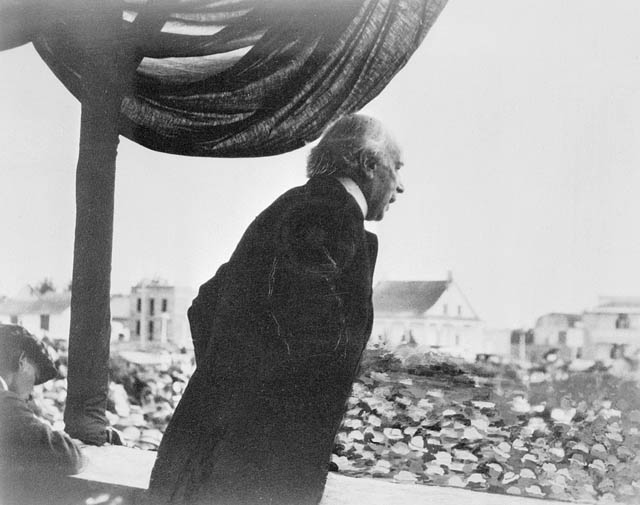
-
Article
Northern Youth Abroad
Northern Youth Abroad is a registered not-for-profit charity. Since 1998, it has provided education and travel opportunities for over 550 young people, aged 15 to 22, from every community in Nunavut and the Northwest Territories. The programs are designed to foster cross-cultural awareness and global citizenship, while building the self-confidence and self-esteem necessary to help develop life and career goals.
"https://d3d0lqu00lnqvz.cloudfront.net/NorthernYouthAbroad/14496009746_0e4e140273.jpg" // resources/views/front/categories/view.blade.php
https://d3d0lqu00lnqvz.cloudfront.net/NorthernYouthAbroad/14496009746_0e4e140273.jpg
-
Article
Norwegian Music in Canada
It is believed that the Norse (Vikings) visited North America around the year 1000. However, people from modern Norway, the western kingdom of the Scandinavian peninsula, immigrated to Canada from the USA during the 1890s and moved into the Prairies and particularly to British Columbia, whose coastline so closely resembled that of their homeland. In 1986 there were 243,675 people of Norwegian origin living in Canada (191,000 in British Columbia, Alberta, and Saskatchewan). Those born in Canada numbered 224,000, and of the 20,000 immigrants 2,000 arrived in the period 1977-86.
"https://thecanadianencyclopedia.ca/images/tce_placeholder.jpg?v=e9dca980c9bdb3aa11e832e7ea94f5d9" // resources/views/front/categories/view.blade.php
https://thecanadianencyclopedia.ca/images/tce_placeholder.jpg?v=e9dca980c9bdb3aa11e832e7ea94f5d9
-
List
Notable Indigenous Entrepreneurs in Canada
Indigenous economies thrived long before Europeans arrived in North America and, due to hard work and ingenuity, a growing number of Indigenous entrepreneurs are enjoying success today. Many are demonstrating a blending of traditional values and an Indigenous world view with financial success. The following are but a few of a long list of remarkable Indigenous entrepreneurs running thriving businesses in Canada. (See also Economic Conditions of Indigenous Peoples in Canada.)
"https://d3d0lqu00lnqvz.cloudfront.net/IndigenousEntrepeneurs/JeffWard.jpg" // resources/views/front/categories/view.blade.php
https://d3d0lqu00lnqvz.cloudfront.net/IndigenousEntrepeneurs/JeffWard.jpg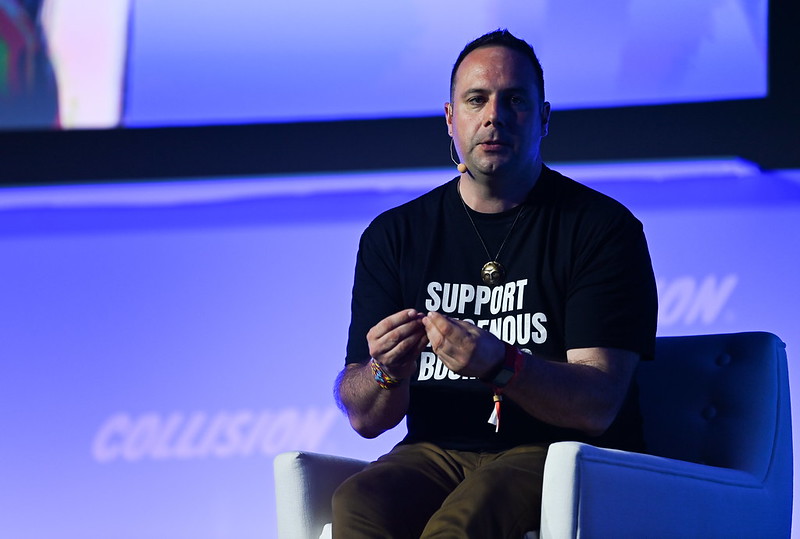
-
List
Notable Women Entrepreneurs in Canadian History
Women have had a long history of entrepreneurship in Canada and their involvement continues to grow. The entrepreneurs listed below are just a few examples of the many women who have made their mark on Canadian business history.
"https://d3d0lqu00lnqvz.cloudfront.net/beverlymascoll/beverlymascoll.jpg" // resources/views/front/categories/view.blade.php
https://d3d0lqu00lnqvz.cloudfront.net/beverlymascoll/beverlymascoll.jpg
-
Article
Numbered Treaties (Plain-Language Summary)
The Numbered Treaties are a series of 11 treaties. A treaty is an agreement between two or more nations. The Numbered Treaties were signed by the Canadian government and Indigenous people. All 11 treaties were signed between 1871 and 1921. The Numbered Treaties cover parts of British Columbia, Alberta, Saskatchewan, Manitoba, Ontario. They also cover portions of Yukon and the Northwest Territories. The treaties provided the Canadian government with land. The government wanted land for industrial development and white settlement. In exchange, the government promised Indigenous people special rights and benefits. These treaty terms are controversial and contested. The Numbered Treaties have ongoing legal, social, and economic impacts on Indigenous communities. (See also Treaties with Indigenous Peoples in Canada.) (This is a plain-language summary of the Numbered Treaties. If you are interested in reading about this topic in more depth, please see our full-length entry, Numbered Treaties.)
"https://d3d0lqu00lnqvz.cloudfront.net/media/media/4f1d71aa-8b25-417f-a88b-2a078f3b1768.jpg" // resources/views/front/categories/view.blade.php
https://d3d0lqu00lnqvz.cloudfront.net/media/media/4f1d71aa-8b25-417f-a88b-2a078f3b1768.jpg
-
Article
Nunatsiavut
Nunatsiavut (meaning “our beautiful land” in Inuktitut) is the homeland of the Labrador Inuit (Labradormiut). The territory covers 72,520km2 of land and 44,030km2 of sea in the northern part of the Labrador Peninsula. On 1 December 2005, the Labrador Inuit celebrated the creation of the Nunatsiavut Government, their own regional government within the province of Newfoundland and Labrador. The Labradormiut became the first Inuit in Canada to achieve self-government. Of the approximately 6,500 beneficiaries, about 2,500 live within the settlement area in five communities: Rigolet, Postville, Makkovik, Hopedale (the legislative capital) and Nain (the administrative capital).
"https://d3d0lqu00lnqvz.cloudfront.net/media/new_article_images/Nunatsiavut/Nunatsiavut_flag.png" // resources/views/front/categories/view.blade.php
https://d3d0lqu00lnqvz.cloudfront.net/media/new_article_images/Nunatsiavut/Nunatsiavut_flag.png
-
Article
Odawa
Odawa (or Ottawa) are an Algonquian-speaking people (see Indigenous Languages in Canada) living north of the Huron-Wendat at the time of French penetration to the Upper Great Lakes. A tradition of the Odawa, shared by the Ojibwa and Potawatomi, states that these three groups were once one people. The division of the Upper Great Lake Algonquians apparently took place at Michilimackinac, the meeting point of lakes Huron and Michigan. The Odawa, or "traders," remained near Michilimackinac, while the Potawatomi, "Those-who-make-or-keep-a-fire," moved south, up Lake Michigan. The Ojibwa (Ojibwe), or "To-roast-till-puckered-up," went northwest to Sault Ste Marie.
"https://d3d0lqu00lnqvz.cloudfront.net/media/media/7f43d674-3179-4006-afce-5521ddca5b0a.jpg" // resources/views/front/categories/view.blade.php
https://d3d0lqu00lnqvz.cloudfront.net/media/media/7f43d674-3179-4006-afce-5521ddca5b0a.jpg
-
Article
Official Languages Act (1988) (Plain-Language Summary)
The Official Languages Act of 1969 made English and French the two official languages in Canada. The Official Languages Act of 1988 offered more detail about how the policies of bilingualism should be put into practice. It highlighted the responsibilities of federal institutions with respect to official languages in Canada. An important goal of the Official Languages Act is to ensure the equality of English and French in federal institutions and in Canadian society. (This article is a plain-language summary of the Official Languages Act of 1988. If you are interested in reading about this topic in more depth, please see our full-length entry on The Official Languages Act (1988).)
"https://thecanadianencyclopedia.ca/images/tce_placeholder.jpg?v=e9dca980c9bdb3aa11e832e7ea94f5d9" // resources/views/front/categories/view.blade.php
https://thecanadianencyclopedia.ca/images/tce_placeholder.jpg?v=e9dca980c9bdb3aa11e832e7ea94f5d9
-
Article
Ojibwe
The Ojibwe (also Ojibwa and Ojibway) are an Indigenous people in Canada and the United States who are part of a larger cultural group known as the Anishinaabeg. Chippewa and Saulteaux people are also part of the Ojibwe and Anishinaabe ethnic groups. The Ojibwe are closely related to the Odawa and Algonquin peoples, and share many traditions with neighbouring Cree people, especially in the north and west of Ontario, and east of Manitoba. Some Cree and Ojibwe peoples have merged to form Oji-Cree communities. In their traditional homelands in the Eastern Woodlands, Ojibwe people became integral parts of the early fur trade economy. Ojibwe culture, language (Anishinaabemowin) and activism have persisted despite assimilative efforts by federal and provincial governments, and in many cases are representative of the enduring First Nations presence in Canada.
"https://d3d0lqu00lnqvz.cloudfront.net/media/Twitter_Cards/Autumn Peltier.png" // resources/views/front/categories/view.blade.php
https://d3d0lqu00lnqvz.cloudfront.net/media/Twitter_Cards/Autumn Peltier.png
-
Article
Kanesatake Resistance (Oka Crisis)
The Kanesatake Resistance, also known as the Oka Crisis or the Mohawk Resistance at Kanesatake, was a 78-day standoff (11 July–26 September 1990) between Kanyen'kehà:ka (Mohawk) protesters, Quebec police, the RCMP and the Canadian Army. It took place in the community of Kanesatake, near the Town of Oka, on the north shore of Montreal. Related protests and violence occurred in the Kahnawá:ke reserve, to the south of Montreal. The crisis was sparked by the proposed expansion of a golf course and the development of townhouses on disputed land in Kanesatake that included a Kanyen'kehà:ka burial ground. Tensions were high, particularly after the death of Corporal Marcel Lemay, a Sûreté du Québec police officer. Eventually, the army was called in and the protest ended. The golf course expansion was cancelled, and the land was purchased by the federal government. However, it did not establish the land as a reserve, and there has since been no organized transfer of the land to the Mohawks of Kanesatake. This article is a full-length entry about the Kanesatake Resistance (Oka Crisis). For a plain-language summary, please see Kanesatake Resistance (Oka Crisis) (Plain-Language Summary).
"https://d3d0lqu00lnqvz.cloudfront.net/media/new_article_images/OkaCrisis/1990_C_35_7 (003).jpg" // resources/views/front/categories/view.blade.php
https://d3d0lqu00lnqvz.cloudfront.net/media/new_article_images/OkaCrisis/1990_C_35_7 (003).jpg.jpg)
-
Article
Old Believers
Old Believers, also known as Old Ritualists, are descendants of conservative members of the Russian Orthodox Church who refused to accept a reform imposed in the mid-17th century by the patriarch Nikon.
"https://thecanadianencyclopedia.ca/images/tce_placeholder.jpg?v=e9dca980c9bdb3aa11e832e7ea94f5d9" // resources/views/front/categories/view.blade.php
https://thecanadianencyclopedia.ca/images/tce_placeholder.jpg?v=e9dca980c9bdb3aa11e832e7ea94f5d9