
Browse "Communities & Sociology"
-
Article
Myra A. Freeman
Myra Freeman's lifelong commitment to community service, particularly youth-related issues, is also reflected in her choice of profession.
"https://d3d0lqu00lnqvz.cloudfront.net/media/media/09db4ec0-339e-4931-8f53-eba21fcde8dc.jpg" // resources/views/front/categories/view.blade.php
https://d3d0lqu00lnqvz.cloudfront.net/media/media/09db4ec0-339e-4931-8f53-eba21fcde8dc.jpg
-
Article
Nadine Caron
Nadine Rena Caron, OBC, surgeon, researcher, mentor, educator, patient advocate, community leader (born 1970 in Kamloops, BC). Nadine Caron was the first female First Nations student to graduate from the University of British Columbia Faculty of Medicine. She was also the first female First Nations general surgeon in Canada. For many years, Caron has highlighted the needs and voices of northern, rural and Indigenous populations in Canada.
"https://d3d0lqu00lnqvz.cloudfront.net/!feature-img-thumbnails/Nadine-Caron-tweet.jpg" // resources/views/front/categories/view.blade.php
https://d3d0lqu00lnqvz.cloudfront.net/!feature-img-thumbnails/Nadine-Caron-tweet.jpg
-
"https://thecanadianencyclopedia.ca/images/tce_placeholder.jpg?v=e9dca980c9bdb3aa11e832e7ea94f5d9" // resources/views/front/categories/view.blade.php
https://thecanadianencyclopedia.ca/images/tce_placeholder.jpg?v=e9dca980c9bdb3aa11e832e7ea94f5d9
-
Article
Nanabozo
Nanabozo (Nanabozho or Nanabush) is a culture hero, creator and trickster of various Indigenous oral histories. He is known by a variety of names and appears prominently in many origin tales. In the modern era, Nanabozo, like other Indigenous culture heroes, has proved useful to Indigenous peoples seeking a return to traditional approaches to learning and storytelling.
"https://d3d0lqu00lnqvz.cloudfront.net/media/media/34d90334-e424-48cd-9c67-c1fb31876de7.jpg" // resources/views/front/categories/view.blade.php
https://d3d0lqu00lnqvz.cloudfront.net/media/media/34d90334-e424-48cd-9c67-c1fb31876de7.jpg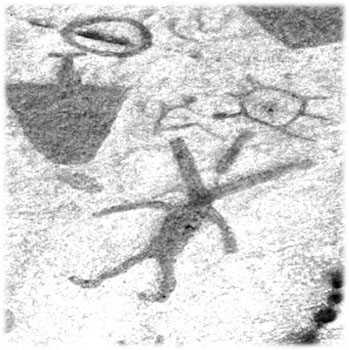
-
Article
Nancy Greene Raine
Nancy Catherine “Tiger” Greene Raine, OC, OBC, alpine skier (born 11 May 1943 in Ottawa, ON). Olympic gold medallist Nancy Greene was named Canada’s best female athlete of the 20th century by the Canadian Press. A two-time World Cup alpine skiing champion, Greene competed in slalom, giant slalom and downhill. Her fierce and aggressive style earned her the nickname “Tiger.” Her 13 World Cup victories are the most ever by a Canadian. Greene received the Lou Marsh Trophy (now the Northern Star Award) as Canada’s athlete of the year in 1967 and 1968. She retired from skiing at the age of 24 and later became a member of the Senate of Canada (2009–18). She has been inducted into Canada’s Sports Hall of Fame, the British Columbia Sports Hall of Fame and Museum, the Canadian Ski Hall of Fame, the US Ski and Snowboarding Hall of Fame and Canada’s Walk of Fame.
"https://d3d0lqu00lnqvz.cloudfront.net/media/new_article_images/NancyGreene/Annie_Famose,_Nancy_Greene,_Fernande_Bochatay_1968.jpg" // resources/views/front/categories/view.blade.php
https://d3d0lqu00lnqvz.cloudfront.net/media/new_article_images/NancyGreene/Annie_Famose,_Nancy_Greene,_Fernande_Bochatay_1968.jpg
-
Article
Nathanael Burwash
Nathanael Burwash, Methodist minister, university chancellor (b at St Andrew's, Qué 25 July 1839; d at Toronto 30 Mar 1918). Theologically moderate, he trained a generation of Methodist ministers and undergraduates to pursue enlightened research in theology and the humanities.
"https://thecanadianencyclopedia.ca/images/tce_placeholder.jpg?v=e9dca980c9bdb3aa11e832e7ea94f5d9" // resources/views/front/categories/view.blade.php
https://thecanadianencyclopedia.ca/images/tce_placeholder.jpg?v=e9dca980c9bdb3aa11e832e7ea94f5d9
-
Article
National Indigenous Peoples Day
Celebrated in Canada every 21 June, National Indigenous Peoples Day is an official day of celebration to recognize and honour the heritage, cultures and valuable contributions to society by First Nations, Inuit and Métis peoples. National Indigenous Peoples Day is the same day as the summer solstice (the longest day of the year) and was chosen for its important symbolism to many Indigenous peoples (see Religion and Spirituality of Indigenous Peoples in Canada.) This day has been celebrated as a statutory territorial holiday in the Northwest Territories since 2001 and in the Yukon since 2017.
"https://d3d0lqu00lnqvz.cloudfront.net/media/media/877d8ab1-84a9-4ecd-8703-50661feef4e9.jpg" // resources/views/front/categories/view.blade.php
https://d3d0lqu00lnqvz.cloudfront.net/media/media/877d8ab1-84a9-4ecd-8703-50661feef4e9.jpg
-
Article
Francophone Nationalism in Québec
Francophone nationalism in Québec or Québec nationalism is the result of the evolution of French-Canadian nationalism.
"https://d3d0lqu00lnqvz.cloudfront.net/media/media/69946f3c-6a50-4516-a665-8c412faf420d.jpg" // resources/views/front/categories/view.blade.php
https://d3d0lqu00lnqvz.cloudfront.net/media/media/69946f3c-6a50-4516-a665-8c412faf420d.jpg
-
Article
Social Conditions of Indigenous Peoples in Canada
Social conditions, including health, income, education, employment and community, contribute to the well-being of all people. Among the Indigenous population in Canada (i.e., First Nations, Métis and Inuit peoples), social conditions have been impacted by the dispossession of cultural traditions, social inequities, prejudice and discrimination. Social conditions also vary greatly according to factors such as place of residence, income level, and family and cultural factors. While progress with respect to social conditions is being achieved, gaps between the social and economic conditions of Indigenous people and non-Indigenous people in Canada persist.
"https://d3d0lqu00lnqvz.cloudfront.net/media/media/1c9e6b76-0f75-4626-bf76-5325340c66dd.jpg" // resources/views/front/categories/view.blade.php
https://d3d0lqu00lnqvz.cloudfront.net/media/media/1c9e6b76-0f75-4626-bf76-5325340c66dd.jpg
-
Article
Indigenous Women's Issues in Canada
First Nations, Métis and Inuit women (collectively referred to as Indigenous women) face many socio-economic issues today because of the effects of colonization. Europeans forced a male-controlled system of government and society (known as patriarchy) on Indigenous societies. The 1876 Indian Act disadvantaged certain Indigenous women by excluding them from band council government and enforcing discriminatory measures that took away Indian Status rights. Many Indigenous women today are leading the way in the area of healing the wounds of colonization, as they grapple with the issues of residential schools, missing and murdered Indigenous women and girls, abuse and violence, and drug, alcohol and other addictions. (See also Indigenous Feminisms in Canada.)
"https://d3d0lqu00lnqvz.cloudfront.net/media/media/64c38e30-7fd2-4acc-a41a-0b4d9d991bd2.jpg" // resources/views/front/categories/view.blade.php
https://d3d0lqu00lnqvz.cloudfront.net/media/media/64c38e30-7fd2-4acc-a41a-0b4d9d991bd2.jpg
-
Article
Netsilingmiut
Until the latter half of the 20th century, the Netsilingmiut were nomadic hunters who lived in small shifting family groups with simple nonhierarchical social organization. They had no formal government and no institutionalized group relationships.
"https://d3d0lqu00lnqvz.cloudfront.net/media/media/f293ab63-54d2-4847-9688-ea19de3a10e7.jpg" // resources/views/front/categories/view.blade.php
https://d3d0lqu00lnqvz.cloudfront.net/media/media/f293ab63-54d2-4847-9688-ea19de3a10e7.jpg
-
Article
The Neutral Confederacy
The Neutral Confederacy was a political and cultural union of Iroquoian nations who lived in the Hamilton-Niagara district of southwestern Ontario and across the Niagara River to western New York before their dispersal by the Seneca in the mid-17th century. Some surviving Neutral migrated west and south, where they were absorbed by various Haudenosaunee (Iroquois) communities. As a result of this dispersal, information about pre-contact Neutral history comes mainly from Jesuit records and archaeological excavations.
"https://d3d0lqu00lnqvz.cloudfront.net/media/media/377f6033-1f74-466b-a742-684e889a069a.jpg" // resources/views/front/categories/view.blade.php
https://d3d0lqu00lnqvz.cloudfront.net/media/media/377f6033-1f74-466b-a742-684e889a069a.jpg
-
Article
Nine Hour Movement
The Nine Hour Movement was an international phenomenon, taking place in Canada between January and June 1872. The movement’s goal was to standardize shorter working days. Though this particular mandate was unsuccessful, the movement did have an impact, including setting the foundation for the Canadian Labor Union.
"https://d3d0lqu00lnqvz.cloudfront.net/media/media/74917b1f-8a36-49c3-99fd-4cf328a0bfa3.jpg" // resources/views/front/categories/view.blade.php
https://d3d0lqu00lnqvz.cloudfront.net/media/media/74917b1f-8a36-49c3-99fd-4cf328a0bfa3.jpg
-
Article
Nisga'a
The Nisga’a are the original occupants of the Nass River Valley of Northwestern British Columbia. As of 2021, 1,794 Nisga’a continue to live on traditional lands in this area. In the 2021 Census, 4,890 people identified as Nisga’a. Granted self-government in a landmark case in 2000, the Nisga’a Lisims Government now governs the Nisga’a nation.
"https://d3d0lqu00lnqvz.cloudfront.net/media/media/6c6fbfac-3c49-4d28-afd9-afbac5a5d336.jpg" // resources/views/front/categories/view.blade.php
https://d3d0lqu00lnqvz.cloudfront.net/media/media/6c6fbfac-3c49-4d28-afd9-afbac5a5d336.jpg
-
Macleans
Nisga'a Land Treaty
This article was originally published in Maclean’s magazine on July 27, 1998. Partner content is not updated. A mere 111 years after a group of northwestern B.C. natives first asked Ottawa and Victoria for a treaty confirming their title to hundreds of square kilometres of the remote and lovely Nass River valley, their descendants may finally be on the verge of satisfaction.
"https://thecanadianencyclopedia.ca/images/tce_placeholder.jpg?v=e9dca980c9bdb3aa11e832e7ea94f5d9" // resources/views/front/categories/view.blade.php
https://thecanadianencyclopedia.ca/images/tce_placeholder.jpg?v=e9dca980c9bdb3aa11e832e7ea94f5d9