Browse "Communities & Sociology"
-
Article
Millennials in Canada
The millennial generation (also known as Generation Y) refers to a cohort of people born roughly between 1980 and 1996, though some have a more restrictive definition (see Population of Canada). Most millennials are children of members of the baby boom generation, a term which refers to those born immediately following the end of the Second World War. Millennials are often compared to and defined by the ways in which they are both a product of, and a challenge to, their parents’s generational traits.
"https://d3d0lqu00lnqvz.cloudfront.net/media/new_article_images/MillennialsinCanada/Avocado_Toast_Millennials.jpg" // resources/views/front/categories/view.blade.php
https://d3d0lqu00lnqvz.cloudfront.net/media/new_article_images/MillennialsinCanada/Avocado_Toast_Millennials.jpg
-
Article
Kanyen'kehà:ka (Mohawk)
Kanyen'kehà:ka or Kanien'kehá:ka (“People of the Chert”), commonly known as Mohawk by non-Kanyen'kehà:ka, are Indigenous peoples in North America. They are the easternmost member of the Haudenosaunee Confederacy, also referred to as the Iroquois or Six Nations Confederacy. In the early years of the 17th century, they resided on the banks of the Mohawk River in what is now upstate New York. They became intensely involved in the fur trade and in the colonial conflicts of the next two centuries. Many had moved to the St. Lawrence River before 1700 and following the American Revolution, the remainder moved to Canada to reside in territories controlled by their ally, Great Britain. Here, the Kanyen'kehà:ka have garnered a reputation of militancy in maintaining their language and culture, and for defending their rights.
"https://d3d0lqu00lnqvz.cloudfront.net/media/media/6c0023ab-b0fd-42d7-84e8-3ee0b717d091.jpg" // resources/views/front/categories/view.blade.php
https://d3d0lqu00lnqvz.cloudfront.net/media/media/6c0023ab-b0fd-42d7-84e8-3ee0b717d091.jpg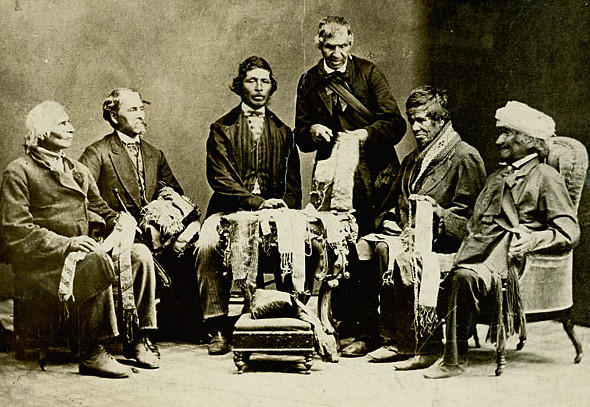
-
Article
Mohawk of the St Lawrence Valley
From the late 1660's onwards, several hundred Haudenosaunee (Iroquois) mainly from the Mohawk nation settled in the region of Montréal. Most converted to Catholicism or underwent the process of doing so.
"https://thecanadianencyclopedia.ca/images/tce_placeholder.jpg?v=e9dca980c9bdb3aa11e832e7ea94f5d9" // resources/views/front/categories/view.blade.php
https://thecanadianencyclopedia.ca/images/tce_placeholder.jpg?v=e9dca980c9bdb3aa11e832e7ea94f5d9
-
Article
Montagnards
Montagnards. Name adopted by various Montreal and Quebec City choral societies in the wake of a tour across Quebec (August 1856) by the Montagnards basques, a French company directed by Alfred Rolland.
"https://thecanadianencyclopedia.ca/images/tce_placeholder.jpg?v=e9dca980c9bdb3aa11e832e7ea94f5d9" // resources/views/front/categories/view.blade.php
https://thecanadianencyclopedia.ca/images/tce_placeholder.jpg?v=e9dca980c9bdb3aa11e832e7ea94f5d9
-
Article
Lucy Maud Montgomery
Lucy Maud Montgomery, OBE, writer (born 30 November 1874 in Clifton (now New London), PEI; died 24 April 1942 in Toronto, ON). Lucy Maud Montgomery is arguably Canada’s most widely read author. Her first novel, Anne of Green Gables (1908), became an instant best-seller. It has remained in print for more than a century, making the character of Anne Shirley a mythic icon of Canadian culture. Montgomery produced more than 500 short stories, 21 novels, two poetry collections, and numerous journal and essay anthologies. Her body of work has sold an estimated 50 million copies worldwide. Anne of Green Gables alone has been translated into at least 36 languages as well as braille. It has been adapted dozens of times in various mediums. Montgomery was named an Officer of both the Order of the British Empire and the Literary and Artistic Institute of France. She was the first Canadian woman to be made a member of the British Royal Society of Arts and she was declared a Person of National Historic Significance in Canada.
"https://d3d0lqu00lnqvz.cloudfront.net/media/media/86aefeb1-bbe3-4e30-809b-c5680d4f1933.jpg" // resources/views/front/categories/view.blade.php
https://d3d0lqu00lnqvz.cloudfront.net/media/media/86aefeb1-bbe3-4e30-809b-c5680d4f1933.jpg
-
Article
Moravian Missions in Labrador
In 1771, Moravian missionaries were the first Europeans to settle in Labrador. Over a 133-year period, they established a series of eight missions along the coast which became the focus of religious, social and economic activities for the Inuit who gradually came to settle near the communities. Moravians had a huge impact on the life and culture of Labrador Inuit. What emerged was a unique culture rooted in Inuit traditions with indigenized European practices. The last Moravian missionary left Labrador in 2005, but the Moravian church, its customs and traditions are still very much alive in Labrador.
"https://d3d0lqu00lnqvz.cloudfront.net/media/new_article_images/MoravianMissionsinCanada/Eine-Schulergrupper-in-Nain-Resized.jpg" // resources/views/front/categories/view.blade.php
https://d3d0lqu00lnqvz.cloudfront.net/media/new_article_images/MoravianMissionsinCanada/Eine-Schulergrupper-in-Nain-Resized.jpg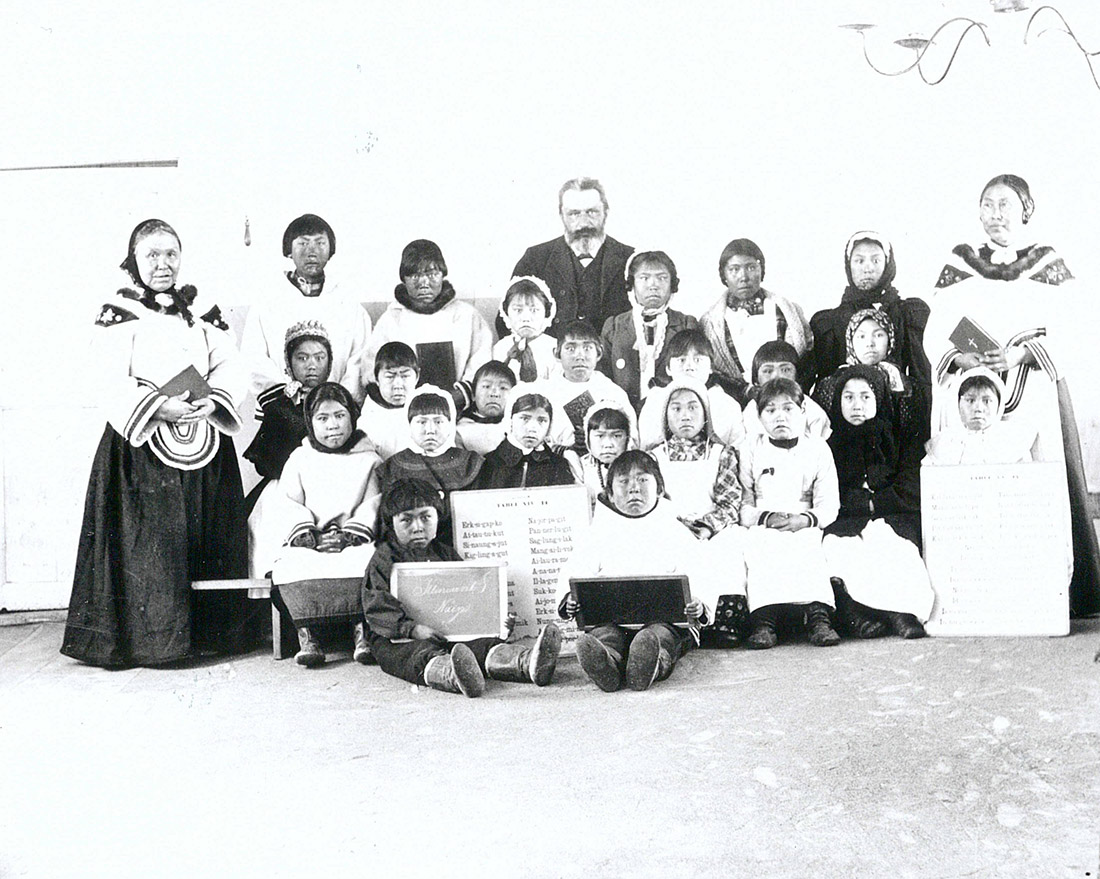
-
Article
Moravian Canadians
Moravians, as commonly used in the English-speaking world, refers to members of the Moravian Church formally known as the Unitas Fratrum (United Brethren).
"https://thecanadianencyclopedia.ca/images/tce_placeholder.jpg?v=e9dca980c9bdb3aa11e832e7ea94f5d9" // resources/views/front/categories/view.blade.php
https://thecanadianencyclopedia.ca/images/tce_placeholder.jpg?v=e9dca980c9bdb3aa11e832e7ea94f5d9
-
Article
Moses Coady
Moses Michael Coady, "M.M.," priest, teacher (b at North East Margaree, NS 3 Jan 1882; d at Antigonish, NS 28 July 1959).
"https://thecanadianencyclopedia.ca/images/tce_placeholder.jpg?v=e9dca980c9bdb3aa11e832e7ea94f5d9" // resources/views/front/categories/view.blade.php
https://thecanadianencyclopedia.ca/images/tce_placeholder.jpg?v=e9dca980c9bdb3aa11e832e7ea94f5d9
-
Article
Moses Harvey
Moses Harvey, clergyman, essayist, naturalist (b at Armagh, Ire 21 Mar 1820; d at St John's 3 Sept 1901). He was of Scottish descent and was ordained a Presbyterian minister in 1844. After serving in Maryport, Eng, he immigrated to Newfoundland in 1852.
"https://thecanadianencyclopedia.ca/images/tce_placeholder.jpg?v=e9dca980c9bdb3aa11e832e7ea94f5d9" // resources/views/front/categories/view.blade.php
https://thecanadianencyclopedia.ca/images/tce_placeholder.jpg?v=e9dca980c9bdb3aa11e832e7ea94f5d9
-
Article
Mother Marie-Rose
Marie-Rose, Mother, name in religion of Eulalie Durocher, educator (b at St-Antoine-sur-Richelieu, LC 6 Oct 1811; d at Longueuil, Canada E 6 Oct 1849). As housekeeper to a brother at the Beloeil presbytery 1831-43, she became
"https://d3d0lqu00lnqvz.cloudfront.net/media/media/85dd1a0a-25d9-4013-b91b-e44ef1d11d06.jpg" // resources/views/front/categories/view.blade.php
https://d3d0lqu00lnqvz.cloudfront.net/media/media/85dd1a0a-25d9-4013-b91b-e44ef1d11d06.jpg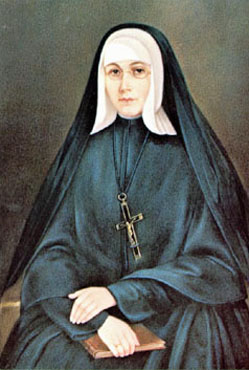
-
Macleans
Mother Teresa
She had defied death so often that when it finally came, even some of her closest followers at first hoped it was yet another false alarm.This article was originally published in Maclean's Magazine on September 15, 1997
"https://thecanadianencyclopedia.ca/images/tce_placeholder.jpg?v=e9dca980c9bdb3aa11e832e7ea94f5d9" // resources/views/front/categories/view.blade.php
https://thecanadianencyclopedia.ca/images/tce_placeholder.jpg?v=e9dca980c9bdb3aa11e832e7ea94f5d9
-
Macleans
Mother Teresa Debate
Briefly, their paths crossed in the CBC's fourth-floor Toronto waiting room for guests on Newsworld's Pamela Wallin Live. Tension bristled in the air.This article was originally published in Maclean's Magazine on December 25, 1995
"https://thecanadianencyclopedia.ca/images/tce_placeholder.jpg?v=e9dca980c9bdb3aa11e832e7ea94f5d9" // resources/views/front/categories/view.blade.php
https://thecanadianencyclopedia.ca/images/tce_placeholder.jpg?v=e9dca980c9bdb3aa11e832e7ea94f5d9
-
Memory Project Archive
Agnes Elizabeth Ward (Primary Source)
Agnes Elizabeth Ward served in the Royal Canadian Air Force during the Second World War. Please be advised that Memory Project primary sources may deal with personal testimony that reflect the speaker’s recollections and interpretations of events. Individual testimony does not necessarily reflect the views of the Memory Project and Historica Canada.
"https://d3d0lqu00lnqvz.cloudfront.net/The-Memory-Project/image/2583_original.jpg" // resources/views/front/categories/view.blade.php
https://d3d0lqu00lnqvz.cloudfront.net/The-Memory-Project/image/2583_original.jpg
-
Memory Project Archive
Albert Joseph Thomas (Primary Source)
"Gosh, I wonder if it could be possible? So I asked her a question and she says, yes. Well, I said, you’re looking at him. And she started crying. I’m pretty proud about what I did." Albert Joseph Thomas served in the army during the Second World War. See below for Mr. Thomas' entire testimony. Please be advised that Memory Project primary sources may deal with personal testimony that reflect the speaker’s recollections and interpretations of events. Individual testimony does not necessarily reflect the views of the Memory Project and Historica Canada.
"https://d3d0lqu00lnqvz.cloudfront.net/MemoryProject/AlbertJosephThomas/1513_original.jpg" // resources/views/front/categories/view.blade.php
https://d3d0lqu00lnqvz.cloudfront.net/MemoryProject/AlbertJosephThomas/1513_original.jpg
-
Memory Project Archive
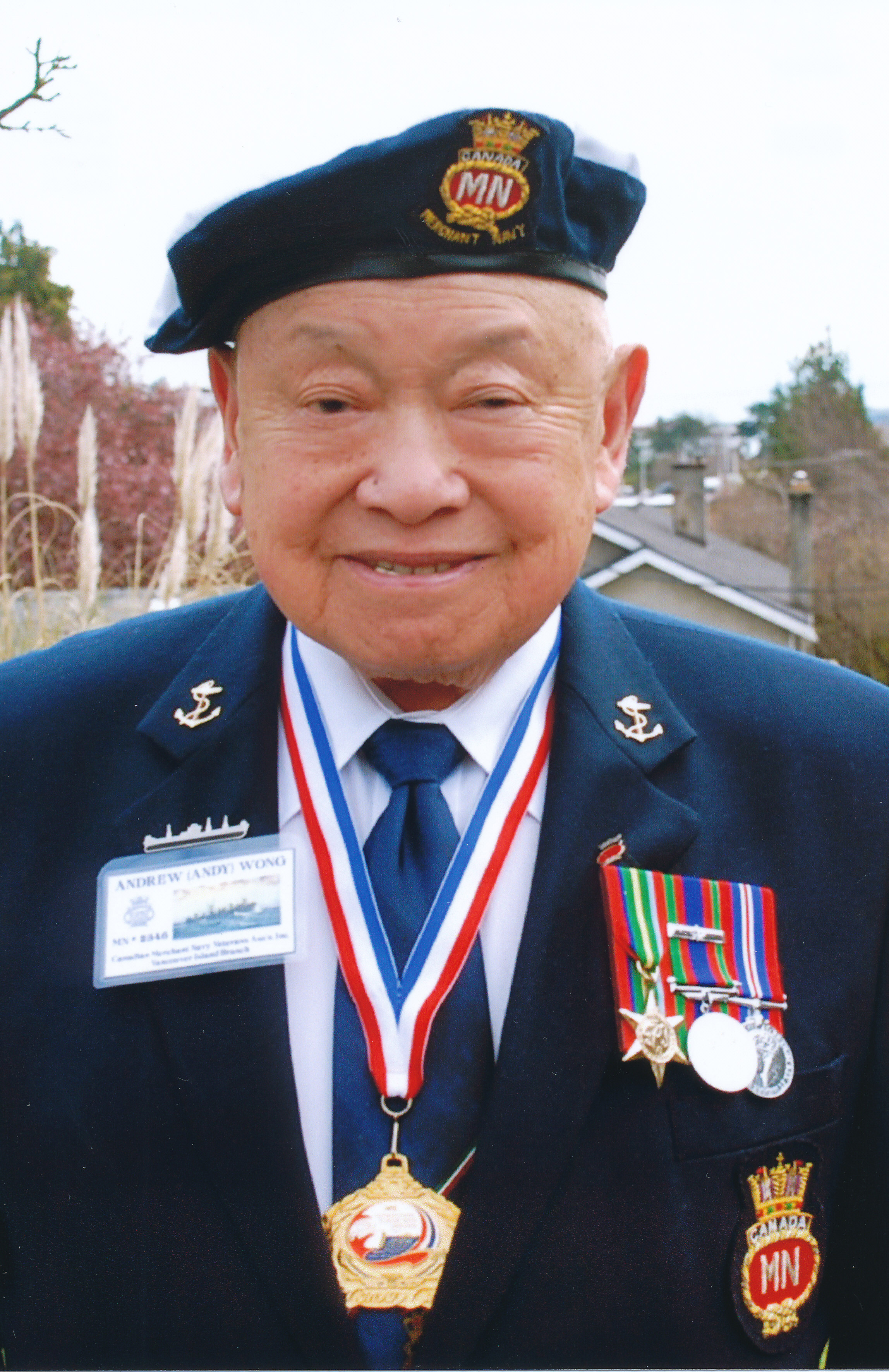
Andrew Kurn “Andy” Wong (Primary Source)
"So he said, “Geez, I noticed you’re a Canadian.” I said, “Yes.” He said, “How do you like the American ships?” I said, “Gee, they’re like castles compared to the Canadian.”" Andrew Kurn “Andy” Wong served with the Merchant Navy during the Second World War. See below for Mr. Wong's entire testimony. Please be advised that Memory Project primary sources may deal with personal testimony that reflect the speaker’s recollections and interpretations of events. Individual testimony does not necessarily reflect the views of the Memory Project and Historica Canada.
"https://d3d0lqu00lnqvz.cloudfront.net/MemoryProject/AndrewKurnAndyWong/2893_original.jpg" // resources/views/front/categories/view.blade.php
https://d3d0lqu00lnqvz.cloudfront.net/MemoryProject/AndrewKurnAndyWong/2893_original.jpg