
Browse "Communities & Sociology"
-
Article
McIvor Case
The McIvor v. Canada case was about gender discrimination in section 6 of the 1985 Indian Act, which deals with Indian status. Sharon McIvor — a woman who regained status rights after the passing of Bill C-31 in 1985 — was not able to pass on those rights to her descendants in the same way that a man with status could. In her case against the federal government, the British Columbia Supreme Court ruled in 2007 that section 6 did, in fact, deny McIvor’s equality rights under the Canadian Charter of Rights and Freedoms. In response to this case, the federal government introduced new legislation (Bill C-3) in 2011 to counter gender discrimination in the Indian Act.
"https://d3d0lqu00lnqvz.cloudfront.net/McIvorCase/McIvor.jpg" // resources/views/front/categories/view.blade.php
https://d3d0lqu00lnqvz.cloudfront.net/McIvorCase/McIvor.jpg
-
Article
Measha Brueggergosman
Measha Brueggergosman (née Gosman), soprano, (born 28 June 1977 in Fredericton, NB).
"https://d3d0lqu00lnqvz.cloudfront.net/media/media/325feed9-e800-4ad2-bb56-fd829d0db712.jpg" // resources/views/front/categories/view.blade.php
https://d3d0lqu00lnqvz.cloudfront.net/media/media/325feed9-e800-4ad2-bb56-fd829d0db712.jpg
-
Article
Mennonites
The first Mennonites in Canada arrived in the late 18th century, settling initially in Southern Ontario. Today, almost 200,000 Mennonites call Canada home. More than half live in cities, mainly in Winnipeg.
"https://d3d0lqu00lnqvz.cloudfront.net/media/media/ad187d7a-1c31-469a-99a0-e4bd136ac3ea.jpg" // resources/views/front/categories/view.blade.php
https://d3d0lqu00lnqvz.cloudfront.net/media/media/ad187d7a-1c31-469a-99a0-e4bd136ac3ea.jpg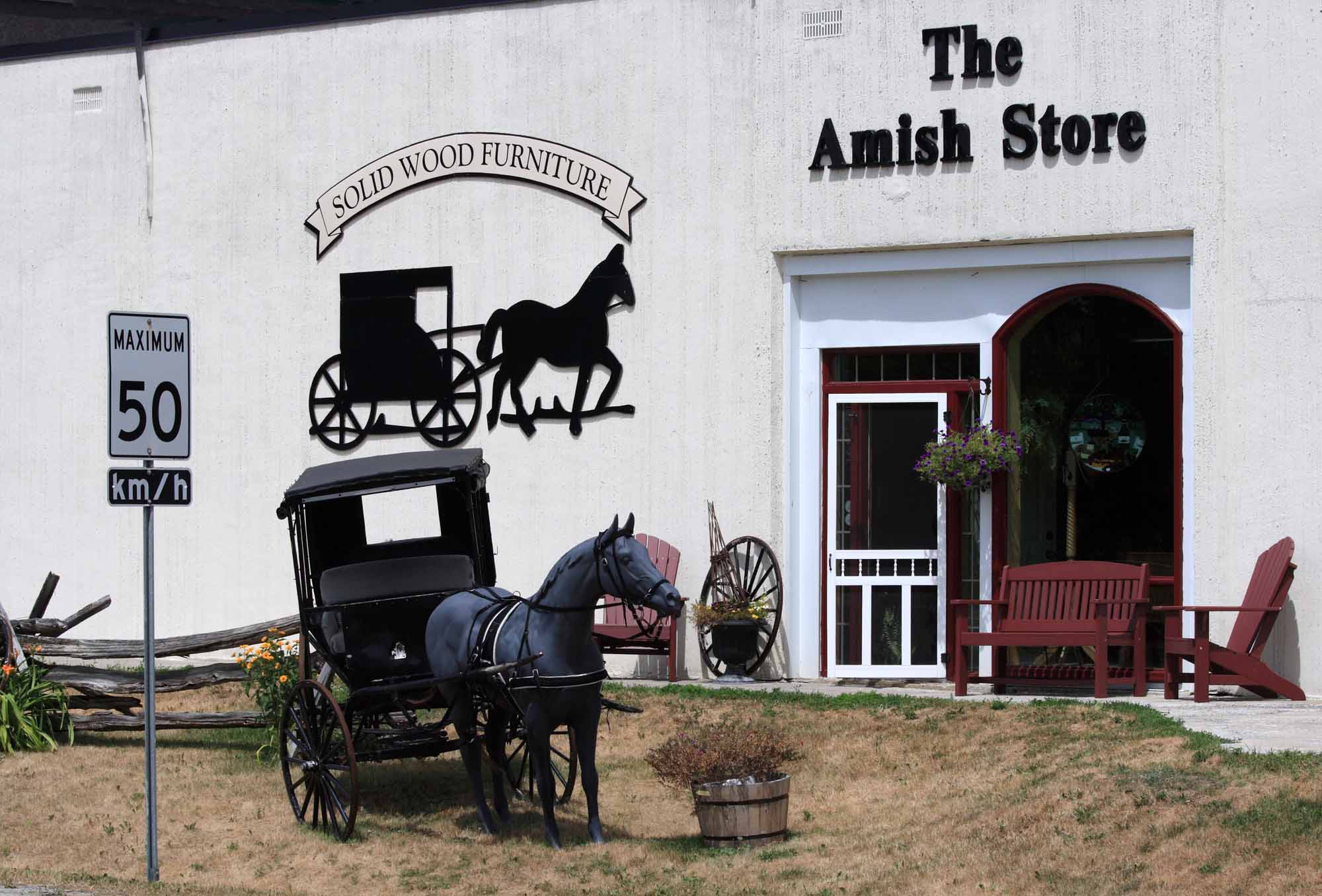
-
Article
Métis
Métis are people of mixed European and Indigenous ancestry, and one of the three recognized Aboriginal peoples in Canada. The use of the term Métis is complex and contentious, and has different historical and contemporary meanings. The term is used to describe communities of mixed European and Indigenous descent across Canada, and a specific community of people — defined as the Métis Nation — which originated largely in Western Canada and emerged as a political force in the 19th century, radiating outwards from the Red River Settlement (see Métis Are a People, Not a Historical Process and The “Other” Métis). While the Canadian government politically marginalized the Métis after 1885, they have since been recognized as an Aboriginal people with rights enshrined in the Constitution of Canada and more clearly defined in a series of Supreme Court of Canada decisions.This article is a full-length entry about the Métis. For a plain-language summary, please see Métis (Plain-Language Summary).
"https://d3d0lqu00lnqvz.cloudfront.net/media/media/254ae37e-4c7d-44d9-8b00-073d5d80a1b2.jpg" // resources/views/front/categories/view.blade.php
https://d3d0lqu00lnqvz.cloudfront.net/media/media/254ae37e-4c7d-44d9-8b00-073d5d80a1b2.jpg
-
Editorial
Métis Are a People, Not a Historical Process
In the interest of promoting a better understanding of the complex issue of Métis identity and how it is defined, The Canadian Encyclopedia has commissioned two opinion pieces exploring different perspectives on the topic. This article explores Métis identity from the perspective of Métis with ancestral ties to the Red River Settlement. For another perspective on Métis identity, see The "Other" Métis.
"https://d3d0lqu00lnqvz.cloudfront.net/media/media/cbb299c8-c0b7-460c-add9-2e245342dc9b.jpg" // resources/views/front/categories/view.blade.php
https://d3d0lqu00lnqvz.cloudfront.net/media/media/cbb299c8-c0b7-460c-add9-2e245342dc9b.jpg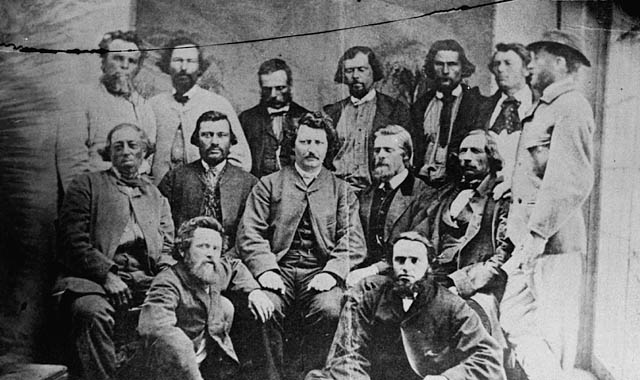
-
Article
Métis Experiences at Residential School
Although the first residential schools in Canada were established with the intention of assimilating First Nations children into Euro-Canadian culture, Métis and Inuit children were also institutionalized in such facilities. Métis children experienced similar day-to-day conditions to those of other students in residential schools, but they were often considered “outsiders” by their peers and administrators. This perception affected their experiences within these institutions in particular ways.
"https://d3d0lqu00lnqvz.cloudfront.net/MetisExperiences/Webp.net-resizeimage.jpg" // resources/views/front/categories/view.blade.php
https://d3d0lqu00lnqvz.cloudfront.net/MetisExperiences/Webp.net-resizeimage.jpg
-
Article
Métis Road Allowance Communities
Road allowance communities were home to Métis families throughout the late 1800s until the mid- to late 1900s. Métis peoples used the road allowances as new home communities after experiencing relocations, migrations and dispossession from their homelands. After resistance and violence in a period during and after the Riel Resistance of 1869–1870 and the North–West Resistance in 1885, Métis were marginalized and labelled as rebellious or troublesome by the government of Canada and the provinces.
"https://d3d0lqu00lnqvz.cloudfront.net/media/media/RoosterTownFamily.jpg" // resources/views/front/categories/view.blade.php
https://d3d0lqu00lnqvz.cloudfront.net/media/media/RoosterTownFamily.jpg
-
Article
Métis Scrip in Canada
Scrip is any document used in place of legal tender, for example a certificate or voucher, where the bearer is entitled to certain rights. In 1870, the Canadian government devised a system of scrip — referred to as Métis scrip — that issued documents redeemable for land or money. Scrip was given to Métis people living in the West in exchange for their land rights. The scrip process was legally complex and disorganized; this made it difficult for Métis people to acquire land, yet simultaneously created room for fraud. In March 2013, the Supreme Court of Canada ruled that the federal government failed to provide the Métis with the land grant they were promised in the Manitoba Act of 1870. Negotiations between various levels of government and the Métis Nation concerning the reclamation of land rights continue.
"https://d3d0lqu00lnqvz.cloudfront.net/media/media/00019b96-4c2b-4fb8-9d1b-58ccf46ec3ae.jpg" // resources/views/front/categories/view.blade.php
https://d3d0lqu00lnqvz.cloudfront.net/media/media/00019b96-4c2b-4fb8-9d1b-58ccf46ec3ae.jpg
-
Article
History of Métis Settlements in Canada
Métis communities are found in many provinces and territories in Canada; however, the only legislated Métis land base is in Alberta. Eight Métis settlements are located across the northern and central-eastern part of the province: Paddle Prairie, Peavine, Gift Lake, East Prairie, Buffalo Lake, Kikino, Elizabeth and Fishing Lake. As of 2021, the settlements cover 1.25 million acres of land and are home to approximately 4,238 people. That year, 3,540 people reported that they were registered members of Métis Settlements in Alberta. The Métis Settlements are self-governing and provide for the protection of Métis culture and identity.
"https://d3d0lqu00lnqvz.cloudfront.net/MetisSettlementsFlag/Metis_Settlements_Flag.gif" // resources/views/front/categories/view.blade.php
https://d3d0lqu00lnqvz.cloudfront.net/MetisSettlementsFlag/Metis_Settlements_Flag.gif
-
Article
Michael Anthony Fleming
Fleming, Michael Anthony, Roman Catholic bishop of Newfoundland (b at Carrick-on-Suir, Ire 1792?; d at St John's 14 July 1850). A Franciscan priest, Fleming came to St John's in 1823.
"https://thecanadianencyclopedia.ca/images/tce_placeholder.jpg?v=e9dca980c9bdb3aa11e832e7ea94f5d9" // resources/views/front/categories/view.blade.php
https://thecanadianencyclopedia.ca/images/tce_placeholder.jpg?v=e9dca980c9bdb3aa11e832e7ea94f5d9
-
Article
Michael Francis Fallon
Michael Francis Fallon, Roman Catholic bishop (b at Kingston, Canada W 17 May 1867; d at London, Ont 22 Feb 1931).
"https://thecanadianencyclopedia.ca/images/tce_placeholder.jpg?v=e9dca980c9bdb3aa11e832e7ea94f5d9" // resources/views/front/categories/view.blade.php
https://thecanadianencyclopedia.ca/images/tce_placeholder.jpg?v=e9dca980c9bdb3aa11e832e7ea94f5d9
-
Macleans
Michael Ondaatje Interview
This article was originally published in Maclean’s magazine on September 9, 2002. Partner content is not updated. Canadian author Michael Ondaatje is an avid film buff. And as he watched his novel The English Patient being adapted for the screen, he became fascinated with the mind of the movie's Oscar-winning editor.
"https://thecanadianencyclopedia.ca/images/tce_placeholder.jpg?v=e9dca980c9bdb3aa11e832e7ea94f5d9" // resources/views/front/categories/view.blade.php
https://thecanadianencyclopedia.ca/images/tce_placeholder.jpg?v=e9dca980c9bdb3aa11e832e7ea94f5d9
-
Macleans
Michael Sabia (Profile)
In her day, the late Laura Sabia was never shy about poking establishment noses. Tart and outspoken, the founding president of the National Action Committee on the Status of Women in 1972 was a champion upender of the status quo.This article was originally published in Maclean's Magazine on June 3, 2002
"https://thecanadianencyclopedia.ca/images/tce_placeholder.jpg?v=e9dca980c9bdb3aa11e832e7ea94f5d9" // resources/views/front/categories/view.blade.php
https://thecanadianencyclopedia.ca/images/tce_placeholder.jpg?v=e9dca980c9bdb3aa11e832e7ea94f5d9
-
Article
Midewiwin
Midewiwin, or Grand Medicine Society, is a spiritual society found historically among the Algonquian of the Upper Great Lakes (Anishinaabe), northern prairies and eastern subarctic. Once widespread, the Midewiwin became less prevalent after the arrival of Europeans in the 18th and 19th centuries. Today, the largest Midewiwin societies are found in parts of Ontario, Manitoba, Wisconsin and Minnesota.
"https://d3d0lqu00lnqvz.cloudfront.net/midewiwin.jpg" // resources/views/front/categories/view.blade.php
https://d3d0lqu00lnqvz.cloudfront.net/midewiwin.jpg
-
Article
Mifflin Gibbs
Mifflin Wistar Gibbs, politician, judge, diplomat, banker, entrepreneur (born 17 April 1823 in Philadelphia, PA; died 11 July 1915, in Little Rock, AR). Gibbs was a notable figure in both American and Canadian history. In just over a decade in colonial British Columbia, he prospered in business, advocated for the Black community, served as an elected official and helped guide British Columbia into Confederation. Gibbs was the first Black person elected to public office in what is now British Columbia.
"https://d3d0lqu00lnqvz.cloudfront.net/media/new_article_images/Mifflin-Gibbs.jpg" // resources/views/front/categories/view.blade.php
https://d3d0lqu00lnqvz.cloudfront.net/media/new_article_images/Mifflin-Gibbs.jpg