
Browse "Communities & Sociology"
-
Article
Jamaican Maroons in Nova Scotia
The ancestors of the Maroons of Jamaica were enslaved Africans who had been brought there by the Spanish in the 16th and 17th centuries, and later by the British (who captured Jamaica from Spain in 1655), to work its lucrative sugar plantations. The word maroon was widely used to describe a runaway, and maroonage to denote the act and action of escaping enslavement, whether temporarily or permanently. After a series of wars with the colonial government in Jamaica, one group of Maroons was deported to Nova Scotia in 1796. While Maroon communities existed in Nova Scotia for only four years before they were sent to Sierra Leone, their legacy in Canada endures.
"https://d3d0lqu00lnqvz.cloudfront.net/media/media/ec55dd45-84f0-4ca8-a613-cadef5f53496.jpg" // resources/views/front/categories/view.blade.php
https://d3d0lqu00lnqvz.cloudfront.net/media/media/ec55dd45-84f0-4ca8-a613-cadef5f53496.jpg
-
Article
Marshall Case
The Marshall case is a landmark ruling in Indigenous treaty rights in Canada. The case centres on Donald Marshall Jr., a Mi’kmaq man from Membertou, Nova Scotia. In August 1993, Marshall caught and sold 210 kg of eel with an illegal net and without a licence during closed-season times. He was arrested after being charged under the federal Fisheries Act and the Maritime Provinces Fishery Regulations. In Marshall’s court case, R. v. Marshall, he was found guilty on all three charges in provincial court (1996) and appeals court (1997). The Supreme Court of Canada reversed Marshall’s convictions in September 1999. The Supreme Court recognized the hunting and fishing rights promised in the Peace and Friendship Treaties. These treaties were signed between the British and the Mi’kmaq, Wolastoqiyik and Peskotomuhkati in 1760–61.
"https://d3d0lqu00lnqvz.cloudfront.net/media/media/0696b0d3-e259-4e89-8895-f6296d7ab589.JPG" // resources/views/front/categories/view.blade.php
https://d3d0lqu00lnqvz.cloudfront.net/media/media/0696b0d3-e259-4e89-8895-f6296d7ab589.JPG
-
Article
Mary Ann Shadd
Mary Ann Camberton Shadd Cary, educator, publisher, lawyer, abolitionist (born 9 October 1823 in Wilmington, Delaware; died 5 June 1893 in Washington, D.C.). Mary Ann Shadd became the first Black woman in North America to publish and edit a newspaper, The Provincial Freeman. As one of the first Black newspaperwomen in North America, Shadd promoted the abolition of slavery and the emigration of African Americans to Canada (see Black Canadians; Black Enslavement in Canada; Slavery Abolition Act, 1833). She also advocated on behalf of women’s rights (see Women’s Movements in Canada).
"https://d3d0lqu00lnqvz.cloudfront.net/maryannshadd/maryannshaddcanadapost.jpg" // resources/views/front/categories/view.blade.php
https://d3d0lqu00lnqvz.cloudfront.net/maryannshadd/maryannshaddcanadapost.jpg
-
Article
Mary Barrow
Mary Barrow (née Robb), French horn player (born 28 September 1918 in Aberdeen, Scotland; died 22 June 2017 in Calgary, AB).
"https://thecanadianencyclopedia.ca/images/tce_placeholder.jpg?v=e9dca980c9bdb3aa11e832e7ea94f5d9" // resources/views/front/categories/view.blade.php
https://thecanadianencyclopedia.ca/images/tce_placeholder.jpg?v=e9dca980c9bdb3aa11e832e7ea94f5d9
-
Article
Mary Greyeyes Reid
Mary Greyeyes Reid, Cree veteran of the Second World War (born 14 November 1920 on the Muskeg Lake Cree Nation reserve, Marcelin, SK; died 31 March 2011 in Vancouver, BC). The first Indigenous woman to join Canada’s armed forces, Mary became a member of the Canadian Women’s Army Corps during the Second World War. The military tried to boost Indigenous recruitment and demonstrate Canada’s military might by posing her in a staged photo that has since been widely circulated in Canada.
"https://d3d0lqu00lnqvz.cloudfront.net/media/media/cead97f2-01e5-4959-9560-c91596bfe398.jpg" // resources/views/front/categories/view.blade.php
https://d3d0lqu00lnqvz.cloudfront.net/media/media/cead97f2-01e5-4959-9560-c91596bfe398.jpg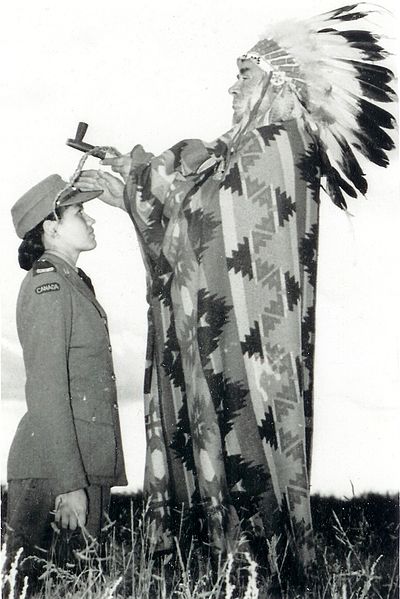
-
Article
Mary John Batten
Mary John Batten (née Fodchuk), lawyer, politician, justice and chief justice of the Saskatchewan Court of Queen’s Bench (born 30 August 1921 in Sifton, MB; died 9 October 2015). Mary John Batten was the first Ukrainian Canadian woman elected to a Canadian legislature. She served as an MLA in Saskatchewan from 1956 until 1964. That year, she became the first woman to be appointed as a federal judge in Saskatchewan, and only the second in Canada. In 1983, she became Saskatchewan’s first female chief justice. She also chaired a Saskatchewan royal commission. She retired from the bench in 1989.
"https://d3d0lqu00lnqvz.cloudfront.net/DCI-images/Mary-John-Batten-final.jpg" // resources/views/front/categories/view.blade.php
https://d3d0lqu00lnqvz.cloudfront.net/DCI-images/Mary-John-Batten-final.jpg
-
Article
Mary Spencer
Mary Spencer, boxer, model, humanitarian (born 12 December 1984 in Wiarton, ON). Mary Spencer is one of Canada's premier boxing champions, holding eight national titles, five Pan-American titles, and three world titles. An Ojibwe of the Cape Croker First Nation, Spencer is involved in Motivate Canada’s GEN7 Aboriginal role model initiative, and in 2013 became a mentor with the CIBC Team Next program.
"https://d3d0lqu00lnqvz.cloudfront.net/Everguard_Fight_Gloves.jpg" // resources/views/front/categories/view.blade.php
https://d3d0lqu00lnqvz.cloudfront.net/Everguard_Fight_Gloves.jpg
-
Article
Masumi Mitsui
Masumi Mitsui, MM, farmer, soldier, Canadian Legion official (born 7 October 1887 in Tokyo, Japan; died 22 April 1987 in Hamilton, ON). Masumi Mitsui immigrated to Canada in 1908 and served with distinction in the First World War. In 1931, he and his comrades persuaded the BC government to grant Japanese Canadian veterans the right to vote, a breakthrough for Japanese and other disenfranchised Canadians. Nevertheless, Matsui and more than 22,000 Japanese Canadians were displaced, detained and dispossessed by the federal government during the Second World War (see Internment of Japanese Canadians).
"https://d3d0lqu00lnqvz.cloudfront.net/media/new_article_images/MasumiMitsui/2010-23-2-4-551.jpg" // resources/views/front/categories/view.blade.php
https://d3d0lqu00lnqvz.cloudfront.net/media/new_article_images/MasumiMitsui/2010-23-2-4-551.jpg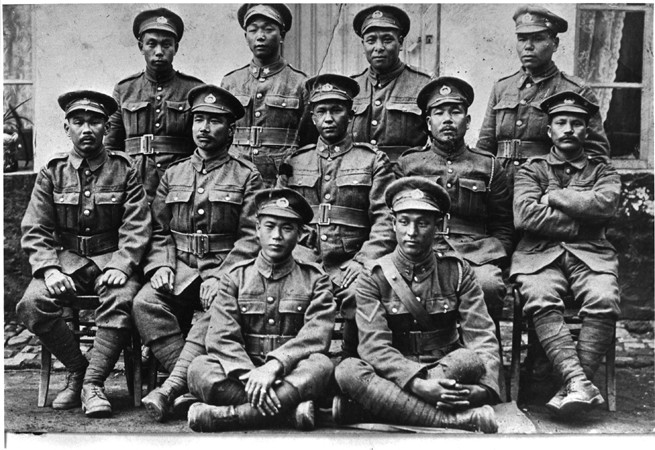
-
Article
Mathieu Da Costa
Mathieu Da Costa (depending on the language of the documents that mention his name, also known as “Mateus Da Costa,” “Mathieu de Coste,” “Matheus de Cost” and “een Swart genamd Matheu”), interpreter (dates and places of birth and death unknown). Da Costa is one of the most fascinating and elusive figures in the early history of Canada. Historians consider him the first Black person known to have visited Canada, probably in the company of Pierre Dugua de Mons and Samuel de Champlain). (See also Black Canadians; African Canadians.) But many aspects of his life remain unclear or unknown.
"https://d3d0lqu00lnqvz.cloudfront.net/media/media/122b2db3-8b90-411b-97f2-6c1c1390feef.jpg" // resources/views/front/categories/view.blade.php
https://d3d0lqu00lnqvz.cloudfront.net/media/media/122b2db3-8b90-411b-97f2-6c1c1390feef.jpg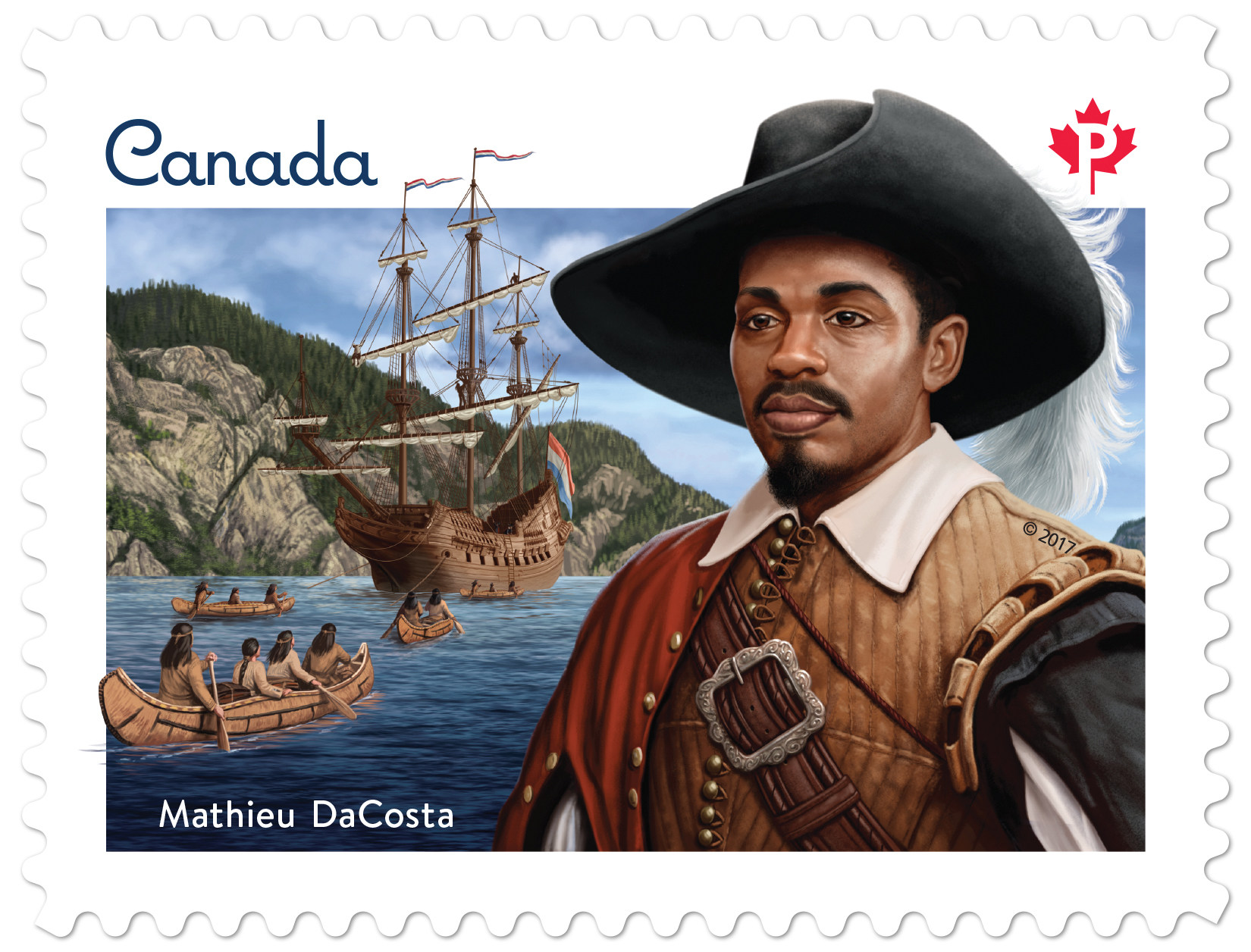
-
Article
Matthew Coon Come
Matthew Coon Come, OC, Grand Chief of the Grand Council of the Crees (1987–99, 2009–17), National Chief of AFN (2000–03); activist, environmentalist (born in 1956 near Mistissini, Quebec). Matthew Coon Come was Grand Chief of the Grand Council of the Crees for 20 years and served one term as National Chief of the Assembly of First Nations. He achieved national and international fame through his successful opposition to the James Bay hydroelectric project in the 1990s, his assertion of Cree self-determination, and his advocacy for Indigenous self-determination across the world.
"https://d3d0lqu00lnqvz.cloudfront.net/media/media/917e6241-f79f-4590-a68b-802eb71e1c5f.jpg" // resources/views/front/categories/view.blade.php
https://d3d0lqu00lnqvz.cloudfront.net/media/media/917e6241-f79f-4590-a68b-802eb71e1c5f.jpg
-
Article
Maude Abbott
Maude Elizabeth Seymour Abbott, cardiac pathologist, physician, curator (born 18 March 1868 in St. Andrews East, QC; died 2 September 1940 in Montreal, QC). Maude Abbott is known as the author of The Atlas of Congenital Cardiac Disease (1936), a groundbreaking text in cardiac research. Though Abbott graduated in arts from McGill University (1890), she was barred from studying medicine at McGill because of her gender. Instead, she attended Bishop’s College (now Bishop’s University), earning a medical degree in 1894. As assistant curator of the McGill Medical Museum (1898), and curator (1901), she revolutionized the teaching of pathology by using the museum as an instructional tool. Abbott’s work paved the way for women in medicine and laid the foundation for modern heart surgery. (See also Women in STEM).
"https://d3d0lqu00lnqvz.cloudfront.net/media/maude-abbott/Dr. Maude Abbott, Montreal, QC, 1904.jpg" // resources/views/front/categories/view.blade.php
https://d3d0lqu00lnqvz.cloudfront.net/media/maude-abbott/Dr. Maude Abbott, Montreal, QC, 1904.jpg
-
Article
Maurice Pollack Foundation
Maurice Pollack Foundation. Established in 1955 by Maurice Pollack (merchant, philanthropist, b Kanele, Kiev, 28 Jan 1885, d Quebec City 16 Dec 1968). After arriving in Canada in 1902, Pollack settled in Quebec City, where he opened a department store and became prosperous.
"https://thecanadianencyclopedia.ca/images/tce_placeholder.jpg?v=e9dca980c9bdb3aa11e832e7ea94f5d9" // resources/views/front/categories/view.blade.php
https://thecanadianencyclopedia.ca/images/tce_placeholder.jpg?v=e9dca980c9bdb3aa11e832e7ea94f5d9
-
Article
Maxime Fortin
Maxime Fortin, parish priest, editor, Catholic union organizer (b at St-Aubert, Qué 17 Mar 1881; d at St-Jean-Port-Joli, Qué 4 Aug 1957).
"https://thecanadianencyclopedia.ca/images/tce_placeholder.jpg?v=e9dca980c9bdb3aa11e832e7ea94f5d9" // resources/views/front/categories/view.blade.php
https://thecanadianencyclopedia.ca/images/tce_placeholder.jpg?v=e9dca980c9bdb3aa11e832e7ea94f5d9
-
Article
Mayo Singh
Mayan Singh Manhas (Mayo Singh), lumber baron, founder of the Mayo Lumber Company, founder of the town of Paldi, franchise advocate, philanthropist (born 1888 in Paldi, District Hoshiarpur, East Punjab, India; died 23 February 1955 in Paldi, BC). As a founder of the Mayo Lumber Company, Singh became a wealthy lumber baron (see Lumber and Wood Industries). He challenged race-based immigration policies and disenfranchisement. Singh supported hospitals, schools and community projects in his adopted country and his birthplace in India. Paldi, the town he established on Vancouver Island and its gurdwara (temple), remains a cultural and spiritual touchstone for the South Asian community.
"https://d3d0lqu00lnqvz.cloudfront.net/MayoSingh/MayoSinghPortrait.jpg" // resources/views/front/categories/view.blade.php
https://d3d0lqu00lnqvz.cloudfront.net/MayoSingh/MayoSinghPortrait.jpg
-
Article
Pauline Emily McGibbon
Pauline Emily McGibbon, née Mills (born at Sarnia, Ont 20 Oct 1910, died at Toronto 14 Dec 2001).
"https://thecanadianencyclopedia.ca/images/tce_placeholder.jpg?v=e9dca980c9bdb3aa11e832e7ea94f5d9" // resources/views/front/categories/view.blade.php
https://thecanadianencyclopedia.ca/images/tce_placeholder.jpg?v=e9dca980c9bdb3aa11e832e7ea94f5d9