
Browse "Communities & Sociology"
-
Article
Klee Wyck
Klee Wyck (1941) is a memoir by Emily Carr, consisting of a collection of literary sketches. It is an evocative work that describes in vivid detail the influence that the Indigenous people and culture of the Northwest Coast had on Carr. Klee Wyck (“Laughing One”) is the name the Nuu-chah-nulth (Nootka) people gave her. The book won a Governor General’s Literary Award for nonfiction in 1941 and has been translated into French.
"https://d3d0lqu00lnqvz.cloudfront.net/media/media/a470b336-21e0-40c4-a8a8-4118d56bb838.jpg" // resources/views/front/categories/view.blade.php
https://d3d0lqu00lnqvz.cloudfront.net/media/media/a470b336-21e0-40c4-a8a8-4118d56bb838.jpg
-
Article
Kondiaronk
Kondiaronk, Tionontati chief (born circa 1649; died 2 August 1701 in Montreal, QC). He has been known by several names throughout history, including Gaspar Soiaga, Souoias, Sastaretsi, and Le Rat (the Rat). Kondiaronk was one of the main brokers of the Great Peace of Montreal, signed in 1701. This peace agreement between the French and Haudenosaunee brought to an end almost a century of hostilities marked by atrocities on both sides. (See also Indigenous-French Relations in Canada.)
"https://d3d0lqu00lnqvz.cloudfront.net/Kondiaronk/KondiaronkStamp.jpg" // resources/views/front/categories/view.blade.php
https://d3d0lqu00lnqvz.cloudfront.net/Kondiaronk/KondiaronkStamp.jpg
-
Article
Ktunaxa (Kootenay)
The Ktunaxa (Kootenay) are an Indigenous people who traditionally occupied territories in southeastern British Columbia, as well as in parts of Alberta, Idaho, Montana and Washington. The term “Kootenay” may be an anglicized form of an old Ktunaxa word. In the 2016 census, 935 people identified as having Ktunaxa ancestry.
"https://d3d0lqu00lnqvz.cloudfront.net/media/media/c6ee12de-e628-4471-b4e7-db4c40e30884.jpg" // resources/views/front/categories/view.blade.php
https://d3d0lqu00lnqvz.cloudfront.net/media/media/c6ee12de-e628-4471-b4e7-db4c40e30884.jpg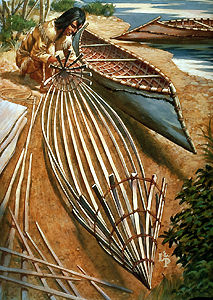
-
Article
Korean Music in Canada
In the 1986 Census of Canada, 29,705 listed Korean as their single or multiple ethnic origin. Half of these lived in the Metropolitan Toronto area.
"https://thecanadianencyclopedia.ca/images/tce_placeholder.jpg?v=e9dca980c9bdb3aa11e832e7ea94f5d9" // resources/views/front/categories/view.blade.php
https://thecanadianencyclopedia.ca/images/tce_placeholder.jpg?v=e9dca980c9bdb3aa11e832e7ea94f5d9
-
Article
Korean Music and Dance
The first significant wave of immigration to Canada from Korea began in the late 1960s and the early 1970s.
"https://thecanadianencyclopedia.ca/images/tce_placeholder.jpg?v=e9dca980c9bdb3aa11e832e7ea94f5d9" // resources/views/front/categories/view.blade.php
https://thecanadianencyclopedia.ca/images/tce_placeholder.jpg?v=e9dca980c9bdb3aa11e832e7ea94f5d9
-
Article
Korean Canadians
Korea was a single, independent country for 1,300 years before splitting in two after the Second World War. North Korea is today an isolated military dictatorship while South Korea is a liberal democracy. Almost all Korean immigration to Canada has been from South Korea. In 2016, the census recorded 198,210 Canadians of Korean origin (177,925 single and 20,290 multiple responses.)
"https://d3d0lqu00lnqvz.cloudfront.net/media/new_article_images/KoreanCanadians/Koreatown_Toronto.jpg" // resources/views/front/categories/view.blade.php
https://d3d0lqu00lnqvz.cloudfront.net/media/new_article_images/KoreanCanadians/Koreatown_Toronto.jpg
-
Article
Ksan
Ksan (or ‘Ksan) is a historical village, museum and campground, owned and operated by the Gitanmaax Band. It is located at the junction of the Skeena and Bulkley rivers in Hazelton, British Columbia. Ksan was established in 1970 as way to promote and preserve Gitxsan culture and history.
"https://d3d0lqu00lnqvz.cloudfront.net/media/media/2fd73ae3-5ed7-4894-b6ae-caa2ac25e639.jpg" // resources/views/front/categories/view.blade.php
https://d3d0lqu00lnqvz.cloudfront.net/media/media/2fd73ae3-5ed7-4894-b6ae-caa2ac25e639.jpg
-
Article
L' Action nationale
L'Action nationale was founded in 1933 by economist Esdras Minville as the voice of the Ligue d'Action nationale. It is the oldest journal of intellectual opinion writing in Quebec.
"https://d3d0lqu00lnqvz.cloudfront.net/media/media/6e559a82-fa39-4e67-8505-cd188e83d9d0.jpg" // resources/views/front/categories/view.blade.php
https://d3d0lqu00lnqvz.cloudfront.net/media/media/6e559a82-fa39-4e67-8505-cd188e83d9d0.jpg
-
Article
La Corriveau
La Corriveau, popular designation of Marie-Josephte Corriveau (born 14 May 1733 in St-Vallier, Québec; died 18 April 1763 in Québec City).
"https://d3d0lqu00lnqvz.cloudfront.net/media/media/26fa727b-86dc-4df5-a5e5-9263f2a2d2b6.jpg" // resources/views/front/categories/view.blade.php
https://d3d0lqu00lnqvz.cloudfront.net/media/media/26fa727b-86dc-4df5-a5e5-9263f2a2d2b6.jpg
-
Article
La Dernière heure et la première
La Dernière Heure et la première (1970) is a theoretical essay by Pierre Vadeboncoeur arguing that the French Canadian people have paradoxically been excluded from history in their successful pursuit of "la survivance"
"https://thecanadianencyclopedia.ca/images/tce_placeholder.jpg?v=e9dca980c9bdb3aa11e832e7ea94f5d9" // resources/views/front/categories/view.blade.php
https://thecanadianencyclopedia.ca/images/tce_placeholder.jpg?v=e9dca980c9bdb3aa11e832e7ea94f5d9
-
Article
Louis Laberge
Louis Laberge, aircraft mechanic, labour leader (born at Ste-Martine, Qué 18 Feb 1924, died at L'Assomption, 19 Jul 2002). At age 22, after working 2 years for Canadair, Laberge became shop steward of his union.
"https://thecanadianencyclopedia.ca/images/tce_placeholder.jpg?v=e9dca980c9bdb3aa11e832e7ea94f5d9" // resources/views/front/categories/view.blade.php
https://thecanadianencyclopedia.ca/images/tce_placeholder.jpg?v=e9dca980c9bdb3aa11e832e7ea94f5d9
-
Article
Labrador Archaic
The distinctive tools and weapons of the Labrador Archaic people included narrow spear or dart points with a stemmed base for hafting, flaked stone knives and, in some cases, small scrapers for preparing hides.
"https://thecanadianencyclopedia.ca/images/tce_placeholder.jpg?v=e9dca980c9bdb3aa11e832e7ea94f5d9" // resources/views/front/categories/view.blade.php
https://thecanadianencyclopedia.ca/images/tce_placeholder.jpg?v=e9dca980c9bdb3aa11e832e7ea94f5d9
-
Article
Labrador Inuit (Labradormiut)
Labrador Inuit (Labradormiut) are descendants of the Early Inuit (Thule) people and have historically occupied most of the Atlantic coast of Northern Labrador. In 2005, the Labrador Inuit celebrated the enactment of the first Nunatsiavut Government, a self-governing Inuit regional government, the product of three decades of land claims negotiations with the federal government.
"https://d3d0lqu00lnqvz.cloudfront.net/media/media/8cfbeb31-b9b9-4783-a639-4cee826bec5b.jpg" // resources/views/front/categories/view.blade.php
https://d3d0lqu00lnqvz.cloudfront.net/media/media/8cfbeb31-b9b9-4783-a639-4cee826bec5b.jpg
-
Article
Indigenous Land Claims in Canada
Land claims seek to address wrongs made against Indigenous peoples, their rights and lands, by the federal and provincial or territorial governments. There are different types of land claims. Comprehensive claims (also known as modern treaties) deal with Indigenous rights, while specific claims concern the government’s outstanding obligations under historic treaties or the Indian Act. There are many ongoing comprehensive and specific claims negotiations in Canada.
"https://d3d0lqu00lnqvz.cloudfront.net/media/media/174cee51-4aca-4a67-ac60-f72697d35862.jpg" // resources/views/front/categories/view.blade.php
https://d3d0lqu00lnqvz.cloudfront.net/media/media/174cee51-4aca-4a67-ac60-f72697d35862.jpg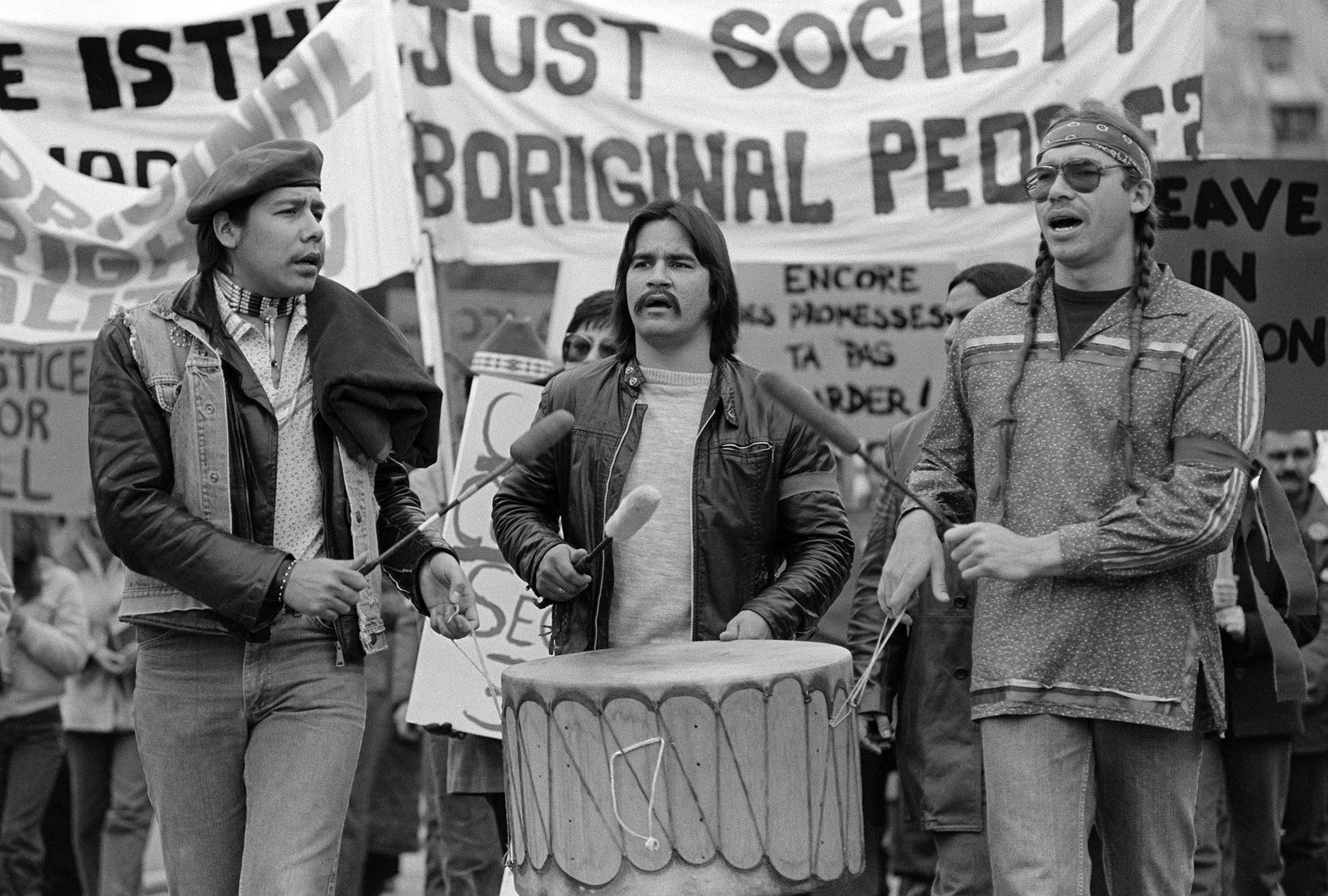
-
Article
Laotian Canadians
The immigration of Laotian nationals to Canada is relatively recent, having begun in earnest in the late 1970s. After the withdrawal of American troops from Vietnam in March 1973, mainland Southeast Asia (former Indochina) was left at the mercy of revolutionary forces in the region. In 1975, at the end of a 20-year-long civil war, communist revolutionaries of the Pathet Lao (Lao State) movement took power, abolished the monarchy and proclaimed the Lao People’s Democratic Republic. Living conditions deteriorated in Laos, as they did in Vietnam and Cambodia. Former civil and military officials were sent to labour camps and their families were denied access to employment and education. These difficult economic conditions, combined with an increasingly forceful communist regime and violations of human rights, sparked a mass migration in the region. Like Vietnamese, Laotians left their country in makeshift vessels, facing perilous conditions on the Mekong River and then the China Sea. This is the origin of the name often used to refer to these migrants: “boat people.” From 1979 to 1982, Canada welcomed nearly 8,000 Laotians. Approximately 20 per cent were of Chinese origin. Supported by the federal government and private sponsor groups, they resettled in various parts of Canada. Today, however, the Laotian population is concentrated in Québec and Ontario. In the 2016 Census of Canada, 24,590 people reported being of Laotian origin.
"https://d3d0lqu00lnqvz.cloudfront.net/media/media/4866c1e9-0222-4e6f-91c6-0b8cdf3182dd.jpg" // resources/views/front/categories/view.blade.php
https://d3d0lqu00lnqvz.cloudfront.net/media/media/4866c1e9-0222-4e6f-91c6-0b8cdf3182dd.jpg