
Browse "Communities & Sociology"
-
Article
Jeremiah Jones
Jeremiah “Jerry” Alvin Jones, soldier, farmer, truck driver (born 30 March 1858 in East Mountain, NS; died 23 November 1950 in Halifax, NS). Jeremiah Jones was a Black Canadian soldier who served during the First World War. Jones was 58 years old (13 years above the age limit) when he enlisted with the 106th Battalion in 1916. For his heroic actions during the Battle of Vimy Ridge, he was awarded the Canadian Forces Medallion for Distinguished Service in 2010 — 60 years after his death.
"https://d3d0lqu00lnqvz.cloudfront.net/media/Twitter_Cards/Jeremiah jones.jpg" // resources/views/front/categories/view.blade.php
https://d3d0lqu00lnqvz.cloudfront.net/media/Twitter_Cards/Jeremiah jones.jpg
-
Article
Jérôme Demers
Jérôme Demers, priest, vicar general, architect, teacher (born 1 August 1774 in Saint-Nicolas, QC; died 17 May 1853 in Québec City, Canada East). Demers taught literature, philosophy, architecture and science for over 50 years at the Séminaire de Québec.
"https://d3d0lqu00lnqvz.cloudfront.net/media/media/615b6d32-fdf2-4a2a-90b9-b0d35009cf78.jpg" // resources/views/front/categories/view.blade.php
https://d3d0lqu00lnqvz.cloudfront.net/media/media/615b6d32-fdf2-4a2a-90b9-b0d35009cf78.jpg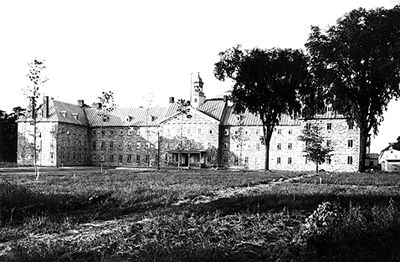
-
Article
Jerome Drayton
Jerome Peter Drayton (né Peter Buniak), marathoner, long-distance runner (born 10 January 1945 in Kolbermoore, Germany). Jerome Drayton is considered Canada’s top male marathon runner and best male distance runner of all time. He set the Canadian men’s marathon record twice, with times of 2:16:11 in 1968 and 2:10:08.4 in 1975; the latter record stood for 43 years. Drayton competed for Canada at the 1968 and 1976 Olympic Summer Games and won the silver medal in the men’s marathon at the 1978 Commonwealth Games in Edmonton. He is the last male Canadian runner to have won the Boston Marathon (in 1977). He also set a world record in the men’s 10-mile run (46:37.4). A member of Canada’s Sports Hall of Fame, Drayton earned 12 national titles and set 13 records in various distances.
"https://thecanadianencyclopedia.ca/images/tce_placeholder.jpg?v=e9dca980c9bdb3aa11e832e7ea94f5d9" // resources/views/front/categories/view.blade.php
https://thecanadianencyclopedia.ca/images/tce_placeholder.jpg?v=e9dca980c9bdb3aa11e832e7ea94f5d9
-
Article
Jérôme Lalemant
Jérôme Lalemant, Jesuit missionary (b at Paris, France 27 Apr 1593; d at Québec City 26 Jan 1673), brother of Charles Lalemant. He arrived in Canada in 1638 and was named superior of the Huron mission.
"https://thecanadianencyclopedia.ca/images/tce_placeholder.jpg?v=e9dca980c9bdb3aa11e832e7ea94f5d9" // resources/views/front/categories/view.blade.php
https://thecanadianencyclopedia.ca/images/tce_placeholder.jpg?v=e9dca980c9bdb3aa11e832e7ea94f5d9
-
Article
Jerry Potts
Jerry Potts, or Ky-yo-kosi, meaning "Bear Child," scout, guide, interpreter (b at Ft McKenzie, US 1840; d at Fort Macleod, Alta 14 July 1896).
"https://d3d0lqu00lnqvz.cloudfront.net/JerryPotts.jpg" // resources/views/front/categories/view.blade.php
https://d3d0lqu00lnqvz.cloudfront.net/JerryPotts.jpg
-
Article
The Jesuit Relations
The Jesuit Relations is a collection of the annual reports written by the Jesuit missionaries in Canada and sent to France from 1632 to 1672. These reports are an important historical resource regarding all of the events which occurred in the colony during this period. More specifically, they describe the central role played by the members of the Society of Jesus in the colonization of North America. (See Population Settlement of New France.) These reports provide an overview of the colonial vision of the times and describe the successes and failures of the missionaries in their efforts to convert the First Nations. Printed and distributed in Paris, primarily as a propaganda tool, the Jesuit Relations are very popular with travel literature enthusiasts. They remain a unique source of information regarding the early days of New France.
"https://d3d0lqu00lnqvz.cloudfront.net/media/media/1ab35d09-0c75-441b-b37e-15cacbc481d7.jpg" // resources/views/front/categories/view.blade.php
https://d3d0lqu00lnqvz.cloudfront.net/media/media/1ab35d09-0c75-441b-b37e-15cacbc481d7.jpg
-
Article
Jesuits
The Society of Jesus was founded in Paris in 1534 by Saint Ignatius Loyola, a Spanish soldier who underwent a profound religious experience while recovering from serious wounds. Loyola called the society "The Company of Jesus" to indicate its military spirit. The order was authorized in September 1540 to ordain its members. The name "Jesuits" (meaning those who too frequently use or appropriate the name of Jesus) was used against the order as a term of reproach but in time was accepted by its members.
"https://d3d0lqu00lnqvz.cloudfront.net/media/media/16b8b94b-0ca0-468a-8f8f-09141c3462be.jpg" // resources/views/front/categories/view.blade.php
https://d3d0lqu00lnqvz.cloudfront.net/media/media/16b8b94b-0ca0-468a-8f8f-09141c3462be.jpg
-
Article
Jewish Canadians
Unlike most immigrants to Canada, Jews did not come from a place where they were the majority cultural group. Jews were internationally dispersed at the time of the ancient Roman Empire and after unsuccessful revolts against it lost their sovereignty in their ancient homeland. Subsequently, Jews lived, sometimes for many centuries, as minorities in the Middle East, North Africa and Europe. Jews have been in what would become Canada as early as the 18th century. Many more immigrated in the 19th and 20th centuries. In the 2021 census, around 335,000 people identified themselves as Jewish in Canada. (See also Judaism.)
"https://d3d0lqu00lnqvz.cloudfront.net/media/media/455197f8-b830-4e6f-8952-4bbaa53ee57d.jpg" // resources/views/front/categories/view.blade.php
https://d3d0lqu00lnqvz.cloudfront.net/media/media/455197f8-b830-4e6f-8952-4bbaa53ee57d.jpg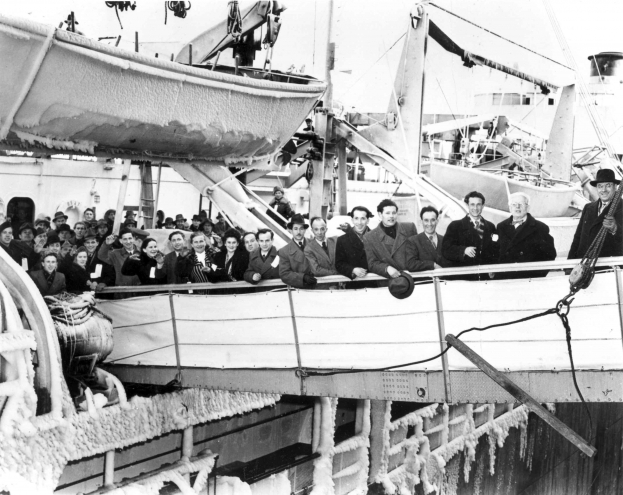
-
Article
Jewish Music and Musicians
The Jewish Community In CanadaThe 245,860 Canadians of Jewish extraction (1986 census) represent a great variety of ancestral languages and cultural traditions.
"https://thecanadianencyclopedia.ca/images/tce_placeholder.jpg?v=e9dca980c9bdb3aa11e832e7ea94f5d9" // resources/views/front/categories/view.blade.php
https://thecanadianencyclopedia.ca/images/tce_placeholder.jpg?v=e9dca980c9bdb3aa11e832e7ea94f5d9
-
Article
Jim Brady
James Patrick Brady, prospector, Métis leader (born 11 March 1908 in Lake St. Vincent, AB; disappeared 7 June 1967 in the Foster Lakes area, SK). A grandson of one of Louis Riel’s soldiers, Brady became a leader among the Métis of northern Alberta and Saskatchewan. He was active in the radical politics of the 1930s, trying in vain to persuade the Co-operative Commonwealth Federation (CCF) in Saskatchewan to implement progressive Indigenous policies. Brady was a founding member of the Association des Métis d’Alberta et des Territoires du Nord-Ouest in 1932 and remained a major figure in the organization as an influential teacher. The last moments of his life are shrouded in mystery as he disappeared on a prospecting trip in 1967.
"https://d3d0lqu00lnqvz.cloudfront.net/Jim_Bradycrop.png" // resources/views/front/categories/view.blade.php
https://d3d0lqu00lnqvz.cloudfront.net/Jim_Bradycrop.png
-
Article
Jim Egan
James Leo (Jim) Egan, gay activist, writer, politician, environmental activist (born 14 September 1921 in Toronto, ON; died 9 March 2000 in Courtenay, BC). Egan was the first person to publish long articles written from a gay point of view in Canada. He was also one of the first openly gay politicians to serve in Canada. Egan is best remembered for a court challenge he and his partner, Jack Nesbit, launched against the spousal allowance benefit under the Old Age Security Act in 1988. In the subsequent Egan v. Canada decision (1995), the Supreme Court read in that sexual orientation is a protected ground of discrimination in the Canadian Charter of Rights and Freedoms — a monumental finding in support of LGBTQ2 rights in Canada.
"https://d3d0lqu00lnqvz.cloudfront.net/!feature-img-thumbnails/jim-egan-tweet.jpg" // resources/views/front/categories/view.blade.php
https://d3d0lqu00lnqvz.cloudfront.net/!feature-img-thumbnails/jim-egan-tweet.jpg
-
Article
Jim Watson
James Alexander Watson, Ottawa city councillor 1991–97, Member of Provincial Parliament 2003–10, mayor of Ottawa 1997–2000 and 2010–22, journalist, broadcaster (born 30 July 1961 in Montreal, QC). Jim Watson has been in and out of politics since he was first elected as an Ottawa city councillor in 1991. He has also served as a member of the Ontario parliament (MPP) and as a minister in the Liberal Cabinet. He came out as gay in 2019 and served four terms as mayor of Ottawa. He was both the youngest and the longest-serving mayor in the city’s history.
"https://d3d0lqu00lnqvz.cloudfront.net/media/media/d87ece12-e6ce-444f-b4c4-6994c6aac274.jpg" // resources/views/front/categories/view.blade.php
https://d3d0lqu00lnqvz.cloudfront.net/media/media/d87ece12-e6ce-444f-b4c4-6994c6aac274.jpg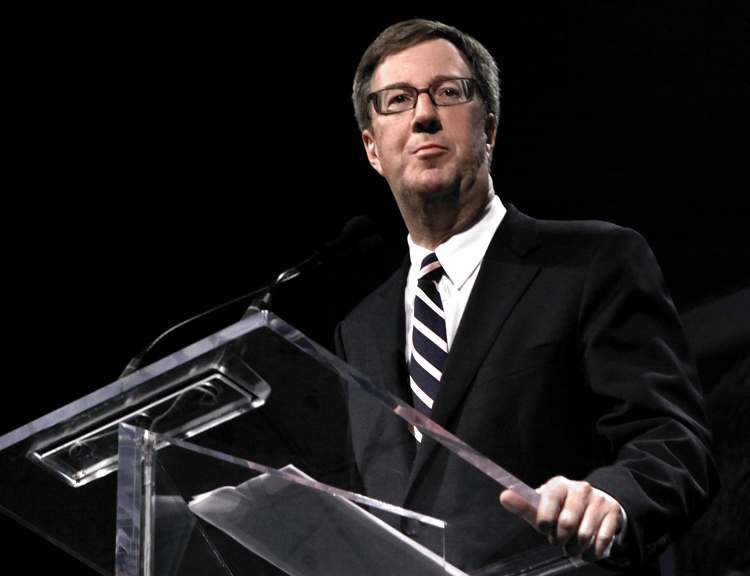
-
Article
Jimmy Claxton
Jimmy Claxton, baseball player, stevedore (born 14 December 1892 in Wellington, BC; died 3 March 1970 in Tacoma, Washington). On 28 May 1916, Jimmy Claxton became the first Black person to play Organized Baseball (MLB and all of its affiliated minor leagues) in the 20th century. The left-handed pitcher did so 30 years before Jackie Robinson played for the Montreal Royals. Claxton was also the first Black player to be featured on an American baseball card. He is the only Negro Leagues player from Canada to have his statistics upgraded to major league numbers. He was inducted into the Canadian Baseball Hall of Fame in 2021.
"https://d3d0lqu00lnqvz.cloudfront.net/Jimmy-Claxton.jpg" // resources/views/front/categories/view.blade.php
https://d3d0lqu00lnqvz.cloudfront.net/Jimmy-Claxton.jpg
-
Article
Jimmy Rattlesnake
Jimmy Rattlesnake, baseball player (born 1909 in Hobbema [now Maskwacis], Alberta; died 17 April 1972 in Hobbema). A crafty and durable left-handed pitcher, Jimmy Rattlesnake was one of Canada’s first Indigenous baseball stars. He dominated prize money tournaments in Alberta and Saskatchewan in the 1930s and 1940s. Some reports indicate that he also briefly pitched professionally in the United States. Often compared to African American pitcher Satchel Paige, Rattlesnake was inducted into the Canadian Baseball Hall of Fame in 2021.
"https://d3d0lqu00lnqvz.cloudfront.net/Jimmy Rattlesnake2 - Copy (1) (002).jpg" // resources/views/front/categories/view.blade.php
https://d3d0lqu00lnqvz.cloudfront.net/Jimmy Rattlesnake2 - Copy (1) (002).jpg (002).jpg)
-
Article
Joe David
Joe David, Nuu-chah-nulth (Nootka) artist (born in 1946 at Opitsat, BC). A member of the Tla-o-qui-aht First Nation, Joe David is a leading figure in modern Northwest Coast Indigenous Art.
"https://d3d0lqu00lnqvz.cloudfront.net/media/media/7e11f2bf-8d4b-4412-a205-99834d3fb923.jpg" // resources/views/front/categories/view.blade.php
https://d3d0lqu00lnqvz.cloudfront.net/media/media/7e11f2bf-8d4b-4412-a205-99834d3fb923.jpg