
Browse "Communities & Sociology"
-
Article
French Canada and the Monarchy
French Canadian attitudes toward monarchical government and members of the French and, later, British royal families have changed over time. King Louis XIV of France made New France a crown colony and supported its expansion and economic development. King George III of Great Britain granted royal assent to the Quebec Act in 1774, which guaranteed freedom of worship and French Canadian property rights. Early royal tours of Quebec were well received by the public. There was republican sentiment expressed during the Lower Canada Rebellion of 1837, however, and support for the monarchy in Quebec declined sharply following the Quiet Revolution of the 1960s. Today, polling data indicates that a majority of people in Quebec support the abolition of the monarchy in Canada.
"https://d3d0lqu00lnqvz.cloudfront.net/FrenchCanadaMonarchy/QueenExpo67.jpg" // resources/views/front/categories/view.blade.php
https://d3d0lqu00lnqvz.cloudfront.net/FrenchCanadaMonarchy/QueenExpo67.jpg
-
Article
French Canadian Nationalism
French Canadian nationalism concerns a wide variety of manifestations of the collective will of much of Canada's French-speaking population to live as a distinct cultural community. Its innumerable ramifications have been not only cultural but also political, economic and social.
"https://d3d0lqu00lnqvz.cloudfront.net/media/media/04c5cf2b-940f-4410-b1a6-fa7105c8b99e.jpg" // resources/views/front/categories/view.blade.php
https://d3d0lqu00lnqvz.cloudfront.net/media/media/04c5cf2b-940f-4410-b1a6-fa7105c8b99e.jpg
-
Article
French Immigration in Canada
After New France was ceded to Great Britain in 1763, the migration of French colonists slowed considerably. A trickle of clergy members, farmers and professionals settled during the 19th century. However, after the Second World War, French immigration — which was then politically favoured — resumed with renewed vigour. This effort was geared towards recruiting francophone professionals and entrepreneurs, who settled in Canada’s big cities. The French spawned many cultural associations and had a large presence in French-Canadian schools.
"https://d3d0lqu00lnqvz.cloudfront.net/media/media/d698c031-e790-4c17-906a-5b880e71e24d.jpg" // resources/views/front/categories/view.blade.php
https://d3d0lqu00lnqvz.cloudfront.net/media/media/d698c031-e790-4c17-906a-5b880e71e24d.jpg
-
Article
French in the West
The French came to the North-West from Montréal in search of furs and an overland route to the Mer de l'Ouest which would lead to a short route to China (see coureurs de bois).
"https://d3d0lqu00lnqvz.cloudfront.net/media/media/89ed12ff-4e88-4efb-aca4-d26cd48ca4c3.jpg" // resources/views/front/categories/view.blade.php
https://d3d0lqu00lnqvz.cloudfront.net/media/media/89ed12ff-4e88-4efb-aca4-d26cd48ca4c3.jpg
-
Article
French Language in Canada
French is one of Canada’s two official languages. Although every province in Canada has people whose mother tongue is French, Québec is the only province where speakers of French are in the majority. In 2011, 7,054,975 people in Canada (21 per cent of the country’s population) had French as their mother tongue.
"https://thecanadianencyclopedia.ca/images/tce_placeholder.jpg?v=e9dca980c9bdb3aa11e832e7ea94f5d9" // resources/views/front/categories/view.blade.php
https://thecanadianencyclopedia.ca/images/tce_placeholder.jpg?v=e9dca980c9bdb3aa11e832e7ea94f5d9
-
Article
Frère Marie-Victorin
Frère Marie-Victorin (born Conrad Kirouac), member of the Brothers of the Christian Schools, botanist, teacher (born 3 April 1885 in Kingsey Falls, QC; died 15 July 1944 in St-Hyacinthe, QC). A self-taught botanist, Frère Marie-Victorin was the first chair of botany at Université de Montréal, founder of the Institut de Botanique and the Montréal Botanical Garden, and author of Flore laurentienne (1935). He also co-founded the Association canadienne-française pour l'avancement des sciences, the Société canadienne d'histoire naturelle, and the Cercles des jeunes naturalistes, and actively promoted science in popular as well as academic publications. A French Canadian nationalist, Marie-Victorin believed that knowledge of Québec’s natural world would inspire pride in French Canadians and enable them to take possession of their land.
"https://d3d0lqu00lnqvz.cloudfront.net/media/new_article_images/Marcellegauvreau/Le_frere_Marie-Victorin_en_Minganie.jpg" // resources/views/front/categories/view.blade.php
https://d3d0lqu00lnqvz.cloudfront.net/media/new_article_images/Marcellegauvreau/Le_frere_Marie-Victorin_en_Minganie.jpg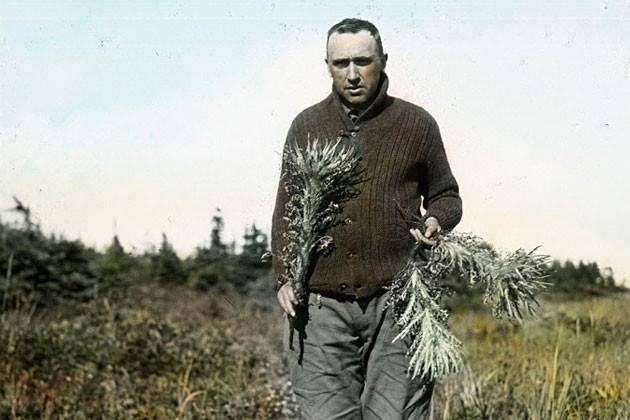
-
Article
Fur Industry
The Canadian fur industry consists of companies that buy raw furs from trappers, dealers or fur-marketing companies (e.g., Hudson's Bay Company raw-fur auctions), send them to fur dressers and dyers in Toronto, match the skins and cut and sew them into garments. Most manufacturers make coats and most specialize in two or three types of fur only. Before the coat can be finished, it must go through a fur-cleaning process and some companies do only this. Some cleaners also maintain cold fur-storage vaults to house furs during the summer, but many retail furriers also have their own vaults. Fur factories are generally small, with 279 of the 280 factories employing fewer than 50 people; only one of the 280 operating factories employed more than 100 people in 1986. In that year there were 3,700 furriers in the manufacturing work force, with about 2950 in Quebec, 675 in Ontario and 75 in Manitoba. Almost all fur companies are Canadian owned; there is some foreign ownership, mainly American, in the retail sector and some Japanese investment in the manufacturing sector.
"https://d3d0lqu00lnqvz.cloudfront.net/media/media/a4d6e476-5e53-4126-9ee6-313b64235660.jpg" // resources/views/front/categories/view.blade.php
https://d3d0lqu00lnqvz.cloudfront.net/media/media/a4d6e476-5e53-4126-9ee6-313b64235660.jpg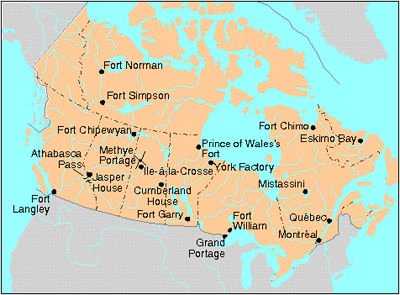
-
Article
Gabriel Kney
Gabriel M. Kney, pipe organ builder (born 21 November 1929 in Speyer, Germany; died 8 November 2024 in London, ON).
"https://thecanadianencyclopedia.ca/images/tce_placeholder.jpg?v=e9dca980c9bdb3aa11e832e7ea94f5d9" // resources/views/front/categories/view.blade.php
https://thecanadianencyclopedia.ca/images/tce_placeholder.jpg?v=e9dca980c9bdb3aa11e832e7ea94f5d9
-
Article
Gaylord Powless
Gaylord Powless, lacrosse player (born 1 December 1946 in Six Nations of the Grand River, ON; died 28 July 2001 in Ohsweken, ON). Gaylord Powless was a Kanyen’kehà:ka (Mohawk) box lacrosse player who transcended the game to become one of Canada’s most famous athletes. Powless lived most of his life in Six Nations of the Grand River, near Brantford, Ontario. He became the signature player on the Oshawa Green Gaels’ junior lacrosse dynasty of the 1960s and shattered the Ontario junior league scoring record in his sophomore year with the team. The Gaels won the Minto Cup, Canada’s national junior lacrosse championship, in all four years that he played at the junior level. Powless also won the 1971 Mann Cup, which is emblematic of the Canadian senior lacrosse champions, and was a marquee player in three different professional leagues. Powless and his father, Ross, are both members of the Canadian Lacrosse Hall of Fame and the Ontario Lacrosse Hall of Fame. In 2017, Powless was elected to Canada’s Sports Hall of Fame. In 2024, Powless was inducted into the North American Indigenous Athletics Hall of Fame.
"https://d3d0lqu00lnqvz.cloudfront.net/media/media/9b8d7ac7-ec44-4a9e-b25f-fcc494d26d0c.jpg" // resources/views/front/categories/view.blade.php
https://d3d0lqu00lnqvz.cloudfront.net/media/media/9b8d7ac7-ec44-4a9e-b25f-fcc494d26d0c.jpg
-
Article
Gender Identity
The term “gender identity” refers to an individual’s sense of their own gender, or the gender they feel is most in keeping with how they see themselves.
"https://d3d0lqu00lnqvz.cloudfront.net/media/media/46a3c4ec-a503-4e72-bba8-c78f5fcd885a.jpg" // resources/views/front/categories/view.blade.php
https://d3d0lqu00lnqvz.cloudfront.net/media/media/46a3c4ec-a503-4e72-bba8-c78f5fcd885a.jpg
-
Article
Genocide
Genocide is the intentional destruction of a particular group through killing, serious physical or mental harm, preventing births and/or forcibly transferring children to another group. The Canadian government has formally recognized certain instances of genocide abroad, including the Armenian genocide, the Holodomor, the Holocaust, the Rwandan genocide, the ethnic cleansing in Bosnia, the Uyghur genocide and the Rohingya genocide. Within Canada, some historians, legal scholars and activists have claimed that the historical, intergenerational and present treatment of Indigenous peoples are acts of genocide.
"https://d3d0lqu00lnqvz.cloudfront.net/media/media/1f69f381-4d3b-489f-aba6-0a7dd06d3e92.jpg" // resources/views/front/categories/view.blade.php
https://d3d0lqu00lnqvz.cloudfront.net/media/media/1f69f381-4d3b-489f-aba6-0a7dd06d3e92.jpg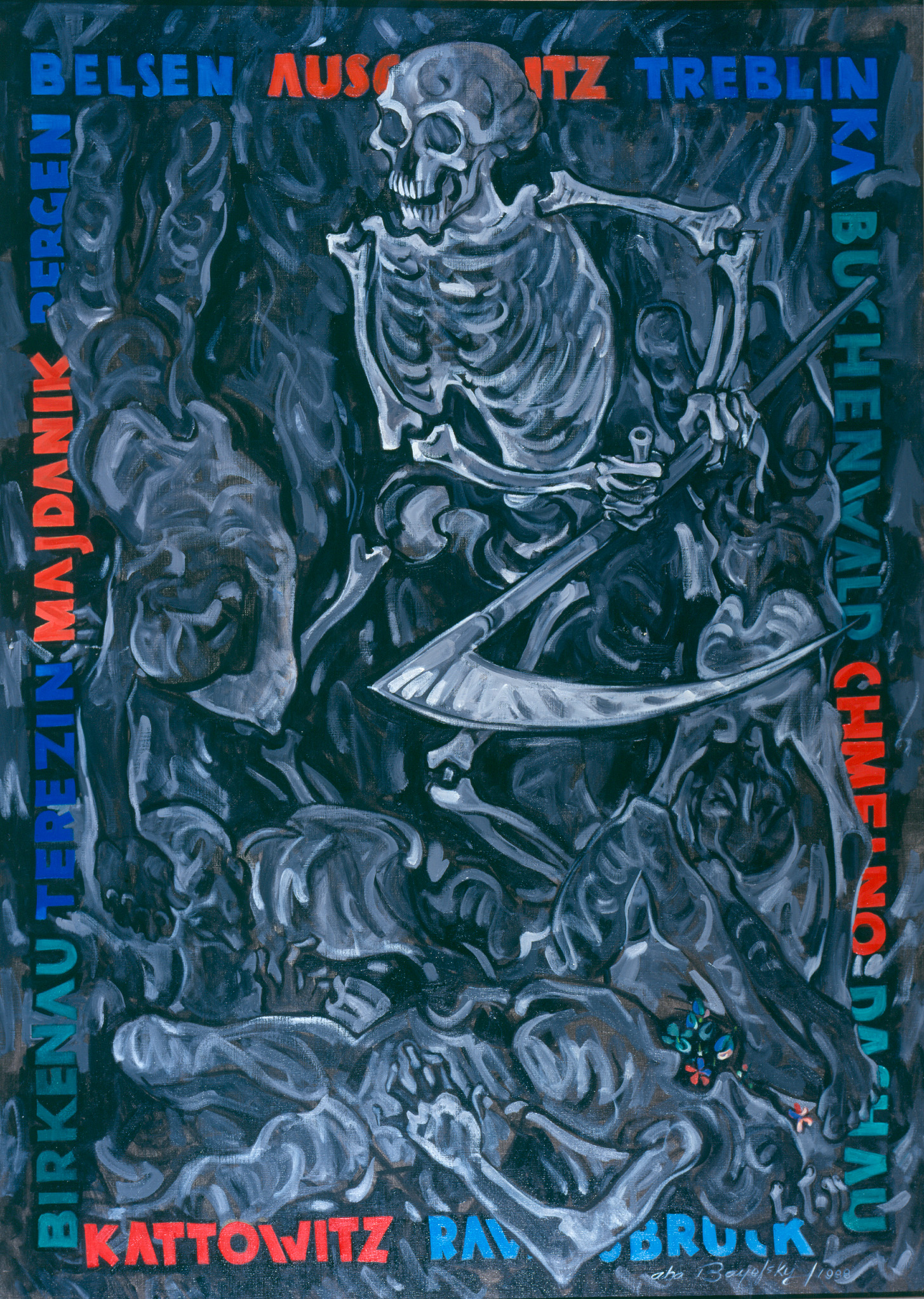
-
Article
Geographic Distribution of the Dorset Culture
Around 2,800 years ago (ca. 800 BCE), the Palaeo-Inuit groups living in the Eastern North American Arctic began to drastically change. These later Palaeo-Inuit groups are collectively called the “Dorset” by archaeologists. They had many differences from their Pre-Dorset ancestors. The Dorset people would persist in the Arctic until roughly 600-700 years ago (ca. 1300-1400 CE). After this point, they disappeared. This happened only a few centuries after the arrival of early Inuit (Thule) groups. They were genetically and culturally distinct from the Dorset. Archaeologists separate this roughly 2,000-year period of Dorset existence into three different periods or traditions. These periods are the Early Dorset (ca. 800 BCE to 1 CE), Middle Dorset (ca. 1 to 500 CE) and Late Dorset (ca. 500 to 1400 CE). There is ongoing debate regarding the differences and similarities between these time periods. However, changes in terms of technology, domestic architecture, mobility and geographic range did occur (see also Dorset Culture).
"https://d3d0lqu00lnqvz.cloudfront.net/DorsetCulture/Figure2EarlyDorsetGeographicLocation_updated.jpg" // resources/views/front/categories/view.blade.php
https://d3d0lqu00lnqvz.cloudfront.net/DorsetCulture/Figure2EarlyDorsetGeographicLocation_updated.jpg
-
Article
George Anderson Wells
George Anderson Wells, bishop, scholar, lecturer (b at Clarke's Beach, Nfld 18 Nov 1877; d at Toronto 10 Apr 1964). Wells was a fisherman, sealer, labourer, and a trooper in the SOUTH AFRICAN WAR before continuing his education at various American institutions.
"https://thecanadianencyclopedia.ca/images/tce_placeholder.jpg?v=e9dca980c9bdb3aa11e832e7ea94f5d9" // resources/views/front/categories/view.blade.php
https://thecanadianencyclopedia.ca/images/tce_placeholder.jpg?v=e9dca980c9bdb3aa11e832e7ea94f5d9
-
Article
George Arluk
George Arluk, artist (b in the Keewatin region, NWT 5 May 1949). An Inuit sculptor now living in Arviat, Nunavut, Arluk began to teach himself how to carve soapstone at age nine.
"https://d3d0lqu00lnqvz.cloudfront.net/media/media/647a21c7-33ab-4de9-9cdc-ad664db33652.jpg" // resources/views/front/categories/view.blade.php
https://d3d0lqu00lnqvz.cloudfront.net/media/media/647a21c7-33ab-4de9-9cdc-ad664db33652.jpg
-
Article
George Burt
George Burt, labour leader (b at Toronto, Ont 17 Aug 1903; d at Windsor, Ont 6 Sept 1988). Burt became a journeyman plumber, but during the Depression he moved to Oshawa to work for General Motors.
"https://thecanadianencyclopedia.ca/images/tce_placeholder.jpg?v=e9dca980c9bdb3aa11e832e7ea94f5d9" // resources/views/front/categories/view.blade.php
https://thecanadianencyclopedia.ca/images/tce_placeholder.jpg?v=e9dca980c9bdb3aa11e832e7ea94f5d9