Browse "Communities & Sociology"
-
Article
Bessie Starkman
Besha (Bessie) Starkman (Perri), organized crime boss (born 14 April 1889 or 21 June 1890 in Poland; died 13 August 1930 in Hamilton, ON). During the Prohibition era she became known as Canada’s first high-profile female crime boss. With her common-law spouse, mobster Rocco Perri, she ran a bootlegging and drug-smuggling enterprise. Starkman was gunned down in the garage of her home and her murderers were never caught. Her funeral was one of the largest ever seen in Hamilton.
"https://d3d0lqu00lnqvz.cloudfront.net/media/new_article_images/BeshaStarkman/Besha_Starkman.JPG" // resources/views/front/categories/view.blade.php
https://d3d0lqu00lnqvz.cloudfront.net/media/new_article_images/BeshaStarkman/Besha_Starkman.JPG
-
Article
Beverly Mascoll
Beverly Sharon Mascoll (née Ash), CM, entrepreneur, philanthropist, community leader (born 29 October 1941 in Fall River, NS; died 16 May 2001 in Toronto, ON). Mascoll was one of Canada’s notable women entrepreneurs, business owners, and community role models. She was the founder and president of Mascoll Beauty Supply Ltd., a Black beauty business that was both a distribution and retail company. She was one of the first Black women to be appointed a Member of the Order of Canada. (See also Black Canadians.)
"https://d3d0lqu00lnqvz.cloudfront.net/beverlymascoll/beverlymascoll.jpg" // resources/views/front/categories/view.blade.php
https://d3d0lqu00lnqvz.cloudfront.net/beverlymascoll/beverlymascoll.jpg
-
Article
Mistahimaskwa (Big Bear)
Mistahimaskwa (Big Bear), Plains Cree chief (born near Fort Carlton, SK; died 17 January 1888 on the Little Pine Reserve, SK). Mistahimaskwa is best known for his refusal to sign Treaty 6 in 1876 and for his band’s involvement in violent conflicts associated with the 1885 North-West Resistance.
"https://d3d0lqu00lnqvz.cloudfront.net/media/media/d3f8c588-0cfa-414d-b360-98aa3449b9e1.jpg" // resources/views/front/categories/view.blade.php
https://d3d0lqu00lnqvz.cloudfront.net/media/media/d3f8c588-0cfa-414d-b360-98aa3449b9e1.jpg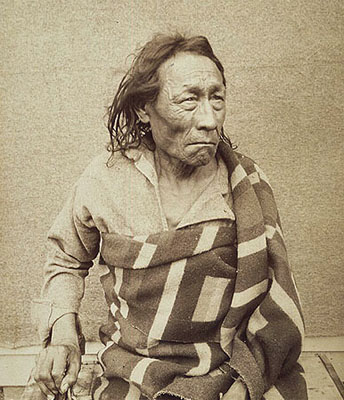
-
Article
Bill Blaikie
William Alexander Blaikie, PC, OC, politician, United Church minister, professor (born 19 June 1951 in Winnipeg, MB; died 24 September 2022 in Winnipeg). Bill Blaikie was an ordained United Church minister and a proponent of social gospel politics. A major figure in the New Democratic Party (NDP), he served as a Member of Parliament (MP) for 29 years. He sought the leadership of the federal NDP in 2003, placing second behind Jack Layton. After retiring from federal politics, he was elected to one term as a Manitoba MLA and served as minister of conservation. He was also an adjunct professor of theology and politics at the University of Winnipeg.
"https://d3d0lqu00lnqvz.cloudfront.net/Bill_Blaikie.jpg" // resources/views/front/categories/view.blade.php
https://d3d0lqu00lnqvz.cloudfront.net/Bill_Blaikie.jpg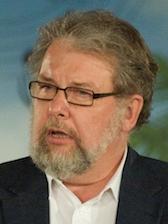
-
Article
Billy Two Rivers
Billy Two Rivers (Kaientaronkwen), political leader, professional wrestler, actor, activist (born 5 May 1935 in Kahnawá:ke, QC; died 12 February 2023 in Kahnawá:ke, QC). Two Rivers’ Kanyen’kehà:ka (Mohawk) name was Kaientaronkwen. He was from the Kahnawá:ke Mohawk Territory, which is on the St. Lawrence River’s south shore, south of Montreal. While he learned English in school, his first language was Kanien'kéha (Mohawk).
"https://d3d0lqu00lnqvz.cloudfront.net/BillyTwoRivers/CP165873022_web.jpg" // resources/views/front/categories/view.blade.php
https://d3d0lqu00lnqvz.cloudfront.net/BillyTwoRivers/CP165873022_web.jpg
-
Article
Bishop Emile Grouard
Monseigneur Émile Grouard was energetic and inventive, having steamboats built on the Peace, Slave and Athabasca rivers. He was also respected by the Indigenous peoples of his diocese, and came to learn the Cree, Denesuline (Chipewyan) and Dane-zaa (Beaver) languages.
"https://d3d0lqu00lnqvz.cloudfront.net/media/media/a897c5c6-d183-4cbb-81f7-f5251ab09526.jpg" // resources/views/front/categories/view.blade.php
https://d3d0lqu00lnqvz.cloudfront.net/media/media/a897c5c6-d183-4cbb-81f7-f5251ab09526.jpg
-
Article
Black Canadians and Conscription in the First World War
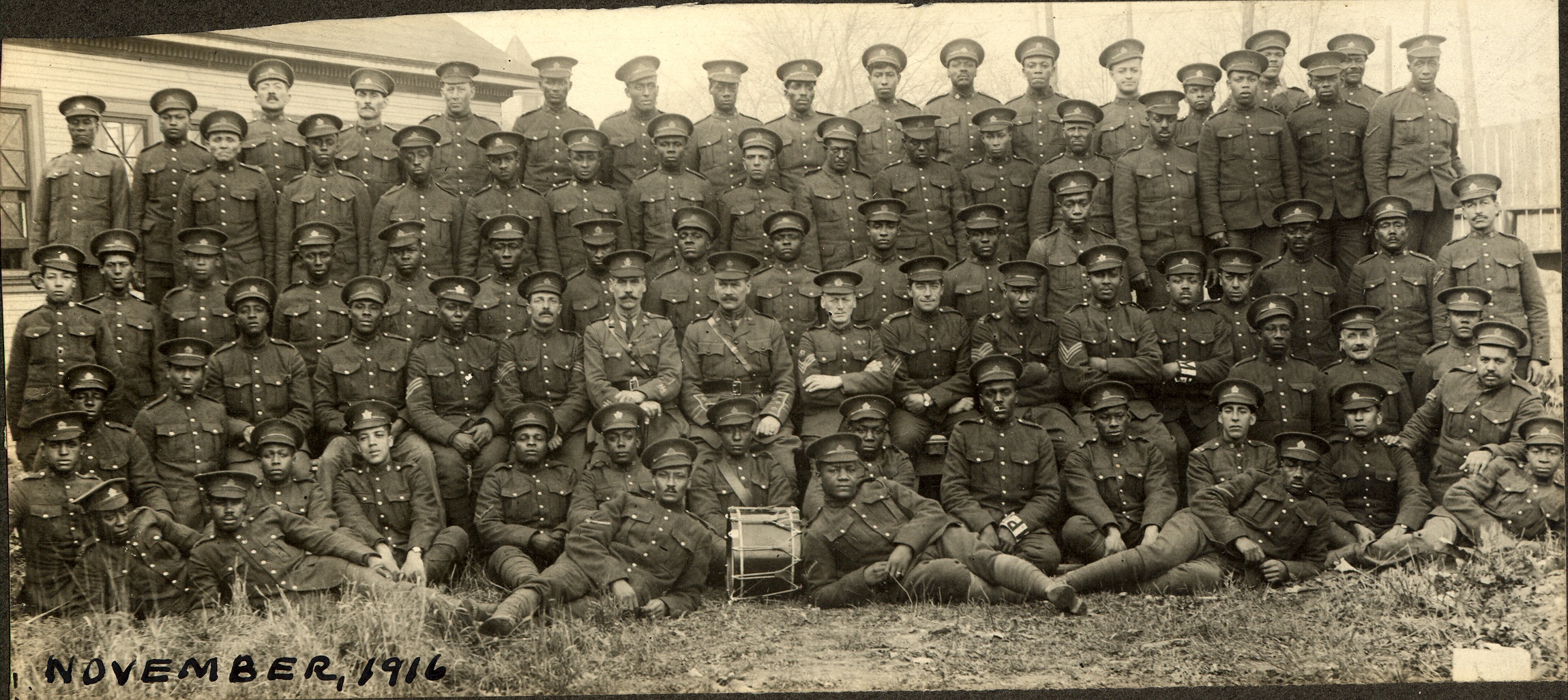
In 1917, the Canadian government passed the Military Service Act, which made all male citizens (aged 20 to 45) subject to conscription. As the First World War (1914–18) dragged on, the Canadian Expeditionary Force (CEF) desperately needed reinforcements, as the number of volunteers had nearly dried up. Earlier in the war, Black volunteers had faced resistance and opposition in their efforts to enlist. However, Black Canadians were not exempt from conscription and at least 350 were drafted into the CEF. Those who served overseas worked primarily with the Canadian Forestry Corps, although some also served on the frontlines.
"https://d3d0lqu00lnqvz.cloudfront.net/ImagefromBooksofRemembrance-H.jpg" // resources/views/front/categories/view.blade.php
https://d3d0lqu00lnqvz.cloudfront.net/ImagefromBooksofRemembrance-H.jpg
-
Article
Black Cross Nurses in Canada
The Black Cross Nurses (BCN) is an auxiliary group intended for female members of the Universal Negro Improvement Association (UNIA). The BCN was modeled on the nurses of the Red Cross. Its first chapter was launched in Philadelphia in May 1920. Under the leadership of Henrietta Vinton Davis, the BCN quickly became one of the UNIA’s most popular and iconic auxiliary groups. Offering a safe and inviting place for the Black community, UNIA halls became important cultural hubs in many cities and towns across Canada, where BCN divisions were also established. Although they were not professionally trained nurses, members of the BCN were expected to provide care and advice on matters of health and hygiene.
"https://d3d0lqu00lnqvz.cloudfront.net/media/new_article_images/BlackCrossNurses/Black Red Cross march, Harlem , 1924 by James Van der Zee.jpg" // resources/views/front/categories/view.blade.php
https://d3d0lqu00lnqvz.cloudfront.net/media/new_article_images/BlackCrossNurses/Black Red Cross march, Harlem , 1924 by James Van der Zee.jpg
-
Article
Black Fur Traders in Canada
The role of Black people within the history of the fur trade is rarely considered. Black people were rarely in a position to write their own stories, so often those stories went untold. This owes to a complex set of factors including racism and limited access to literacy. Black people are also not the focus of many historical documents. However, historians have identified several Black fur traders working in different roles, and even an entire family of Black fur traders who left their mark on history.
"https://d3d0lqu00lnqvz.cloudfront.net/media/home-page-images/por-1261-r1.jpg" // resources/views/front/categories/view.blade.php
https://d3d0lqu00lnqvz.cloudfront.net/media/home-page-images/por-1261-r1.jpg
-
Collection
Black History in Canada
"Have we read our own authors such as Dionne Brand, Afua Cooper and George Elliott Clarke? Do we know that the story of African-Canadians spans four hundred years, and includes slavery, abolition, pioneering, urban growth, segregation, the civil rights movement and a long engagement in civic life?" — Lawrence Hill
"https://d3d0lqu00lnqvz.cloudfront.net/media/media/a7755b40-bb18-444f-92ba-f85d7ff7fb17.jpg" // resources/views/front/categories/view.blade.php
https://d3d0lqu00lnqvz.cloudfront.net/media/media/a7755b40-bb18-444f-92ba-f85d7ff7fb17.jpg
-
Article
Black History in Canada: 1960 to Present
Black people have lived in Canada since the 17th century. Some of the earliest arrivals were enslaved persons brought from what we now call the United States of America and from the Caribbean. (See Black Canadians; Caribbean Canadians.) From the 18th century to the 1960s, most Black immigrants to Canada were fleeing enslavement and/or discrimination in the United States. Since then, changes to Canadian immigration policy have led to an influx of immigrants from the Caribbean and Africa. (See African Canadians.) In the 2016 Canadian census, 1.2 million people (3.5 per cent of the Canadian population) reported being Black.. Despite ongoing challenges, including discrimination and systemic racism, Black Canadians have excelled in sectors and industries across the country. See also Black History in Canada until 1900 and Black History in Canada: 1900–1960.
"https://d3d0lqu00lnqvz.cloudfront.net/media/media/95878d01-d5fa-4ee5-b2a4-24d37723a566.jpg" // resources/views/front/categories/view.blade.php
https://d3d0lqu00lnqvz.cloudfront.net/media/media/95878d01-d5fa-4ee5-b2a4-24d37723a566.jpg
-
Article
Black History in Canada until 1900
Black people have lived in Canada since the beginnings of transatlantic settlement. Although historically very few arrived directly from their ancestral homeland in Africa, the term "African Canadian" is used to identify all descendants of Africa regardless of their place of birth. “Black Canadian” is also used as a more general term. The earliest arrivals were enslaved people brought from New England or the West Indies. Between 1763 and 1900, most Black migrants to Canada were fleeing enslavement in the US. (See also Black Enslavement in Canada.) See also Black History in Canada: 1900–1960 and Black History in Canada: 1960 to Present.
"https://d3d0lqu00lnqvz.cloudfront.net/media/media/917b145c-c991-4838-92ef-ab33000e1bdc.jpg" // resources/views/front/categories/view.blade.php
https://d3d0lqu00lnqvz.cloudfront.net/media/media/917b145c-c991-4838-92ef-ab33000e1bdc.jpg
-
Editorial
Editorial: The Arrival of Black Loyalists in Nova Scotia
The following article is an editorial written by The Canadian Encyclopedia staff. Editorials are not usually updated. “Freedom and a Farm.” The promise was exciting to the thousands of African Americans, most seeking to escape enslavement, who fought in British regiments during the American Revolutionary War (1775–83). Following the war, they joined tens of thousands of Loyalists — American refugees who had sided with the British. Between 80,000 and 100,000 Loyalists eventually fled the United States. About half came to British North America. The main waves arrived in 1783 and 1784. The territory that now includes the Maritime provinces became home to more than 30,000 Loyalists. Most of coastal Nova Scotia received Loyalist settlers, as did Cape Breton and Prince Edward Island (then called St. John’s Island).
"https://d3d0lqu00lnqvz.cloudfront.net/media/media/be13527b-b76d-408a-afca-30acbd4f7bfc.png" // resources/views/front/categories/view.blade.php
https://d3d0lqu00lnqvz.cloudfront.net/media/media/be13527b-b76d-408a-afca-30acbd4f7bfc.png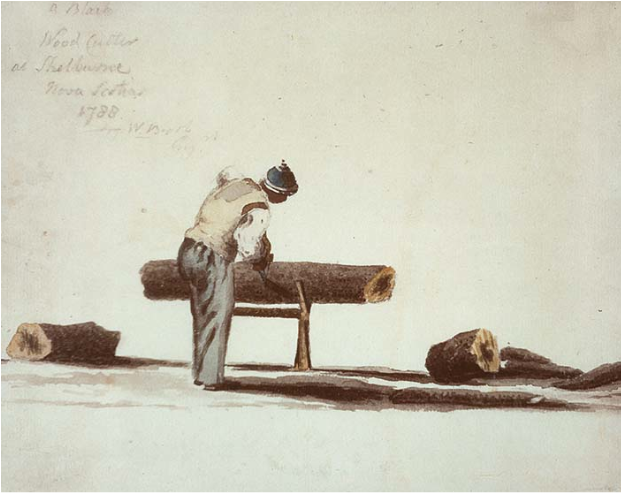
-
Article
Black Pioneers of the American Revolution
The Black Pioneers was a provincial (i.e., locally recruited) unit of the British army during the American Revolutionary War. It was the only Black unit on the provincial establishment. Most members of the company were formerly enslaved persons who had fled their Patriot (rebel) owners in response to British promises of freedom. Although some Black soldiers fought in combat during the war, the Pioneers provided construction and engineering support to the British army. After the war, they were among thousands of Black Loyalists who were transported to Nova Scotia.
"https://d3d0lqu00lnqvz.cloudfront.net/media/media/be13527b-b76d-408a-afca-30acbd4f7bfc.png" // resources/views/front/categories/view.blade.php
https://d3d0lqu00lnqvz.cloudfront.net/media/media/be13527b-b76d-408a-afca-30acbd4f7bfc.png
-
Article
Black Volunteers in the Canadian Expeditionary Force
During the First World War, up to 1,300 Black men volunteered for service in the Canadian Expeditionary Force (CEF). While the men of No. 2 Construction Battalion are the best-known example of Black participation in the war, another 300 to 500 enlisted in other units of the CEF. Of these, about 100 served on the front lines. Black soldiers participated in all major battles of the CEF, from its arrival in France until the Armistice. (See also Black Canadians and Conscription in the First World War.)
"https://d3d0lqu00lnqvz.cloudfront.net/media/media/d2114b98-ef0d-4e98-aa49-892b095d77cc.jpg" // resources/views/front/categories/view.blade.php
https://d3d0lqu00lnqvz.cloudfront.net/media/media/d2114b98-ef0d-4e98-aa49-892b095d77cc.jpg