Share on Facebook
 Share on X
 Share by Email
 Share on Google Classroom
More than 900 Canadians were involved in Operation Manna (29 April-8 May 1945), a massive food drop operation in the Netherlands during the Second World War. By that time, an estimated 20,000 Dutch people had died of starvation during what was known as the Hunger Winter. Operation Manna was conducted by Bomber Command of the Royal Air Force (RAF) and was primarily composed of squadrons from the RAF as well as one from the Royal Australian Air Force (RAAF). One Royal Canadian Air Force (RCAF) squadron (405) was involved in Operation Manna, and more than 760 RCAF members served in the RAF and RAAF squadrons. By 8 May, an estimated 7,000 tons of food had been dropped.

Food Shortage
The Netherlands had been occupied by German forces since May 1940. Operation Market Garden was launched on 17 September 1944 to capture eight key bridges, with the last across the Rhine River at Arnhem. At the same time, the Dutch government-in-exile called for a railway strike. Operation Market Garden failed to achieve its main objective, although it freed parts of the southern Netherlands. The German Reich commissioner (governor), Artur Seyss-Inquart, restricted food delivery into the country but this was partially lifted in November. By then, however, an early winter had frozen the canals and barges could not bring food into the country.
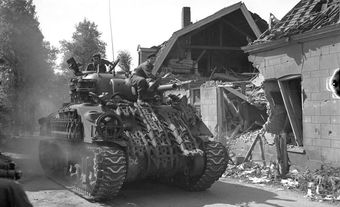
By the end of November, adults in Amsterdam were receiving only 900 calories per day. By the end of February 1945, it was only 580 calories and by April around 300. The western allies were aware of the situation but could do little while fighting the German military. At the end of March, the Canadian army began an attack that liberated the northern part of the Netherlands. Food aid began to flow into the area, but there were still over 3.5 million people in the western provinces who were starving; this included the populations of the major cities of Amsterdam, Rotterdam and The Hague. This desperate situation had forced many people to survive by eating small animals, including pets, as well as tulip bulbs, some of which were poisonous. (See Dutch Hunger Winter.)
"The Canadian troops already had liberated part of Holland for eight months. And we were still waiting. Amsterdam, Den Haag and Rotterdam, we were still waiting for the Canadians to come and liberate us. There were no supplies coming in and you can see that the Germans wouldn’t feed us while they have to feed their own men. So that means we eat tulip bulbs. I eat tulip bulbs, I eat sugar beets. I eat some other things that I don’t even want to mention but I mean, that was a fight for survival. We were starved."
-Peter Melkert
Listen to the full interview with Peter Melkert in the Memory Project Archive
The Plan
During the winter of 1944/45, negotiations had started for a truce between the Allies and the Germans after Queen Wilhelmina and Prince Bernhard of the Netherlands put pressure on British Prime Minister Winston Churchill and American President Franklin Roosevelt. Such an agreement would permit food to be delivered to the starving Dutch population.
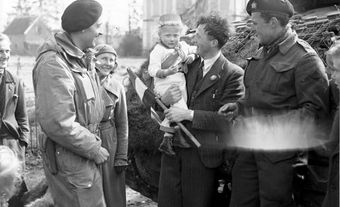
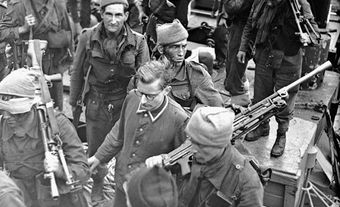
By late April, the military situation had changed, and relief was on the horizon. On 28 April, senior German officials met with members of I (Canadian) Corps at Achterveld, Netherlands to discuss a German surrender in the Netherlands and the delivery of food aid by air, sea and land. Air Commodore A.J.W. Geddes, who represented the RAF, proposed a plan for air dropping food by Lancaster bombers. The Germans for their part specified at which locations the food could be dropped. An agreement was finally signed on 1 May – after the first drops began. The Dutch refer to Geddes as “The Man of Manna.”
The plan involved 24 RAF squadrons and one RAAF squadron from Nos. 1 and 3 Groups that would drop food, as well as two Mosquito, five RAF Lancaster squadrons and 405 Squadron RCAF from No. 8 Group. As a Pathfinder squadron, 405 would drop markers to help identify the drop zones.
Food Drops Begin
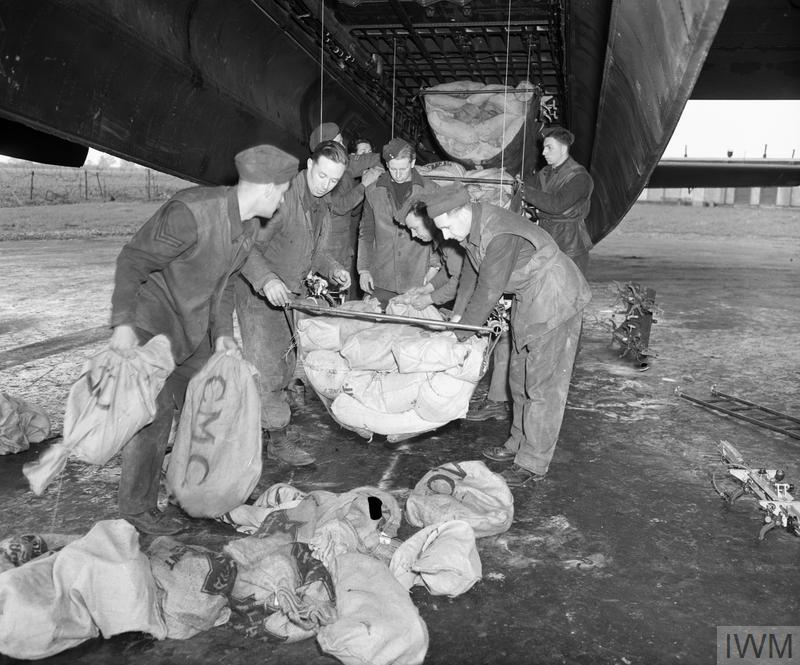
Although Bomber Command had planned to start the food drops on 28 April, the weather was not suitable. But at 11:10 AM on 29 April, the first of 242 Lancaster bombers departed for the Netherlands. Among the crews were 186 RCAF personnel. The first food drop began at 1:00 PM and continued until 2:20. With no agreement yet about the air drops, the Germans were nervous. Troops had been moved to the drop zones in case guns or paratroopers were dropped; anti-aircraft guns tracked the Lancasters. But they did not fire. Some Lancasters were hit by small arms fire from individual German soldiers. Yet on subsequent days there were hardly any reports of aircraft being hit.
The supplies being dropped included flour, luncheon meat (Spam), mashed potato powder, dried beans, sugar, chocolate, coffee, powdered milk, dried eggs, dehydrated meat, beans and tea. In order to safely drop the bags of food, the Lancasters were ordered to fly in at 150 metres (500 feet). Many flew far lower.
The drops on 29 April were so successful that Bomber Command ordered more for subsequent days. The drops continued every day up to and including 8 May, except for 6 May, which was cancelled because of poor weather in the morning.
Table: RAF Drop Zones
|
Drop Zone |
April |
May |
||||||||
|
29 |
30 |
1 |
2 |
3 |
4 |
5 |
6 |
7 |
8 |
|
|
Gouda |
x |
x |
x |
x |
x |
|||||
|
Leiden (Valkenburg Airfield) |
x |
x |
x |
x |
x |
x |
x |
x |
||
|
Rotterdam (Waalhaven Airfield) |
x |
|||||||||
|
Rotterdam (Terbregge) |
x |
x |
x |
x |
x |
x |
x |
x |
||
|
The Hague (Duindigt Racetrack) |
x |
x |
x |
x |
x |
x |
x |
x |
x |
|
|
The Hague (Ypenburg Airfield) |
x |
x |
x |
x |
x |
x |
x |
x |
x |
|
RCAF Members in RAF and RAAF Squadrons
Many members of the RCAF flew in RAF squadrons, with the highest numbers in the following:
- 514 Squadron 82
- 115 Squadron 77
- 101 Squadron 67
- 100 Squadron 58
- 103 Squadron 58
- 166 Squadron 50
Even 460 Squadron of the Royal Australian Air Force had six Canadians.
405 Squadron RCAF
The only RCAF squadron to participate in Operation Manna was 405 Squadron. Other RCAF bomber squadrons were in No. 6 Group, situated too far north in Yorkshire and Durham to participate, while the bombers of 1 and 3 Group were further south and available in the numbers required. 405 Squadron’s role was to mark the drop zones at the Duindigt Racetrack, The Hague (30 April and 1, 2, 4, 5 and 7 May) and Terbregge, Rotterdam on 8 May. Their Lancasters were inserted at 5-minute intervals between the other bombers to refresh the smoke markers that allowed the low-flying crews to be better able to find the drop zone. Overall, 144 RCAF members of the squadron flew on Operation Manna missions, including three ground crew who flew as passengers.
RCAF Crews in Operation Manna
In total, more than 900 members of the RCAF participated in Operation Manna. Moreover, RCAF members flew each day on Operation Manna missions.
Table: Known RCAF Aircrew in RAF and RAAF Squadrons Flying on Operation Manna
|
April |
May |
||||||||
|
29 |
30 |
1 |
2 |
3 |
4 |
5 |
7 |
8 |
|
|
1 Group |
130 |
219 |
208 |
247 |
194 |
104 |
58 |
227 |
89 |
|
3 Group |
56 |
112 |
112 |
109 |
44 |
33 |
38 |
128 |
29 |
|
8 Group |
0 |
14 |
10 |
12 |
10 |
11 |
10 |
6 |
2 |
|
Totals |
186 |
345 |
330 |
368 |
248 |
148 |
106 |
361 |
120 |
Many RCAF members flew three, four and even five missions; 166 and 576 Squadrons had crews who flew six missions. Moreover, three crews flew seven missions: Pilot Officer S. Todd of 166 Squadron with two other Canadians in his crew, and Flying Officer T.E. Meloche and Flight Lieutenant Reginald Wallace McCurdy of 576 Squadron. Meloche was a navigator and the sole RCAF member of his crew while McCurdy’s crew consisted of four other RCAF members and two RAF.
Most of the crews who flew Operation Manna missions were on their first tour, many having flown bombing missions in late 1944 or in 1945. There were, however, some who were on their second or even third tour. For the majority of those who had flown bombing missions, the Operation Manna missions were the most satisfying of the war. When the crews were told on 29 April that they would be flying these missions, cheers erupted in the briefing rooms. Ground crew and aircrew prepared little bundles of candies and other goodies for the kids, which were dropped from the Lancasters as they flew near the drop zones.
Did You Know?
The United States Army Air Forces also participated in the food drop. Operation Chowhound, as they called their mission, ran from 1 to 7 May. They first dropped food on the British zones on 1 May and then Alkmaar (Bergen Airfield), Amsterdam (Schiphol Airfield), Hilversum polder (city), Utrecht (city) and Vogelenzang (near Haarlem). In total, the US Army Air Forces dropped about 4,000 tons of food aid.
Reception
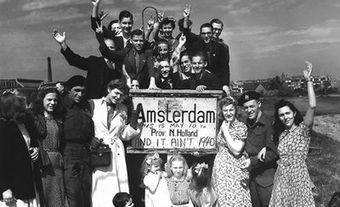
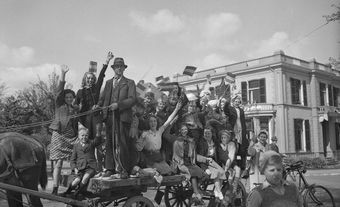
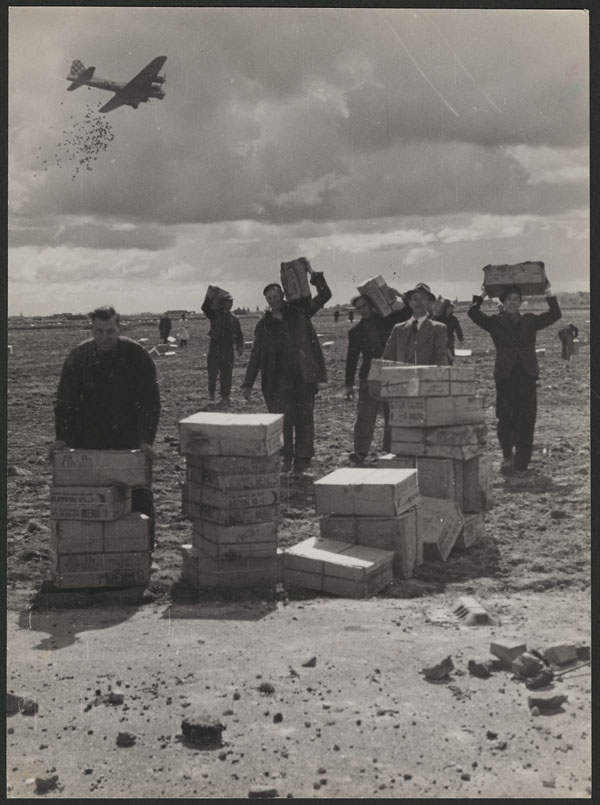
The reception from the Dutch people was overwhelming. The aircrew, often flying at less than 150 meters, could see the people on the ground quite clearly. Warned by radio that the bombers would be coming, thousands rushed into the streets at the sound of the approaching aircraft. People were waving white handkerchiefs, table clothes and even bed sheets. Later, flowers were used to spell out “thank you” and “many thanks” and in some cases large Union Jacks were spread on the roofs of buildings, contemptuous of the German troops who still occupied the area. They were out every day no matter the weather.
Significance
Operation Manna was the world’s first major food airlift operation. It delivered 7,000 tons of food aid to where it was needed most and helped alleviate a humanitarian disaster. The people of the Netherlands continue to remember and commemorate the food drop as a major event of the Second World War. For most of the RCAF members who flew missions, this was the best moment of their Second World War service.
Did You Know?
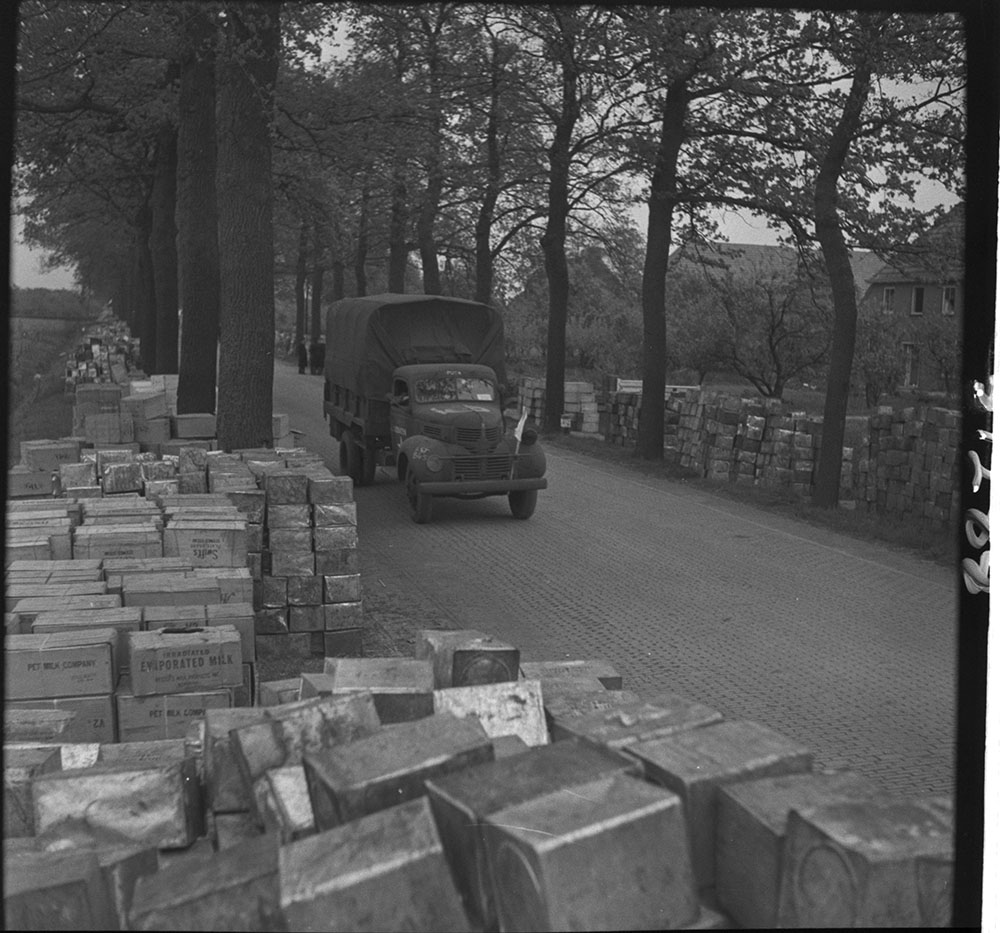
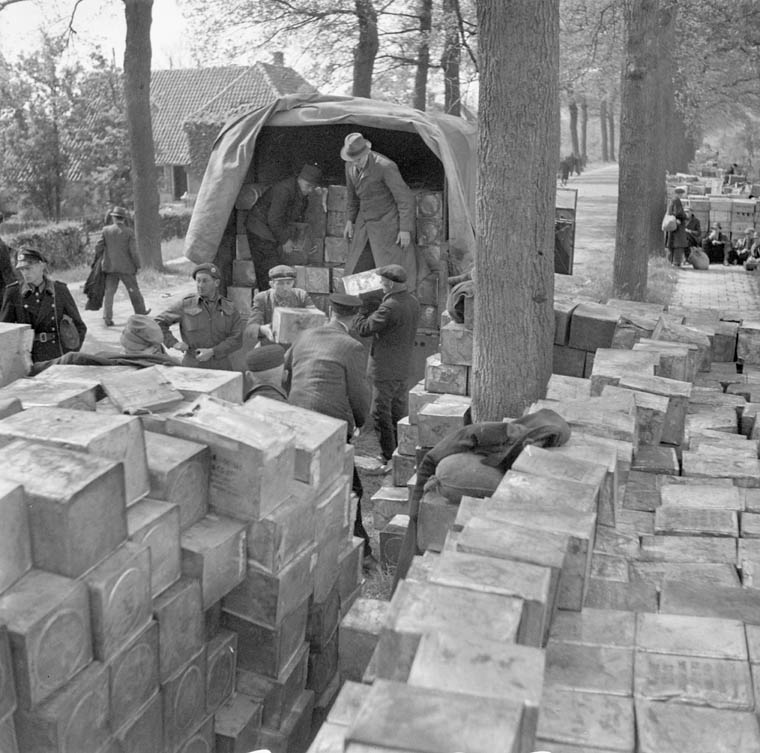
The Allies also moved food into the occupied Netherlands by truck. Operation Faust delivered almost 7,000 tons of food and fuel to Rhenen between 2 and 10 May 1945. The operation employed eight Canadian and four British transport platoons under the command of the Royal Canadian Army Service Corps.