Share on Facebook
 Share on X
 Share by Email
 Share on Google Classroom
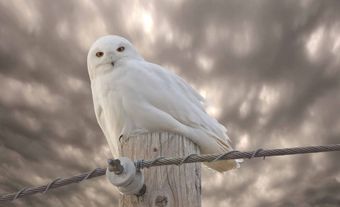
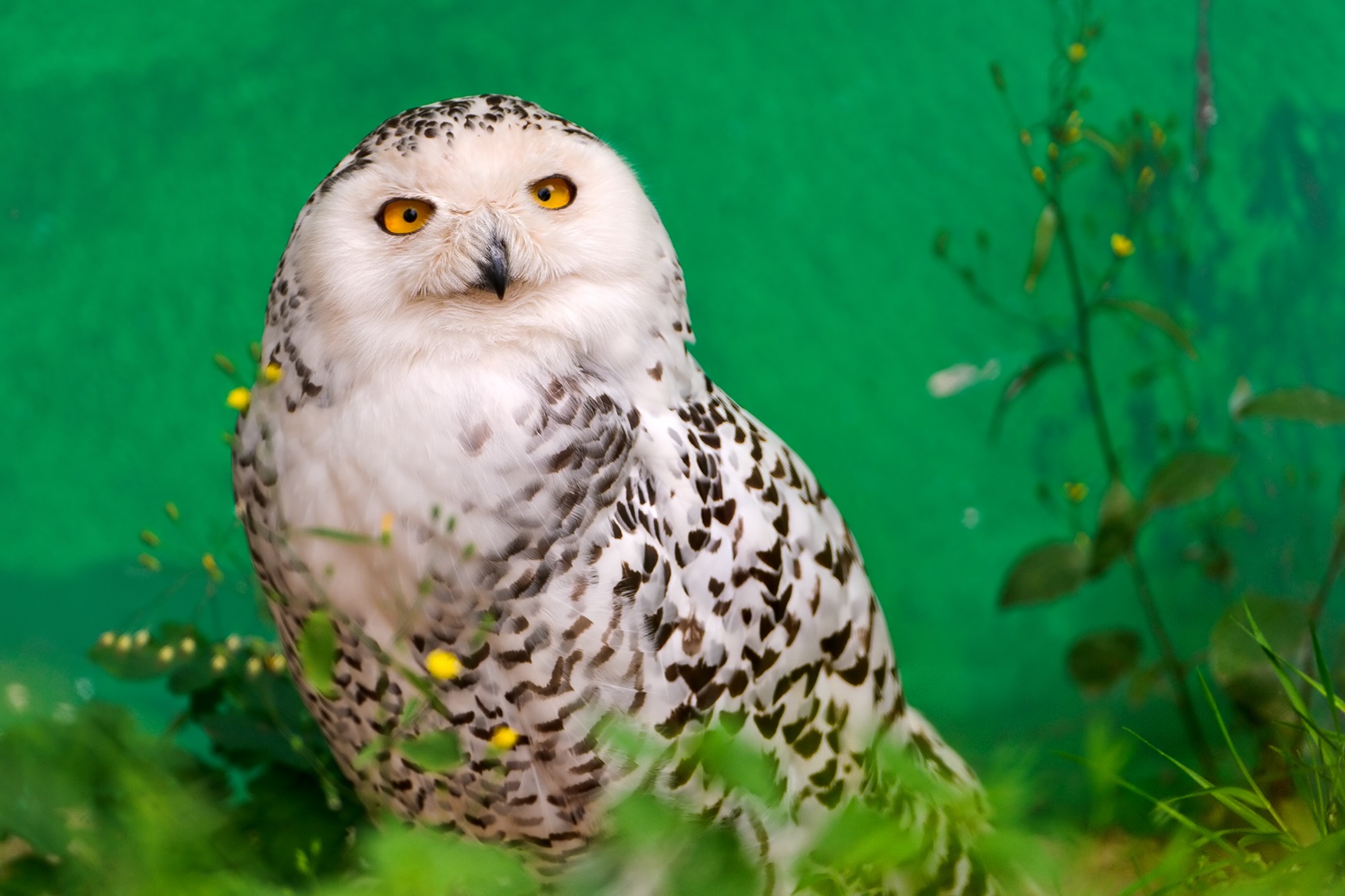
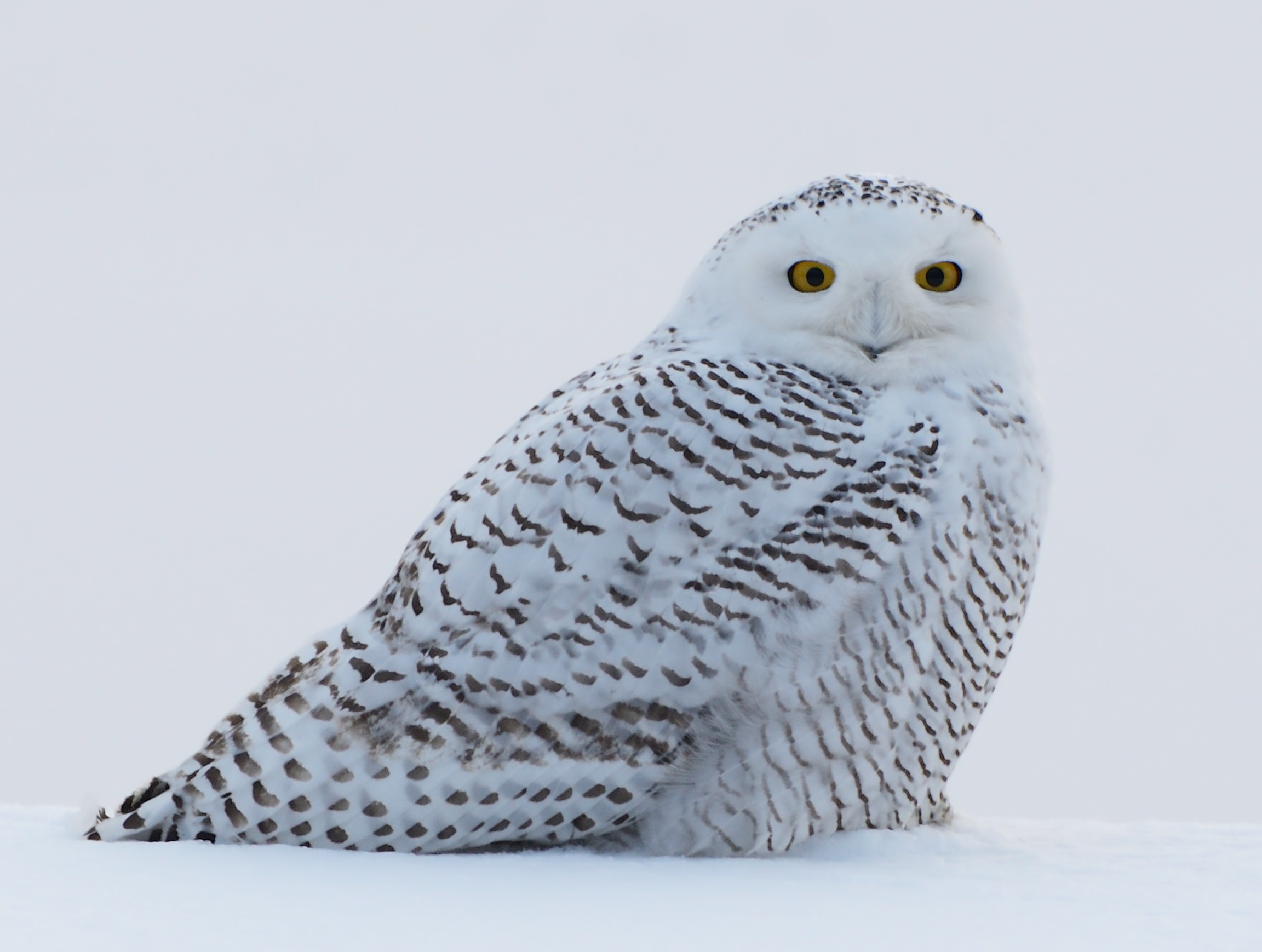
The circumpolar snowy owl (Bubo scandiacus), distinctive for its thick white plumage and bright yellow eyes within a heart-shaped face, is unique among owls in being a diurnal predator. Unusually itinerant and unpredictably irruptive, its summer breeding ground is the Arctic tundra. In winter, the species frequents similarly flat and treeless environments throughout the northern hemisphere. The snowy owl is Quebec’s official bird.

Description
Perhaps most noted for its pure-white feathers, juveniles and females of the species also have brown spots and barring on their bodies, wings and head, while males can be almost entirely white. Snowy owl feathers are unusually dense and thickly distributed all over, including — unlike other owls — on their faces, around their legs and between their long black talons. These insulating feathers and extra body fat add considerably to the raptor's weight; ranging from 0.7 to 3.0 kg, it is the heaviest owl in North America.
The snowy owl's head appears rounded and smooth, with vestigial ear tufts that remain largely invisible. Vivid yellow eyes ideal for daytime hunting are set within filoplumes and bone, positioned and sculpted to orient airflow toward the ears for enhanced hearing during their silent flight. Individuals range from 0.5 to 0.8 m long, with 1.3 to 1.8 m wingspans; the female is generally about 30 per cent larger than the male.
Habitat and Distribution
Breeding in the Arctic tundra of northern Canada, Alaska and Euro-Siberia, the snowy owl is one of the best insulated polar creatures, and can survive temperatures as low as -60oC. Their plumage is aided by behaviours such as ground perching (utilizing the high light reflection that snow provides) and orienting their white plumage like solar panels toward the sun. Generally intolerant of one another when not part of a breeding pair, the snowy owl chooses solitude and as large a personal territory as prey availability allows.
In non-breeding months, snowy owls seek habitats with similar qualities to the Arctic tundra: open, flat, treeless and interspersed with hummocks or various low rises in the landscape. Such environments include the northern Great Plains, marshes, shorelines, open fields, farmland and urban environments (especially airports). Snowy owls also frequent the eastern Canadian Arctic Ocean, perching on glacial mounds that surround polynyas, where they hunt seabirds and, sometimes, fish.
Older adults — most often adult females — overwinter in the Arctic when they can, in or near their breeding sites. Otherwise, movement in the non-breeding season is itinerant and irregular, even within individuals; they travel vast distances, but not in a predictable north-south pattern. In abundant lemming seasons, the snowy owl can breed very successfully, causing irruption years in which snowy owls will range widely, in greater numbers, and often much farther south.
Such geographic irregularity — combined with changes in numbers and movement caused by irruption years, and the physical inaccessibility of much of their traditional habitat — leaves many gaps in current knowledge of the movements and ecology of the snowy owl.
Did you know?
The snowy owl's most consistent breeding sites are in northern Canada, and although an unpredictable migrant, its winter range always includes much of southern Canada, from British Columbia to Labrador, most regularly in the Great Plains. For this reason, Canada is uniquely linked to the research and conservation of the snowy owl — a fact acknowledged in 1987, when it was made Quebec's official bird.
Reproduction and Development
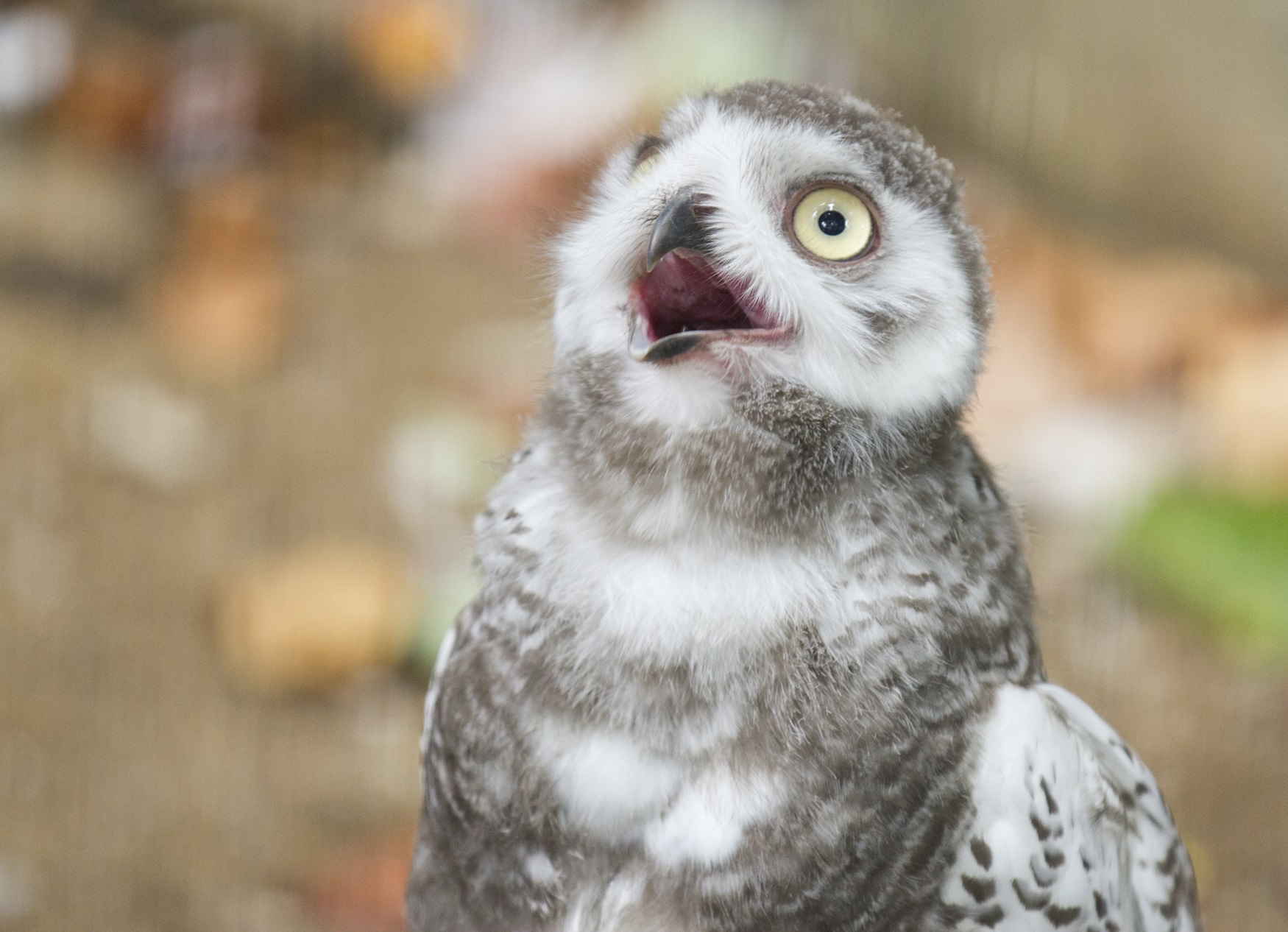
Adults tend to wait until their second year to breed, and are not consistent from year to year, skipping a season if their physical environment or health is not likely to result in successful reproduction. The snowy owl is generally monogamous for the duration of the breeding season, but does not mate for life. To attract a mate, the male performs an ornate courtship ritual with a structure defined by food offerings combined with a swirling and moth-like in-flight dance, ending in a final ground pose, often with fluffed feathers.
Though new studies indicate that both the male and female convergently seek out their breeding territory, after the territory is chosen, each sex within the breeding pair has distinct responsibilities. The male will hunt, guard and defend the female and chicks throughout the breeding season, which lasts four and a half months. The female, with full brooding responsibilities, chooses the actual nesting site within that territory and makes the nest by scraping a shallow, roughly 0.3-m-wide indentation in the earth on a raised mound on the tundra. Nesting on such a rise increases visibility and allows the wind to keep the nest snow-free.
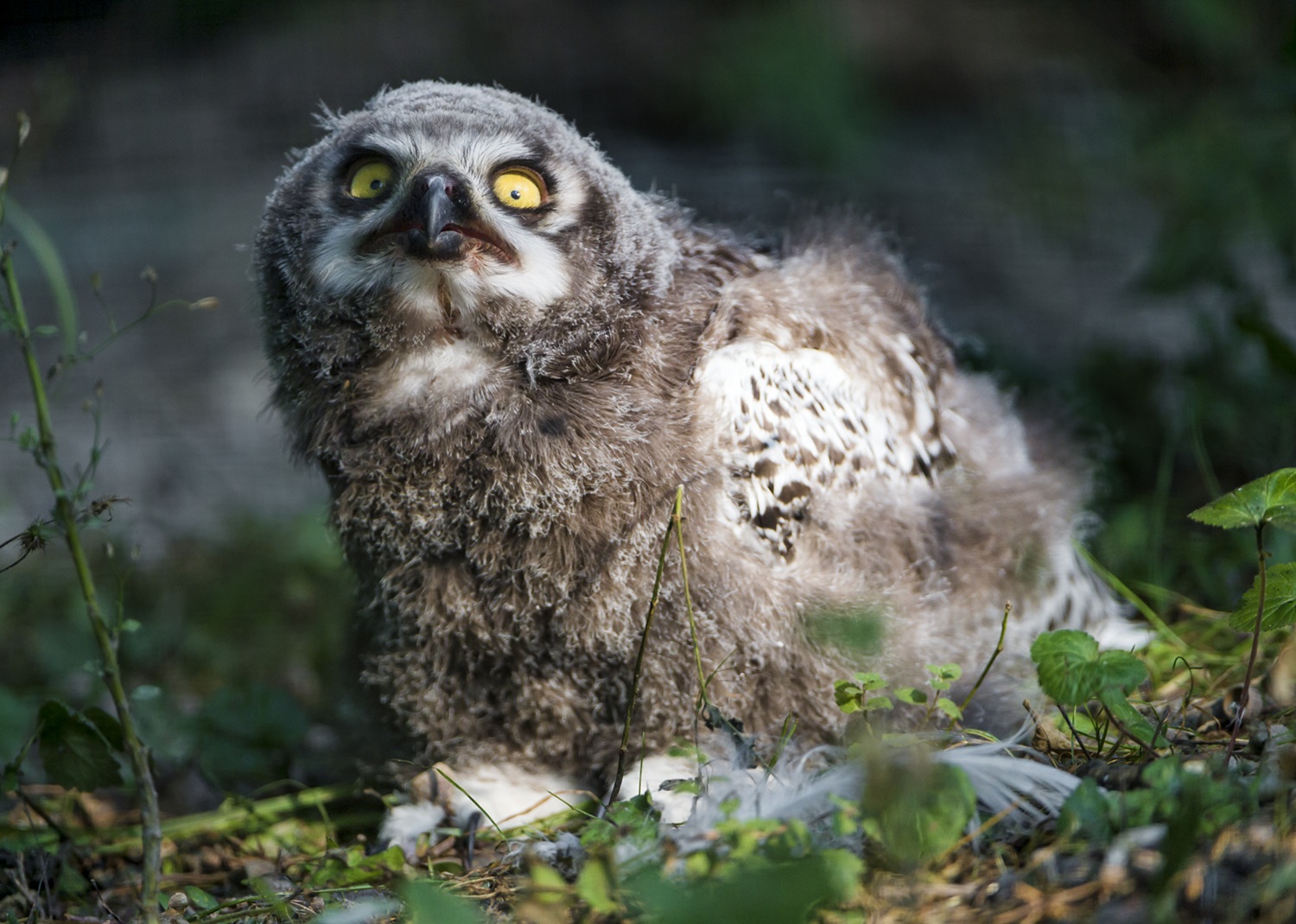
One clutch is produced per breeding season, ranging from 2 to 16 eggs, depending upon prey availability at the beginning of the season. Each egg is laid about two or three days apart, so siblings within a single clutch vary in size and development. Incubation lasts between 31 and 34 days, the first flight happens between 43 and 57 days, and parents feed their young for up to three months.
Diet and Predation
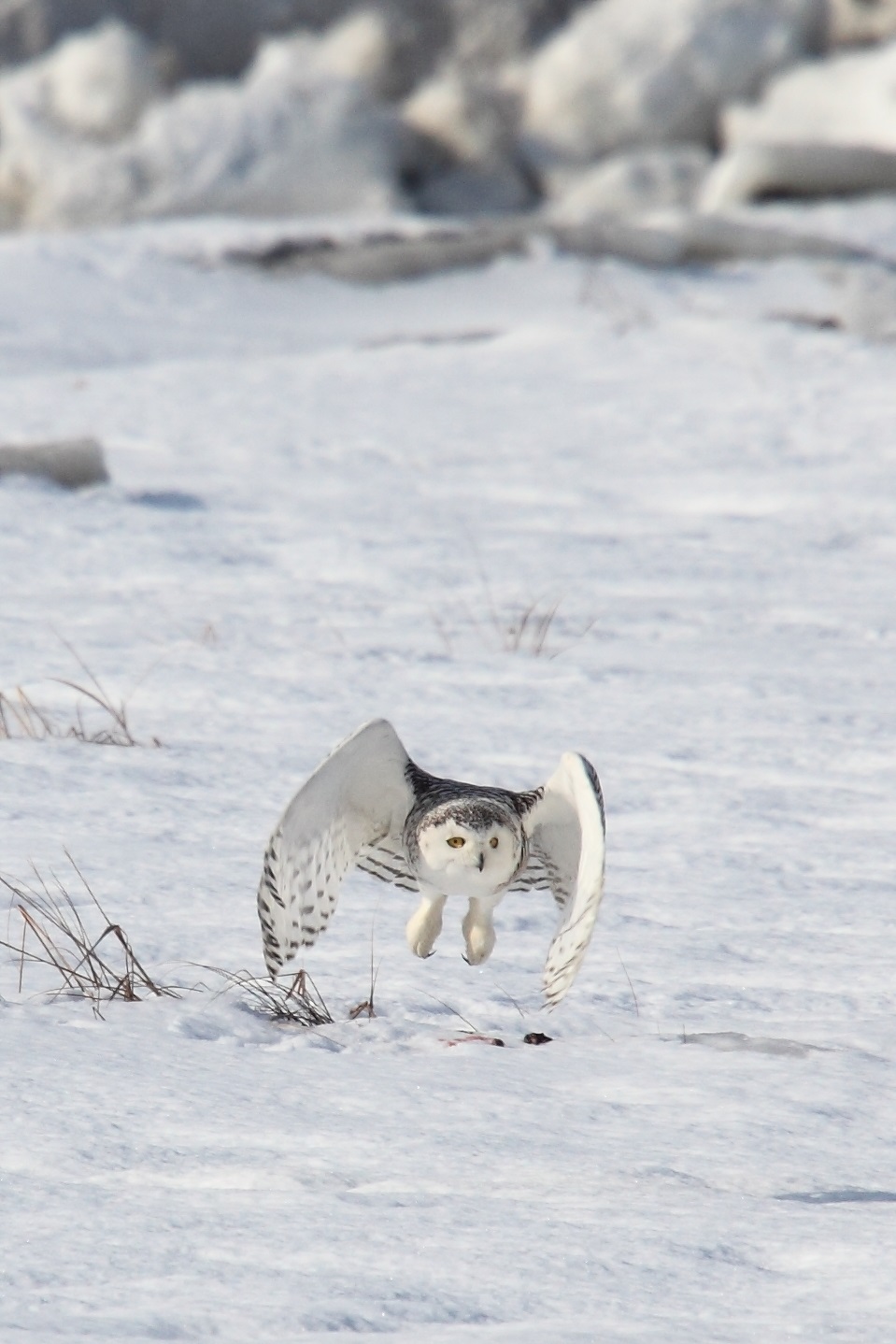
An opportunistic hunter, the snowy owl is, unlike other owls, mostly diurnal — a behaviour no doubt necessitated by living in the Arctic, with its 24-hour summer daylight. It mainly hunts small mammals and waterfowl, with a marked preference for lemmings — lemmings are the staple summer food for most Arctic predators.
The snowy owl uses a creative array of hunting techniques, all of which involve the element of surprise — their colouring blends with the landscape of the snowy tundra, and comb-like serrations on wings with low aspect ratio serve to silence the sound of flight. Sitting and waiting from a low perch before swooping upon their prey seems to be the favoured hunting approach, but variations abound: they will hover and dive, swoop mid-flight, run to catch prey on the ground without taking flight, and even fish with their extraordinarily long and strong claws. They hunt by sight and sound, often capturing lemmings as they invisibly tunnel under the Arctic snow.
Conservation and Threats
It is estimated that from 1976 to 2016, there was a 64 per cent decrease in the worldwide snowy owl population. In 2017, the International Union for Conservation of Nature (IUCN) updated the snowy owl's status to Vulnerable. The globally itinerant nature of the snowy owl means that there are no genetic subsets within the species restricted to geographic location; therefore, its conservation is often viewed as a global responsibility. A 2024 assessment specifically highlighted the importance of increased collaboration with the Indigenous peoples of the Arctic, recognizing their unique historical understanding of the bird.
Known threats to snowy owls include habitat loss due to human activity, collisions (cars, airplanes, etc.) and poisoning by heavy metals or other environmental pollutants. The adverse environmental effects of climate change and the reduction in prey availability are likely also threats, though it is challenging to accurately assess their current impact on snowy owls.
Did you know?
Jean-François Therrien, a researcher from Université Laval who studies how the changing Arctic ecosystem impacts snowy owls, has stated that “We know the Arctic is shrinking because of warmer temperatures. It is becoming more like a boreal forest.” The lemming population has already been thrown into disarray by climate change, with the new “melt and freeze” situation of the summer Arctic ground brought on by irregular temperature fluctuations creating a ground cover of impenetrable ice instead of snow, rendering it impossible for lemmings to tunnel and reach their food source of mosses and grasses beneath. All of this is likely to impact the snowy owl's breeding and survival rates in the near future.
Cultural Significance
Called ookpik (“little bear”) by the Inuit peoples of northern Canada and Alaska, and gawesa (“the white feathered one”) by the Ojibwe peoples, the snowy owl is intertwined in the storytelling and symbolism of many Indigenous peoples in Canada. Frequently appearing in oral traditions, it is depicted with a variety of characterizations, though it is often a symbol of rebirth and transition from the world of the living to that of the dead.
Did you know?
In February 1886, a male snowy owl landed on the rigging of one of the earliest ocean liners, the Nova Scotia steamship Ulunda, when it was over 600 km from land off the edge of Newfoundland. The owl was captured and kept as a pet by the ship's captain, S. Roland Hill, until they arrived in London, at which time Hill had the owl chloroformed, stuffed and posed under glass. The owl is now on display in the Maritime Museum of the Atlantic in Halifax.