Share on Facebook
 Share on X
 Share by Email
 Share on Google Classroom
Canada accepted relatively few refugees during the Second World War because of restrictive immigration policies and public resistance. Yet nearly one-quarter of a million refugees emigrated to Canada between 1947 and 1962 in the aftermath of the Second World War. The displacement of people during and after the Second World War and their resettlement in Canada transformed the country’s previously restrictive refugee policy, contributing to the development of the Department of Citizenship and Immigration in 1950 and the emergence of modern multicultural Canadian society.
Canadian Immigration Policy
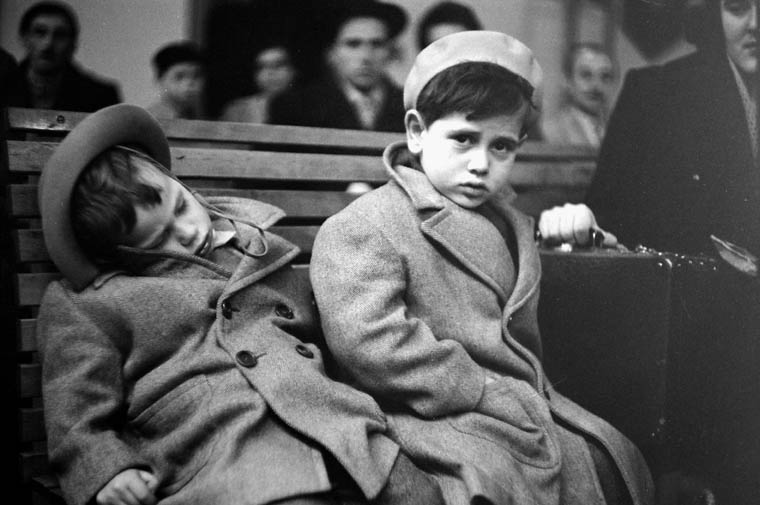
British North America accepted waves of refugees at various points in its early history, including the United Empire Loyalists in the aftermath of the American Revolution. After Confederation, Canada accepted displaced Ukrainian and Russian refugees following the Russian Revolution of 1917 and subsequent civil wars in Eastern Europe. By the 1930s, however, Canadian immigration policy was comparatively restrictive, and there was no consistent policy regarding the admission of refugees. Communities that experienced persecution in their homelands — including Mennonites and Doukhobors — were required to meet the existing expectations for immigrants to Canada rather than be admitted for humanitarian reasons alone. Canada refused to ratify the Nansen passport, introduced by the Council of the League of Nations for stateless citizens after the First World War, as this document protected refugees from being deported to their country of origin.
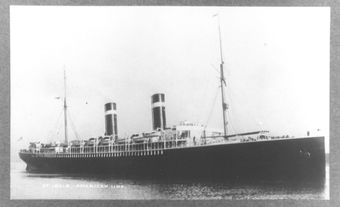
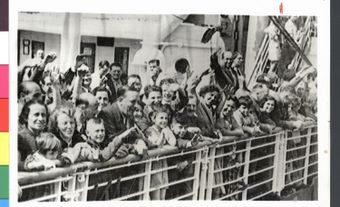
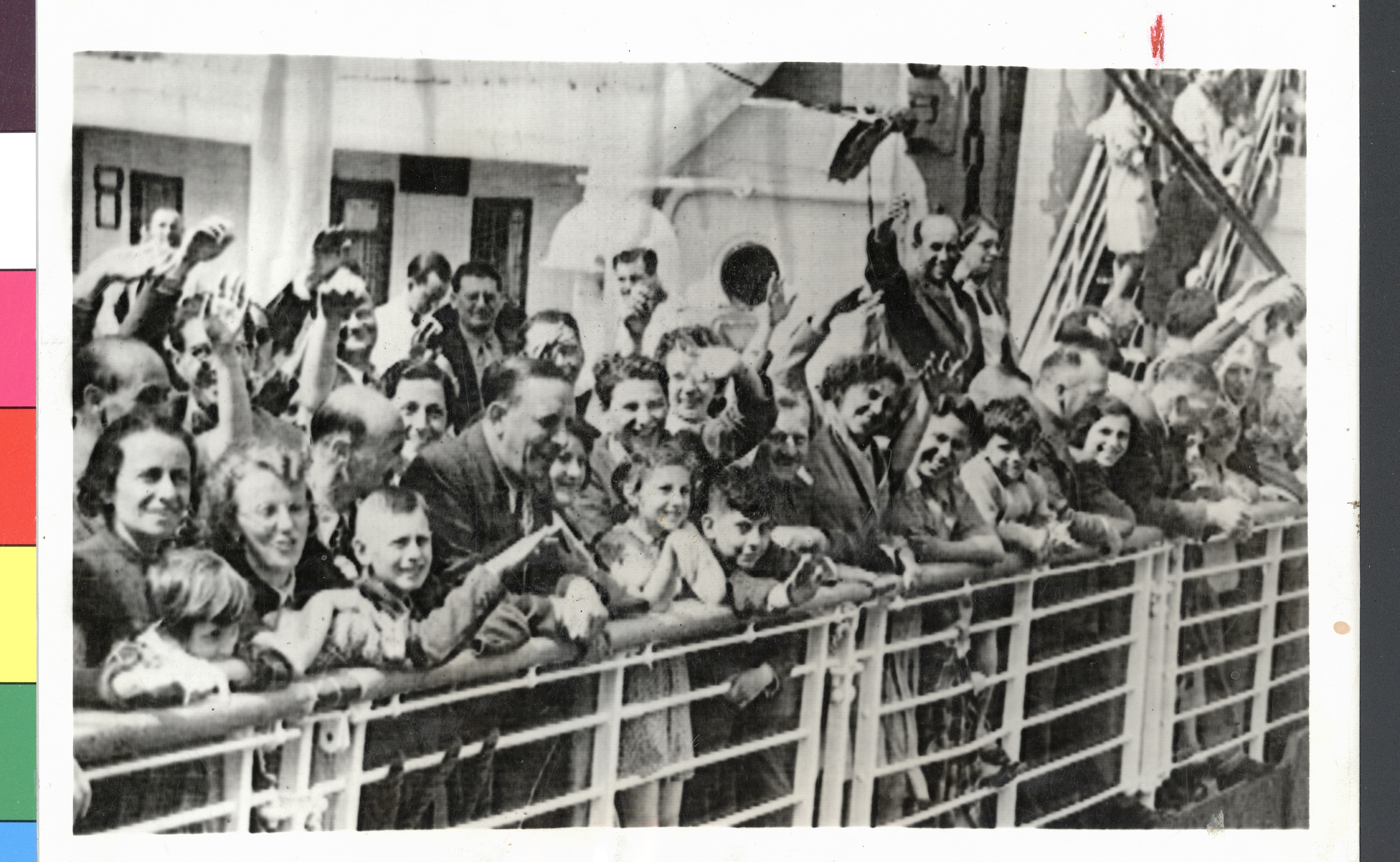
In 1931, an order-in-council implemented by the government of Prime Minister R.B. Bennett restricted immigration to American and British subjects with sufficient means to maintain themselves until securing employment, the spouses and minor children of Canadian residents, and prospective agriculturalists with sufficient means to farm in Canada. This immigration policy was the most restrictive in Canada’s history. Coupled with widespread opposition to admitting large numbers of Jewish refugees, especially in Quebec, the policy shaped the decision of Prime Minister William Lyon Mackenzie King and his immigration minister, Frederick Blair, to refuse admission to 907 Jewish refugees aboard the MS St. Louis on 7 June 1939.
Canadian National Committee on Refugees
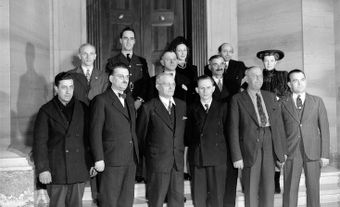
In July 1938, American president Franklin Roosevelt hosted delegates from 32 nations in Évian-les-Bains, France, to discuss the growing refugee crisis in Europe. Only the Dominican Republic, however, was willing to accept more refugees. Canadian delegate Humphrey Hume Wrong from the Department of External Affairs (now Global Affairs Canada) delivered a speech, declaring that Canada could not accept more refugees.
Not all prominent Canadians agreed with Wrong. That same year, the League of Nations Society in Canada — which was chaired by Canada’s first female senator, Cairine Wilson — created the Canadian National Committee on Refugees and Victims of Political Persecution, which was later shortened to the Canadian National Committee on Refugees (CNCR). The CNCR was a response to Nazi Germany’s seizure of the Sudetenland in Czechoslovakia, which displaced 80,000 people. Just 303 families and 72 single men from Sudetenland were ultimately admitted to Canada after the Canadian government offered to accept 1,200 families if the United Kingdom covered the costs of their transport across the Atlantic.
The CNCR was also concerned about the persecution of European Jews and petitioned the Canadian government to admit Jewish refugees, as did the Canadian Jewish Congress. The CNCR also attempted to shift public opinion, publishing literature about the hardships faced by refugees. Despite the efforts of the CNCR, Canada only admitted fewer than 5,000 Jewish refugees between 1933 and 1945 — the lowest number of Jewish refugees among developed nations.
Second World War
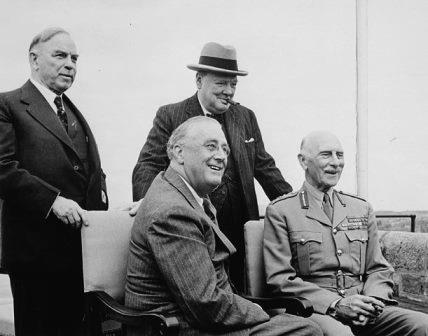
There were many barriers preventing the widespread admission of refugees to Canada during the Second World War. Financial requirements continued to be enforced for new immigrants, which precluded the admission of refugees whose property, possessions and money had been confiscated by Nazi Germany. Canadian immigration offices in Paris, Antwerp, Rotterdam, Liverpool, Glasgow and Belfast were closed in 1941, with all matters concerning immigration and refugee resettlement coordinated through London. Like Mackenzie King and Blair, Canadian high commissioner to Britain and future governor general Vincent Massey opposed the large-scale admission of Jewish refugees to Canada and expressed antisemitic sentiments.
While Canada welcomed about 7,500 British children in 1939 and 1941 for the duration of the war, there was little political support for a wider European refugee resettlement program. (See also British Home Children in Canada.) In the summer of 1943, Mackenzie King delivered an address to the House of Commons concerning Canadian refugee policy. He argued that, as most refugees were in countries controlled by Nazi Germany and other Axis powers, “there is nothing that the Allied governments can do to save these hapless people, except to win the war as quickly and as completely as possible.”
In the case of refugees who had already escaped to neutral European countries, Mackenzie King argued that their plight was a global crisis that required an international consensus. Mackenzie King also claimed that most of the 39,000 immigrants who had settled in Canada between 1932 and 1943 were refugees. European refugees admitted during the early years of the Second World War were those considered useful to the Canadian wartime economy, including Polish refugee scientists and engineers.
In 1944, the CNCR persuaded Mackenzie King to admit refugees who had fled to Spain and Portugal. Four hundred Jewish refugees arrived in Canada from Lisbon aboard the Portuguese ship Serpa Pinto. This acceptance of small numbers of wartime refugees took place the same year that members of the Canadian armed forces were permitted to sponsor war brides and children born overseas and was, therefore, part of a larger wave of European immigration to Canada.
Canadian Public Opinion
Some prominent Canadians argued that the country should accept a greater number of refugees. They included Gladys Strum — the only female member of Canadian parliament elected during the 1945 federal election — who represented Qu’Appelle Saskatchewan as a member of the Co-operative Commonwealth Federation (a forerunner of the New Democratic Party). Strum spoke repeatedly in favour of Canada admitting more refugees from Europe, and she adopted 10 children from Czechoslovakia and Spain. Future governor general Georges Vanier and his wife, Pauline, advocated for greater numbers of refugees to be resettled in Canada before, during and after the Second World War. Vanier visited Buchenwald concentration camp in April 1945 with a group of American congressmen and was deeply moved by the suffering that he witnessed there.
Despite extensive media coverage of the horrors of Nazi concentration camps at the end of the Second World War, October 1946 polling data suggested that 49 per cent of Canadians opposed any Jewish immigration to Canada. As more refugees arrived in Canada in the aftermath of the war, though, popular attitudes gradually changed. The post-war economic boom resulted in lobbying from Canadian businesses for increased immigration, including the admission of greater numbers of refugees.
Canadian Citizenship
The end of the Second World War in 1945 was followed by sweeping changes to Canadian citizenship, immigration and refugee policy. On 1 January 1947, the Canadian Citizenship Act came into effect, creating the legal status of Canadian citizenship distinct from the status of a British subject within the wider Commonwealth. Residents of Canada could now receive Canadian citizenship regardless of their country of origin. The Department of Citizenship and Immigration (now called Immigration, Refugees and Citizenship Canada) was created in 1950 and implemented the Assisted Passage Loan Scheme to assist refugees from Europe who could not pay for their own passage (immigrants from Africa and Asia were excluded from the program until 1970).
The 1923 Chinese Immigration Act — which banned all Chinese immigrants — was repealed in 1947 and Chinese immigration resumed in the 1950s, primarily from Hong Kong, which was controlled by the United Kingdom at the time.
Displaced Persons
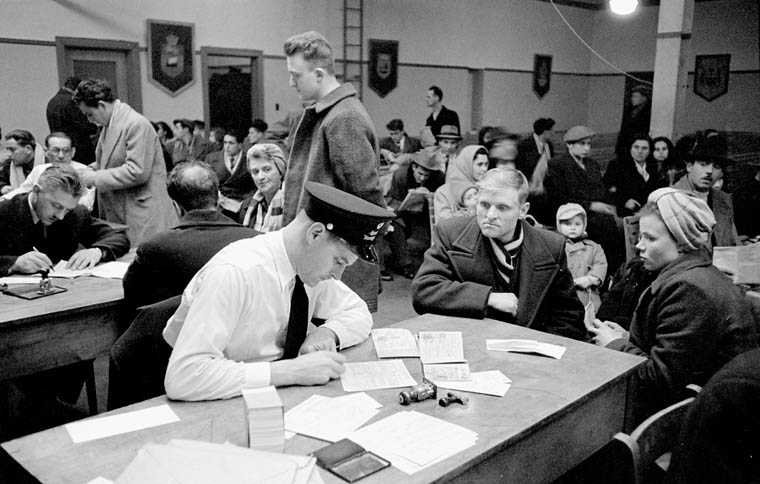
In 1947, there were one million displaced persons — including 200,000 Jewish people — living in or outside of refugee camps organized by the United Nations International Refugee Organization. Although Mackenzie King continued to express public concern about accepting large numbers of European refugees, Canada had played a founding role in the establishment of the United Nations and faced international pressure to help alleviate the post-war refugee crisis in Europe. In 1947, a series of special orders-in-council allowed the admission of European displaced persons to Canada.
Between 1947 and 1962, nearly one-quarter of a million refugees were admitted to Canada through government sponsorship, contract labour programs and the support of Canadian relatives, charities and religious organizations. Ukrainian Canadians who had immigrated to Canada during the early 20th century lobbied the Canadian government for the admission of Ukrainian refugees after the Second World War. Between 1945 and 1952, 35,000 to 40,000 Ukrainian refugees settled in Canada, primarily in urban centres such as Toronto and Montreal rather than the Prairie provinces, which had been the preferred destination for Ukrainian immigrants earlier in the century.
Canada admitted more than 157,000 (and perhaps as many as 187,000) displaced persons between 1945 and 1951. These displaced persons were primarily from Eastern and Central Europe and consisted of Poles (23 per cent), Ukrainians (16 per cent), Germans and Austrians (11 per cent), Jews (10 per cent), Latvians (6 per cent), Lithuanians (6 per cent), Hungarians (5 per cent), Czechs (3 per cent), Dutch (3 per cent), and Russians (3 per cent).
The initial wave of displaced persons was predominantly men who arrived alone under one-year labour contracts. Although there were many refugees among this group with post-secondary education and advanced professional qualifications, these contracts were for jobs primarily involving manual labour, such as mining, logging, agriculture, needle trades and domestic service. According to John Holmes, the first secretary at the Canadian High Commission in London, United Kingdom, “Any displaced persons who would be permitted to come, it was assumed, would be selected like good beef cattle with a preference for strong young men who could do manual labour and would not be encumbered by aging relatives.” After completing their labour contracts, former displaced persons had the opportunity to sponsor their families and seek employment in keeping with their educational qualifications.
1951 Refugee Convention
The 1951 Refugee Convention provided a legal definition of a refugee as “a person who, owing to a well-founded fear of being persecuted for reasons of race, religion, nationality, membership of a particular social group or political opinion, is outside the country of his nationality and is unable or, owing to such fear, unwilling to avail himself of the protection of that country.” Canada did not ratify this convention until 1969 due to concerns that the United Nations protocol would prevent the deportation of communists and other immigrants considered undesirable by the Canadian government during the Cold War.
Hungarian Revolution
The displacement of more than 200,000 Hungarians — following the Soviet invasion of Hungary in 1956 — resulted in lasting changes to Canada’s refugee policy. These Hungarian refugees received free transport rather than loans for their passage to Canada and assistance with living expenses for their first year in Canada. In admitting, settling and supporting Hungarian refugees, the Canadian government worked closely with community groups, religious organizations and non-profit organizations, setting key precedents for subsequent waves of refugees in Canada.
Legacy
The resettlement of nearly one-quarter of a million Second World War refugees in Canada had a lasting impact on Canadian refugee policy, creating conditions for the modern multicultural society. Following Canada’s ratification of the United Nations 1951 Refugee Convention in 1969, Canada gained a reputation as a safe haven for refugees, which continues to the present day.
The publication of None Is Too Many: Canada and the Jews of Europe 1933–1948, by Irving Abella and Harold Troper, in 1982 brought Canada’s failure to accept Jewish refugees both before and immediately after the Second World War to public attention. This influenced the decision of Ronald Atkey, the Minister of Employment and Immigration in Canada at the time, to admit tens of thousands of Vietnamese refugees to Canada.
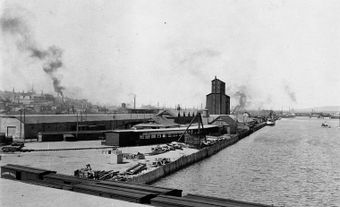
The contributions of Second World War refugees to present-day Canadian society have received widespread recognition across the country. A 2014 Government of Canada plaque at the Canadian Museum of Immigration at Pier 21 in Halifax honours the arrival of displaced persons in Canada after the Second World War. This plaque concludes with the words, “The arrival of displaced persons enriched their new communities and added strong voices to the calls for recognition of Canada’s growing cultural diversity.”