Share on Facebook
 Share on X
 Share by Email
 Share on Google Classroom
Since June 1947, Canada has had a national search and rescue (SAR) program. It started simply, in response to air incidents, with the Royal Canadian Air Force (RCAF) as the lead agency. It has since expanded to include incidents on water and on land. It includes not just the Canadian Armed Forces (CAF), but the Canadian Coast Guard (CCG) and other governmental organizations as well as civilian volunteers.
National Search and Rescue Program
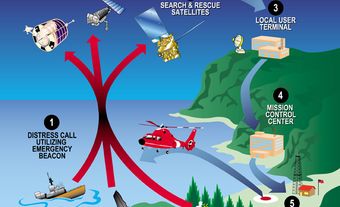
The coordinating organization for SAR in Canada is the National Search and Rescue Secretariat. It is now part of the Emergency Management and Programs Branch of Public Safety Canada. Its roles include prevention outreach as well as coordinating faster communications, interoperability and coordination with the SAR community. It also provides policy advice and recommendations to support Canada’s SAR efforts, including Canada’s role in the International COSPAS-SARSAT Program, a satellite-based distress-alerting system.
Did you know?
Canada, France, the United States and the Soviet Union were the original signatories to the International COSPAS-SARSAT program. The first rescue using one of the satellites was on 9 September 1982, when a Soviet satellite detected the ELT signal of a Cessna that crashed in the Stikine Mountains of British Columbia. The next day they were rescued by search and rescue crews from 442 Squadron.
Canadian Armed Forces
The CAF operates three Joint Rescue Coordination Centres (JRCC). JRCC West is located in Victoria and covers British Columbia and Yukon as well as an area extending to about 1,100 kilometres off Canada’s Pacific coast. JRCC Central, located in Trenton, Ontario, covers an area from Quebec City to the Alberta-British Columbia border, north to the North Pole. In Halifax, JRCC East covers the four Atlantic provinces, eastern Quebec, the southern half of Baffin Island, and the northwest area of the Atlantic Ocean. The JRCCs are manned 24 hours a day. They task the required resources and conduct the initial coordination of each mission.
There are five squadrons whose principal role is search and rescue: 103 Search and Rescue Squadron in Gander, Newfoundland and Labrador; 413 Transport and Rescue Squadron in Greenwood, Nova Scotia; 424 Transport and Rescue Squadron in Trenton, Ontario; 435 Transport and Rescue Squadron in Winnipeg, Manitoba; and 442 Transport and Rescue Squadron in Comox, British Columbia.
In addition, three squadrons fly SAR missions among their other tasks: 417 Combat Support Squadron at Cold Lake, Alberta; 439 Combat Support Squadron at Bagotville, Quebec; and 444 Combat Support Squadron, Goose Bay, Newfoundland and Labrador. Moreover, all other RCAF squadrons may be tasked with conducting or supporting SAR missions. This is especially true of 406, 423 and 443 Squadrons that operate the CH-148 Cyclone helicopter that supports the Royal Canadian Navy (RCN).
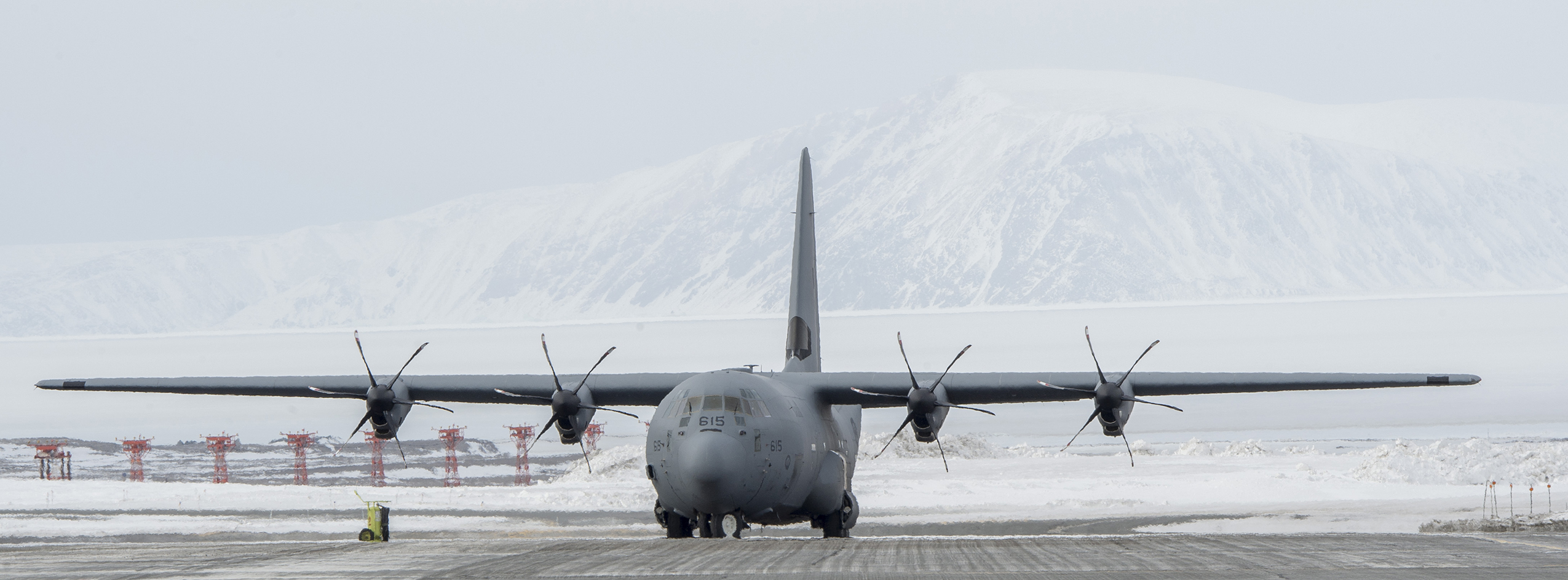
The RCAF uses four aircraft types specifically for SAR:
|
CC-130H Hercules (fixed wing) |
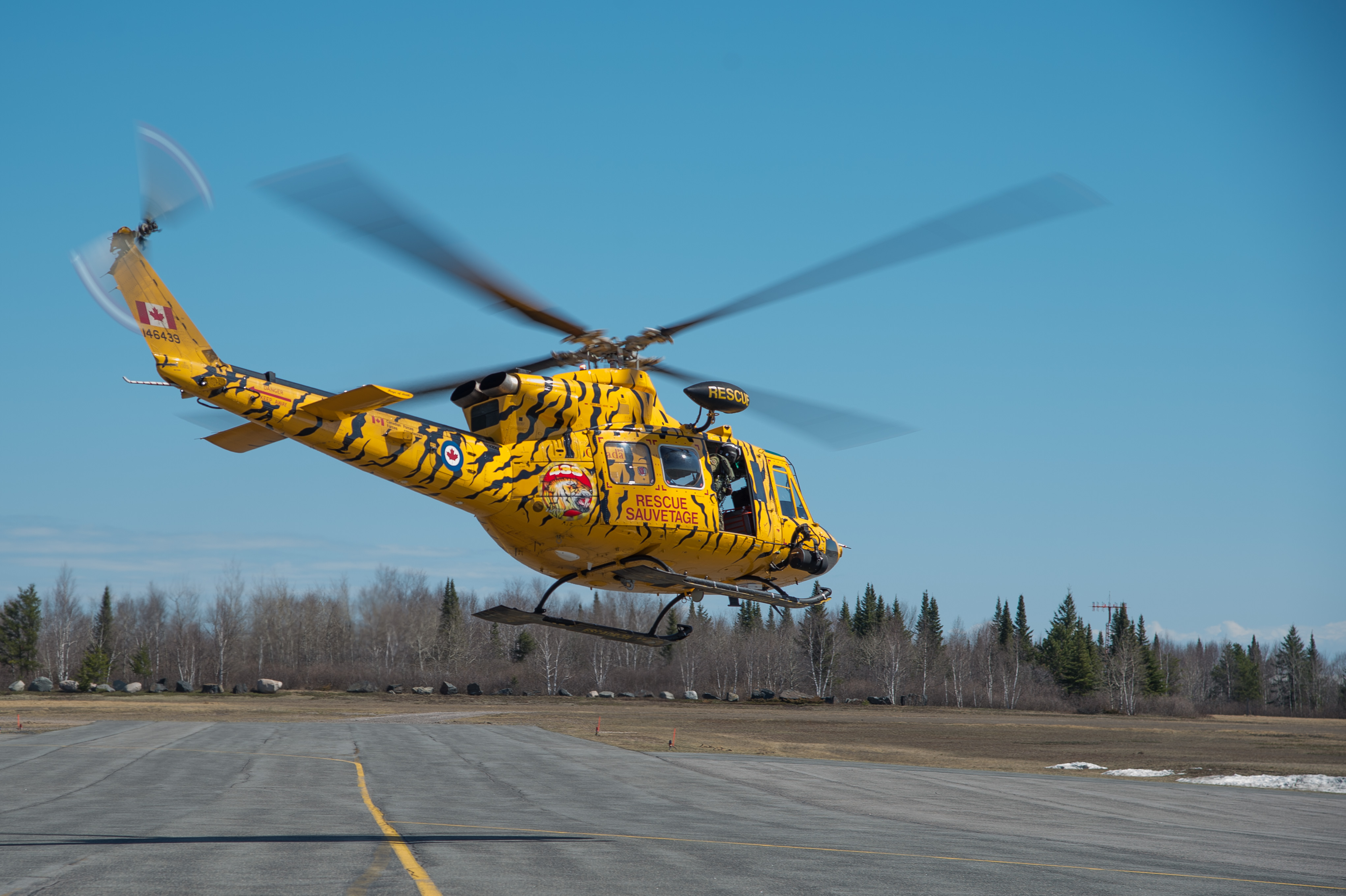
CC-295 Kingfisher (fixed wing) |
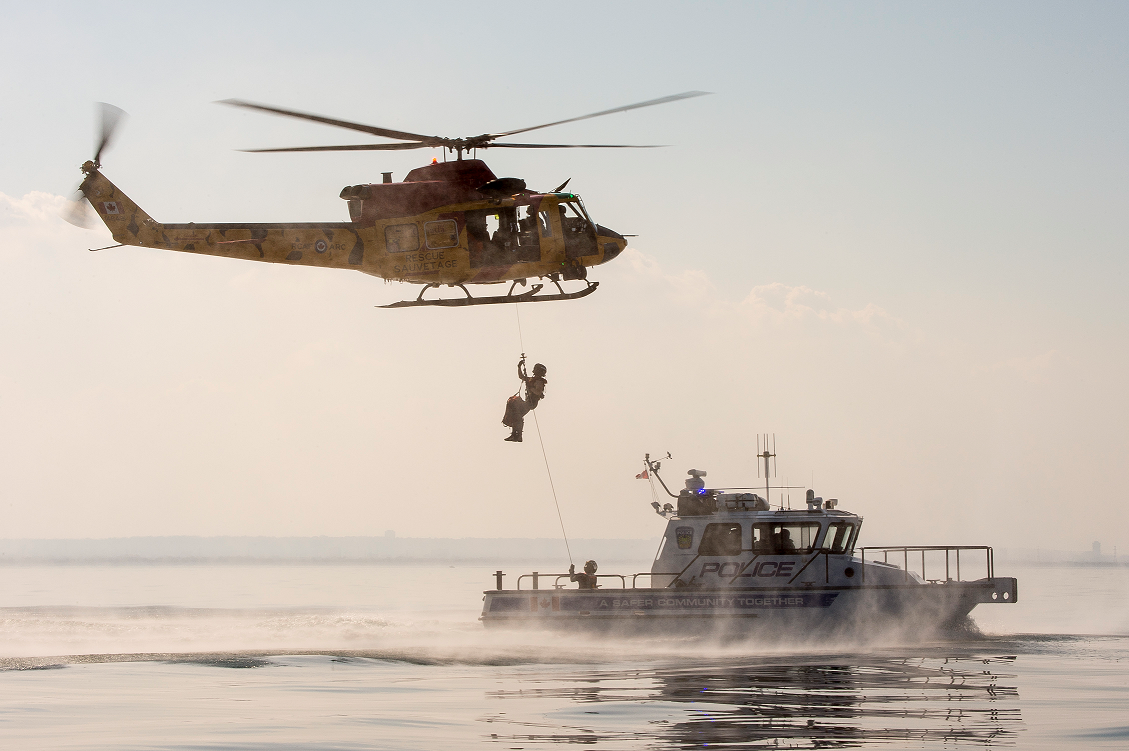
CH-146 Griffon (rotary wing) |
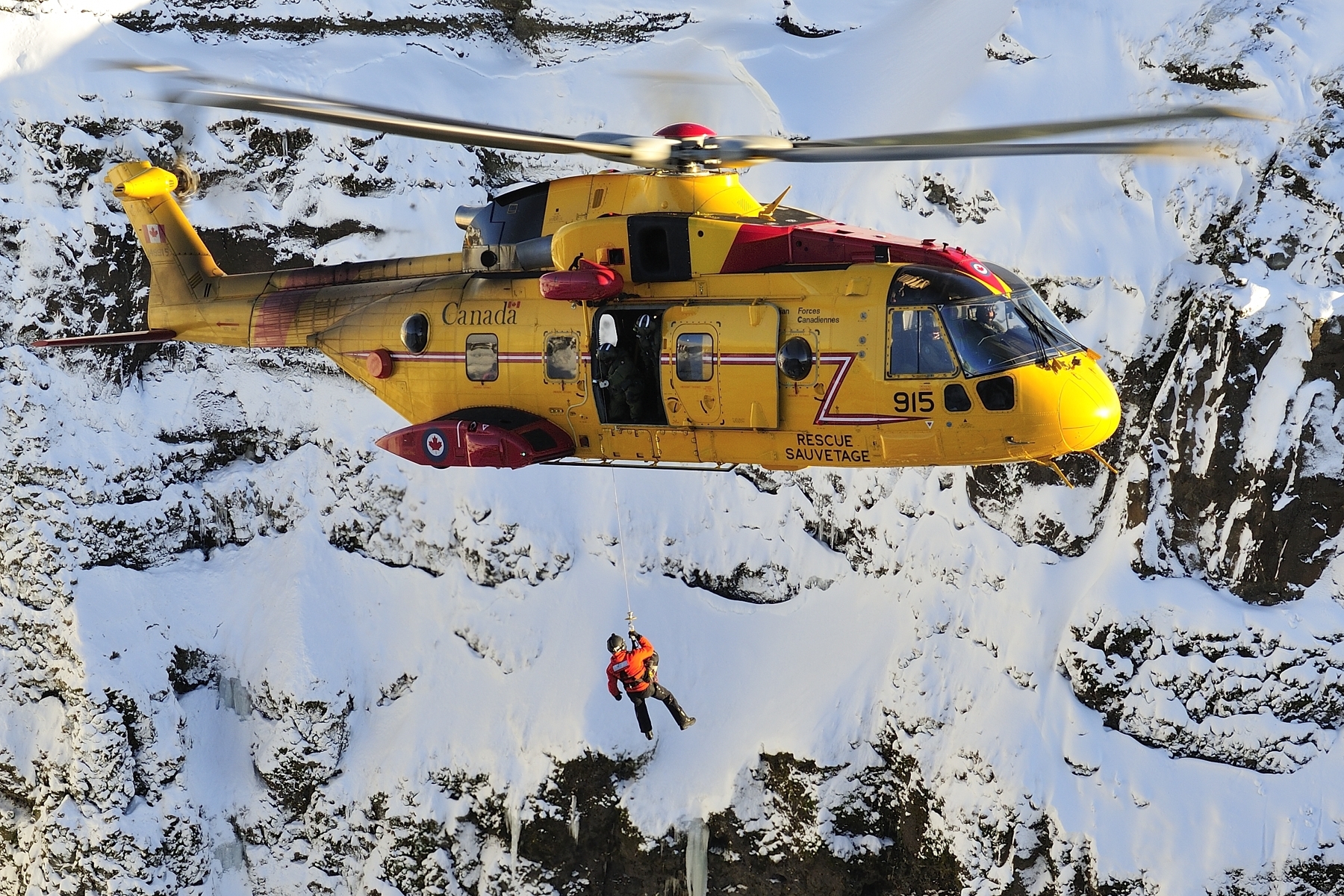
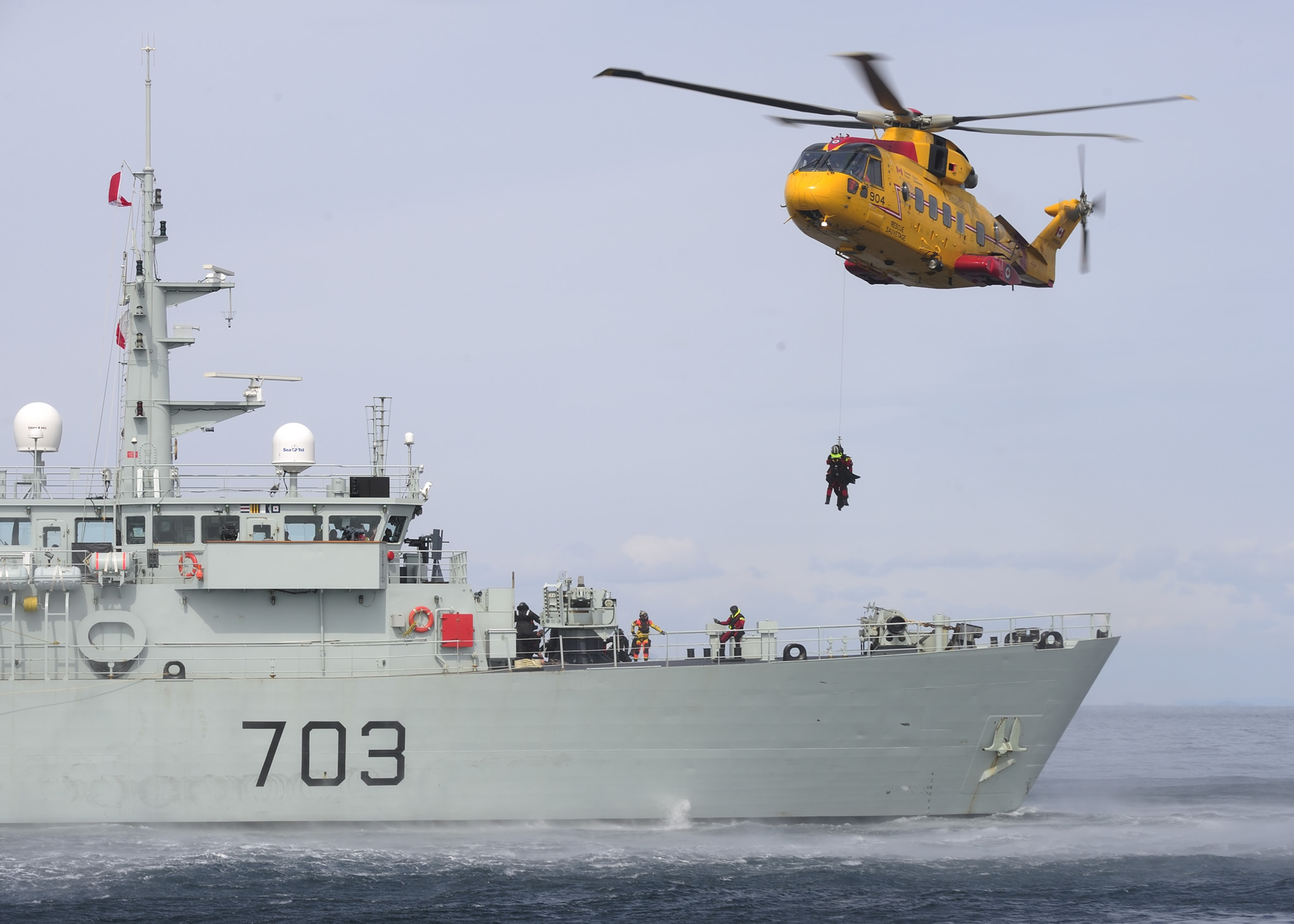
CH-149 Cormorant (rotary wing) |
|
|
103 Squadron |
x |
|||
|
413 Squadron |
x |
x |
||
|
424 Squadron |
x |
x |
||
|
435 Squadron |
x |
|||
|
442 Squadron |
x |
x |
||
|
417 Squadron |
x |
|||
|
439 Squadron |
x |
|||
|
444 Squadron |
x |
The CC-130H will be phased out as the CC-295 Kingfisher achieves full operational capability by 2029-30. The first operational para-jump from the Kingfisher occurred on 21 May 2025.
At each SAR squadron, crews are on standby 24 hours a day, 7 days a week. For 40 hours a week, the designated SAR crew is required to be airborne in less than 30 minutes. At all other times the crew must be airborne in less than two hours. Each SAR aircraft on a search carries a Search and Rescue Technician (SAR Tech). There are about 140 SAR Techs in the CAF.
The RCN may be called upon for SAR missions at sea. This often happens when an RCN vessel is in proximity to a maritime incident. Some ships carry a CH-149 Cormorant, which extends the range of the ship’s search. Canadian Rangers are often called upon when there is a ground search in the sparsely settled areas of Canada where the Rangers operate.
Canadian Coast Guard
The CCG provides key SAR services in the maritime environment on federally controlled waters. To support these operations, it operates two marine rescue sub-centres. The one in Quebec City coordinates local rescues on the waters of the Great Lakes and Gulf of St. Lawrence while the one in St. John’s, Newfoundland and Labrador serves the waters of the northwest Atlantic.
Operationally, the CCG has 46 SAR stations, some of which operate year-round while others are seasonal operations (usually April to December) due to ice and local weather conditions. The CCG also has 25 inshore rescue boat stations that operate in the summer months, as well as an arctic marine response station in Rankin Inlet, Nunavut. All sites maintain a vessel with a 30-minute response time. Like the CAF, the CCG can call upon its other vessels, which have a one-hour response time.
Parks Canada
Parks Canada also participates in SAR missions, leading ground operations in national parks and national park reserves.
Provincial and Territorial Governments
Provincial and territorial governments are responsible for ground searches in their areas. This normally involves missing persons on land or inland waters, which is usually delegated to local police services.
Volunteers
Although the primary responsibility for SAR remains with federal and provincial authorities and organizations, the size of Canadian territory requires help from volunteer organizations as well.
The Civil Air Search and Rescue Association (CASARA) assists the RCAF with personnel to act as spotters in aircraft and with aircraft and pilots. In April 1986, the federal government signed an agreement formalizing CASARA, providing funding to the chapters across Canada to standardize training and promote air safety, and to reimburse pilots for minor repairs, fuel and air time.
The Canadian Coast Guard Auxiliary, formed in 1978, supports missions on the Great Lakes and the oceans surrounding Canada. The Search and Rescue Volunteer Association of Canada (SARVAC), formed in 1996, provides assistance for ground SAR missions through its 300 SAR teams and 9,000 volunteers.