Share on Facebook
 Share on X
 Share by Email
 Share on Google Classroom
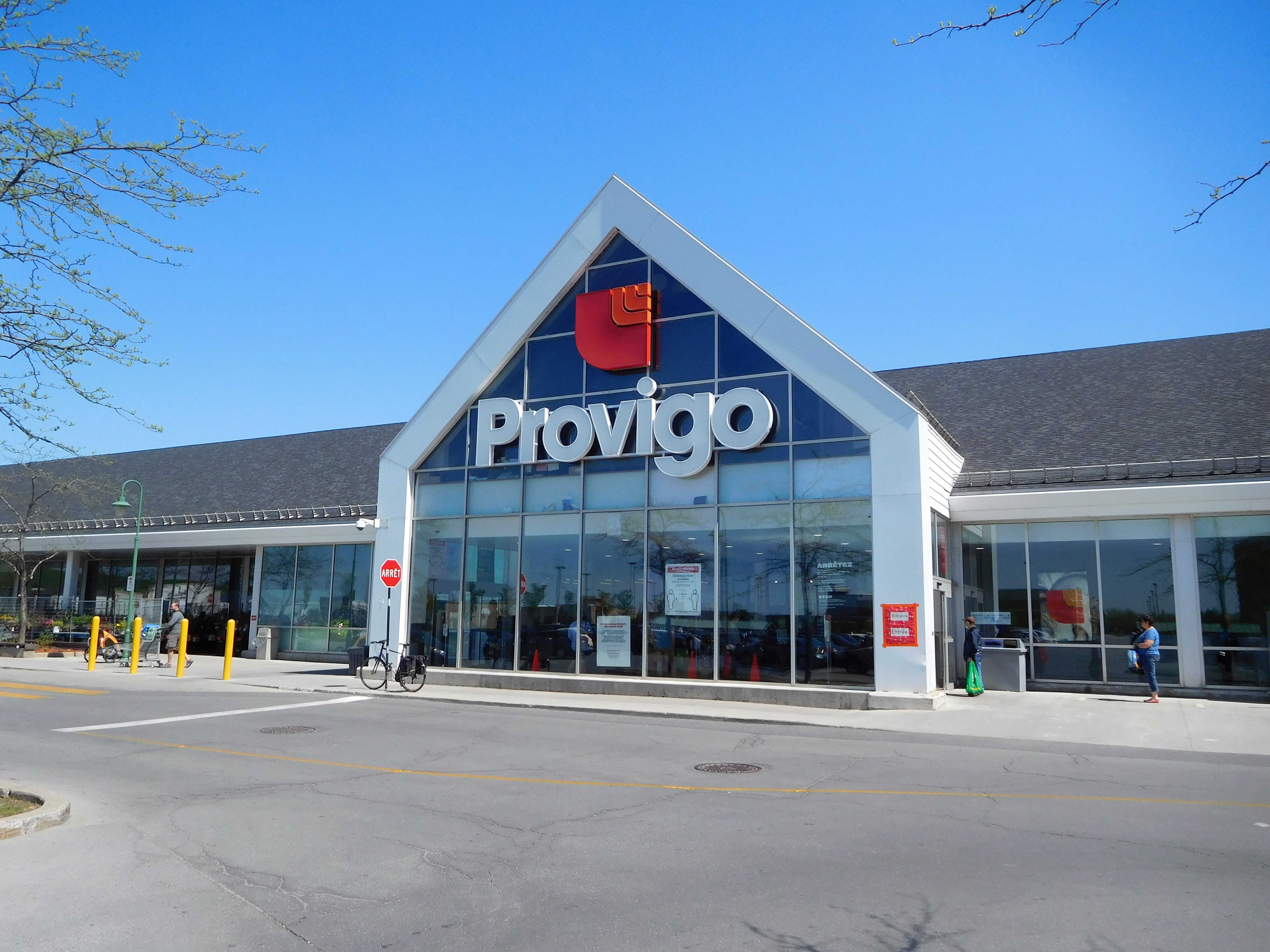
Provigo Inc. is a grocery wholesaler and retailer. Formed in a merger of three of Quebec’s major food wholesalers in 1969, its operations later spread into Ontario, Western Canada and the United States. Its most prominent retail banners included Provigo, Loeb and Maxi supermarkets and Provi-soir convenience stores. The company was purchased by Loblaw in 1998, who retained the Provigo brand for its Quebec supermarkets.
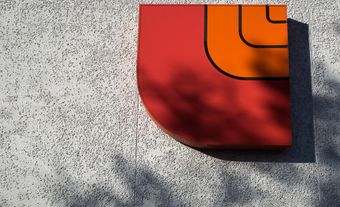
Provigo Logo
A Provigo grocery store with a visible logo in Montreal, Quebec, 4 February 2025.
(photo by Andrej Ivanov/Bloomberg, via Getty Images)
Origins
Three Quebec food wholesalers that spent the previous decade expanding their businesses merged in 1969: Montreal-based Couvrette & Provost Ltée., Sherbrooke-based Denault Limitée, and Chicoutimi-based Lamontagne Limitée. Antoine Turmel, who had been president of Denault, became the company’s first chief executive officer (CEO). The new company headquartered in Montreal, where it remained throughout its existence.
Initially used for its line of house-brand products for the stores it supplied, “Provigo Inc.” was adopted as the company’s corporate name in 1970. As René Provost and Maurice Chartrand observed in their book Provigo: The Story Behind 20 Years of Entrepreneurial Success (1989), “‘Provigo’ has visual appeal and sounds pleasing. It is neither too short nor too long. It has a multilingual flavour. The word itself is new but, separately or in combination, the various syllables evoke the words positive, professional (PRO); provisions (PROVI); vigour (VIGO); and suggest dynamism (GO).”
Though the company encouraged its clients to maintain their independent identities as corporate chains grew in power, by the mid-1970s Provigo had developed four retail banners that both associated and corporate stores could operate under. These were Provigain (large supermarkets), Provibec (medium-sized), Provipop (small), and Provi-soir (convenience stores). Other banners operated or supplied by Provigo in Quebec over its existence included Aux Vraies Aubaines, AXEP, Héritage, L’Intermarché, Jato, Jovi and Octofruit.
Between 1970 and 1979, Provigo’s sales grew from $182 million to $2.3 billion. It ended the decade as Canada’s third-largest food retailing and wholesaling company.
Expansion
In 1977, Provigo acquired Ottawa-based grocery retailer/wholesaler M. Loeb Limited, which allowed the company to expand its operations into Ontario, Western Canada and the United States. The deal also allowed Provigo to enter the pharmaceutical industry through the National Drug and Chemical Company of Canada Limited, which supplied major chains such as Shoppers Drug Mart and Zellers.
Loeb chairman Bertram Loeb was reportedly hesitant about the deal, feeling the idea of being purchased by a company half the size of his was ridiculous. His shares were ultimately bought by the Sobey family, who soon became Provigo’s largest shareholder. Over the next few years, the holdings of the Sobeys and the Caisse de dépôt et placement du Québec, another investor, fluctuated as they both aimed to control the company.
In 1980, Provigo acquired 87 Dominion stores, primarily in the Montreal area, defeating a bid by a consortium of Quebec-based cooperatives. It later purchased most of A&P’s Montreal locations.
Leadership Changes
When Antoine Turmel announced his intention to retire in 1985, his expected successor was chief operating officer Pierre Lessard. But during a controversial board meeting in April 1985, Montreal Exchange president Pierre Lortie and Unigesco CEO Bertin Nadeau were put forward as new directors. The Sobeys felt that since Turmel was also selling his shares in Provigo, there was no need to respect his desired succession if he no longer had a personal financial commitment to the company.
The following month, Lortie became CEO and Unigesco began acquiring Provigo shares from the Caisse. Lessard briefly retained his title before leaving the company. Within three years, Unigesco, the Caisse and the Sobeys combined to form the largest shareholding block.
Shortly after Lortie took over, Provigo acquired a 19.5 per cent ownership share of catalogue merchandiser Consumers Distributing, which it acquired full control of in 1987. It test-piloted placing Consumers catalogue-sales ordering kiosks in some of its stores. But the inability to fix Consumers’ longstanding inventory issues and declining sales led to the sale of the American division in 1988 and the remainder of the chain in 1990.
In 1988, Provigo expanded its presence in the United States by buying the upscale Petrini supermarket chain in San Francisco, California, along with acquiring 15 stores from American Stores, which were rebranded as Quality Stores. Sales declined by up to 30 per cent and within two years many stores were sold off. The subsidiary, known as Provigo Corp., was sold off in 1994.
The perception that its California expansion and non-grocery ventures were a disaster, and overall concerns about management, led to Lortie’s ouster in 1989. Nadeau became CEO and Yvan Bussières assumed the presidency. The pharmaceutical division was sold to McKesson Corp in 1990.
Final Decade
When rival grocer Steinberg’s assets were sold off in 1992, Provigo split some of Steinberg’s remaining stores and its distribution business with Métro-Richelieu. Provigo then sold off 24 of the stores, while retaining 32 locations. Around this time, the corporate name was changed to Univa, which Bertin Nadeau felt would distinguish the company from its main Provigo and Loeb subsidiaries.
When Unigesco, by now the largest stakeholder, ran into financial problems, it shopped Univa around. Separate deals with two American investment companies — Blackstone Capital Partners and Warburg Pincus Investors — fell through in 1993.
That June, the Caisse purchased Unigesco’s shares. In October 1993 Pierre Mignault became the new president and CEO and the old corporate name was restored in May 1994. By 1995, as they contemplated expanding their retail stores into eastern Quebec, the Sobey family resigned its board seats and sold some of their shares.
The Loeb division, which operated under the Loeb, Loeb IGA and Maxi banners, expanded their presence across Ontario during the late 1990s. A legal battle with 22 franchisees over fears over corporate ownerships led to accusations of wiretapping against Provigo. A breach-of-contract lawsuit was settled in 1996 with Loeb purchasing the stores involved.
In April 1997, Provigo’s C Corp convenience store division, which included Provi-soir, Red Rooster and Winks stores, was sold to Alimentation Couche-Tard.
In October 1998, months after opening its first stores in Quebec, Loblaw Cos. Ltd. announced a $1.6-billion bid for Provigo. At this point, Provigo had annual sales of $6 billion and held a 35 per cent market share in Quebec. Loblaw saw a company that had returned to profitability and would allow it to gain a major foothold in Quebec. After negotiations with the Caisse (by then the largest shareholder), the deal was approved. While Métro-Richelieu bought 41 Loeb stores in northeastern Ontario and the Ottawa area, Loblaw retained the Provigo, Maxi and Maxi & Cie brands in Quebec.