Share on Facebook
 Share on X
 Share by Email
 Share on Google Classroom
Margaret Millar (née Margaret Ellis Sturm), crime novelist (born 5 February 1915 in Kitchener, ON; died 26 March 1994 in Montecito, California). Margaret Millar won two Edgar Allan Poe Awards for Best Novel and a Grand Master Award from Mystery Writers of America. She was named Woman of the Year by the Los Angeles Times in 1965.
Education
Raised in the city of her birth, Margaret Millar attended the Kitchener-Waterloo Collegiate Institute, at which she met her future husband Kenneth Millar (best known by his pseudonym Ross Macdonald). Her first published short story, “Impromptu,” appeared in a 1931 issue of the school's student magazine. She continued her education, studying Classics at the University of Toronto, but left before obtaining a degree.
In 1938 she and Kenneth Millar married, settling first in Toronto, then Kitchener.
Writing Career
Margaret Millar maintained that she wrote her first book, the novel The Invisible Worm (1941), as a result of her dissatisfaction with the mysteries of the day. More novels followed, at a pace of over one a year. The commercial success and subsequent sale of film rights for the sixth, The Iron Gates (1946), allowed Millar and her husband (see Ross Macdonald) the financial freedom to pursue interwoven careers as mystery writers (see Popular Literature in English).
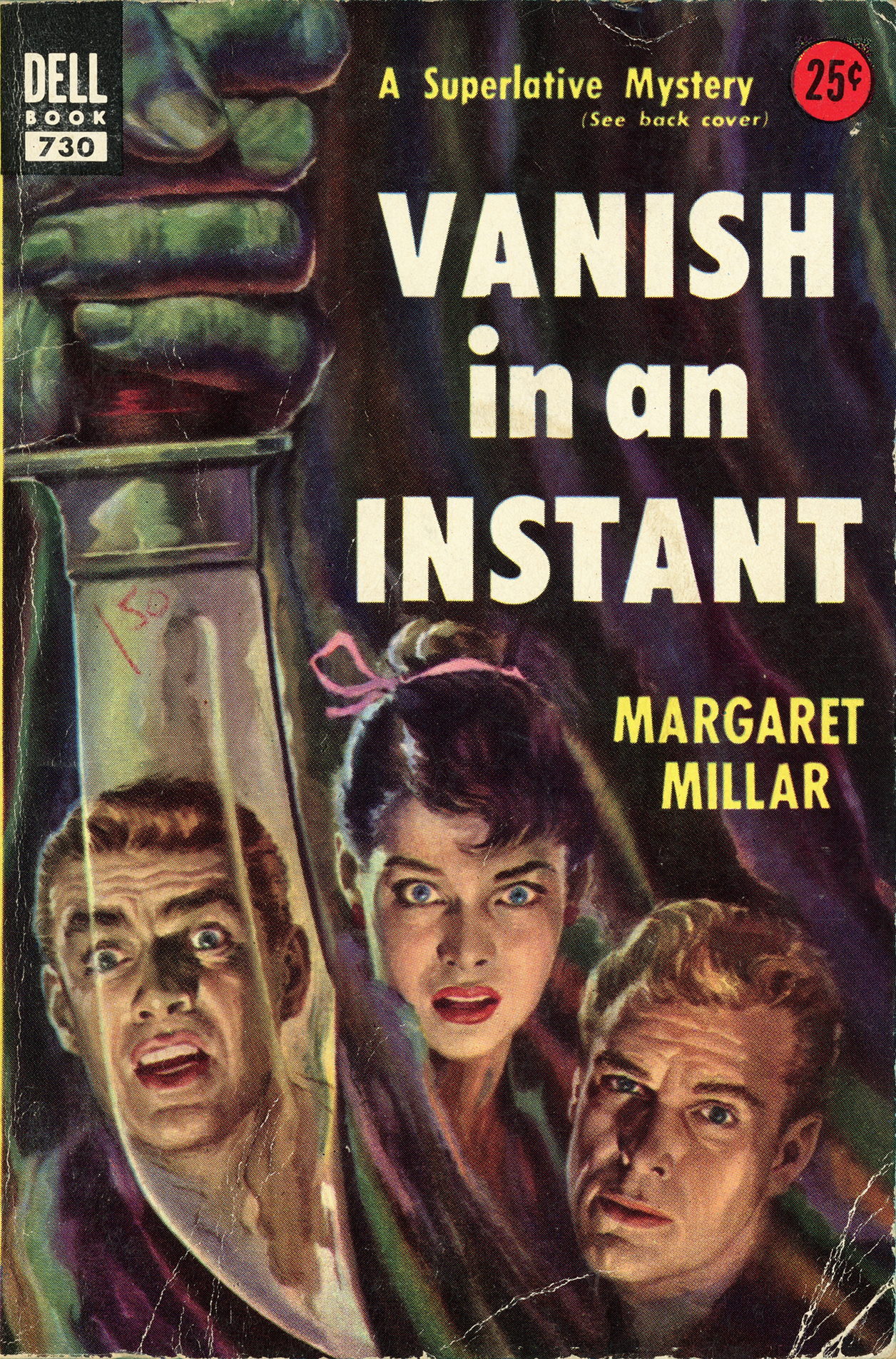
A prolific writer, Margaret Millar produced 26 novels and a birdwatching memoir, The Birds and the Beasts Were There: The Joys of Birdwatching and Wildlife Observation in California's Richest Habitat (1968). Millar's final work, The Couple Next Door: Collected Short Mysteries, was published after her death, in 2004, and edited by Tom Nolan, her husband's biographer.
In later years, Millar’s pace was slowed by her husband Kenneth's struggle with Alzheimer's disease. She herself suffered from macular degeneration (see also Blindness and Vision Impairment) and came to rely on modern technology when writing.
Influences and Themes
In the 1940s the Millars relocated to Santa Barbara, California, the model for “Santa Felicia” (sometimes “San Felice”), the community that figures in much of Margaret Millar's fiction. Unlike her husband (see Ross Macdonald), Millar set several of her novels in Canada, including Wall of Eyes (1943), Fire Will Freeze (1944), and An Air that Kills (1957).
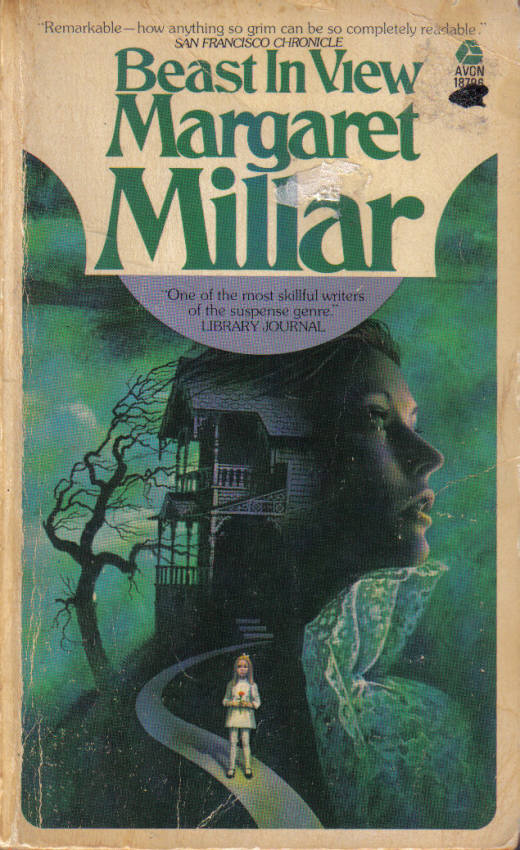
Often considered Millar’s finest work, The Iron Gates (1946) concerns a wealthy Toronto woman who breaks down and is institutionalized after receiving a mysterious package. The psychological element, typical of Millar's writing, is perhaps best exemplified in Beast in View (1955), for which she received the first of two Edgar Awards for Best Novel.
Millar's mysteries almost always contain domestic drama, an element that spills over into her novels outside the genre. In the first, Experiment in Springtime (1941), a staid but steady marriage is shaken when the husband nearly dies and becomes convinced that his wife is trying to kill him.
Honours
As a genre writer who lived much of her life in the United States, Margaret Millar is often ignored by Canadian critics, yet she stands as one of the most talented Anglo-Canadian woman writers of her generation. She had a gift for writing realistic yet entertaining dialogue that furthered plot and revealed character. Her writing earned her several awards and has been adapted to various films and television programs, such as the Alfred Hitchcock Hour episode “Beast in View” (1964) based on her 1955 psychological horror thriller of the same name.
Awards
- Edgar Allan Poe Award, Best Novel (Beast in View) (1956)
- Woman of the Year, Los Angeles Times (1965)
- Edgar Allan Poe Award, Best Novel (Banshee) (1983)
- Grand Master Award, Mystery Writers of America (1983)