Share on Facebook
 Share on X
 Share by Email
 Share on Google Classroom
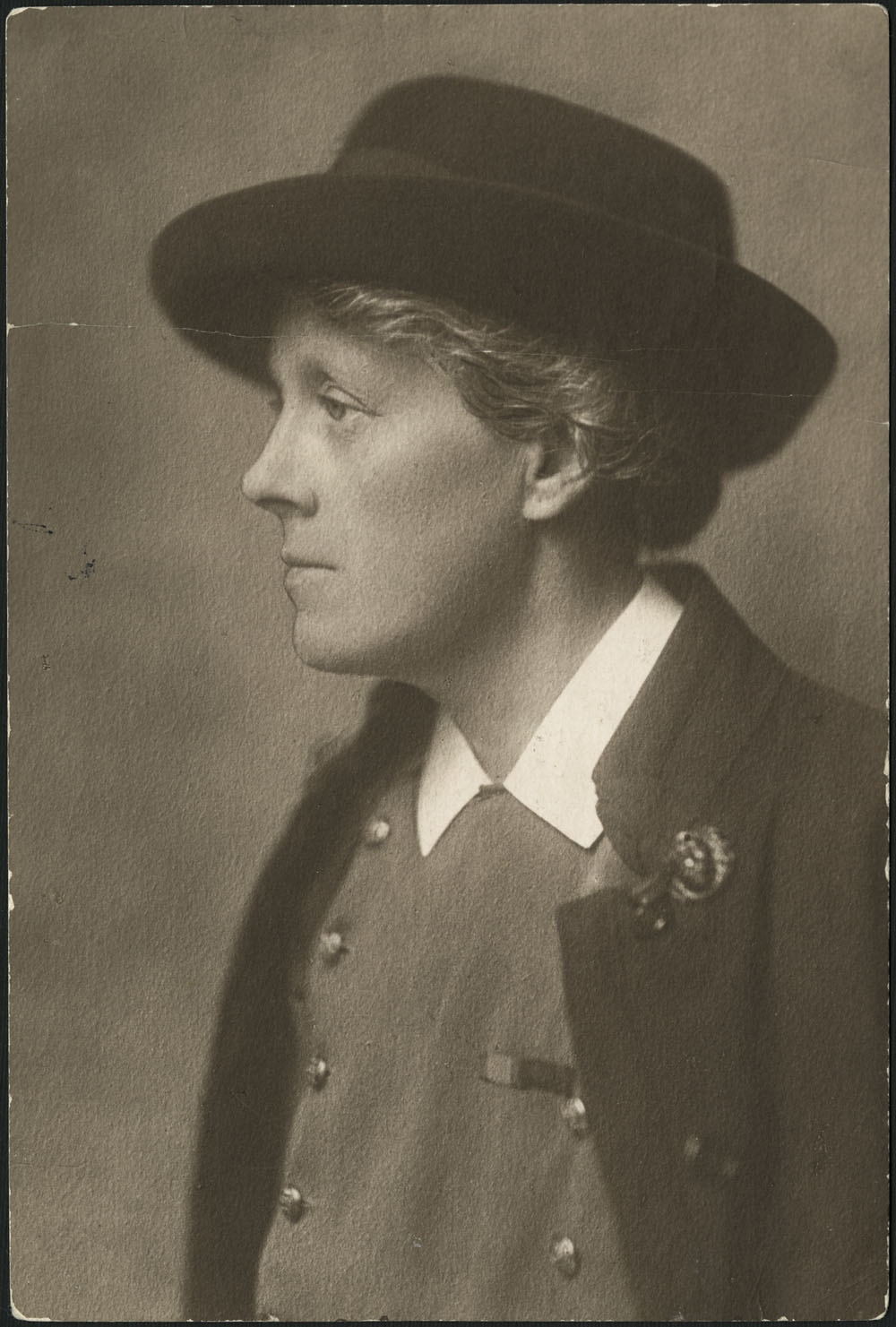
Margaret Clothilde Macdonald, RRC, nurse, nursing administrator, officer (born 26 February 1873 in Bailey’s Brook, NS; died 7 September 1948 in Bailey’s Brook, NS). Macdonald was a Canadian military nurse who served in the South African War and the First World War. In 1914, she was appointed Matron-in-Chief of the Canadian Nursing Service, Canadian Army Medical Corps (CAMC). She was the first woman in the British Empire to obtain the rank of major. Macdonald was named a National Historic Person in 1982.
Early Life and Education
Margaret Macdonald was born into a prosperous Catholic family in Bailey’s Brook, Nova Scotia. She was the third of nine surviving children of Donald St Daniel and Mary Elizbeth Macdonald (née Chisholm). Both her father, who ran the village’s general store, and her mother valued education for their daughters as well as their sons. Margaret received her primary education at Bailey’s Brook School, then followed her two older sisters to Stella Maris Convent, a boarding school in Pictou. In 1890, she began two years of study at Mount Saint Vincent Academy in Halifax. She then became a student nurse at the New York City Hospital, graduating in 1895.
Spanish American War
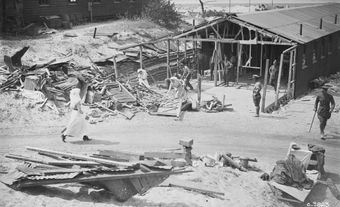
After graduating, Margaret Macdonald found work as a private-duty nurse and district nurse. She then applied to the American government to care for soldiers in the Spanish American War. In August 1898, she took up a position at Camp Wikoff on Montauk Point, Long Island, treating soldiers with contagious diseases such as dysentery and yellow fever. She was soon given charge of a 50-bed ward in the hospital, including the authority to prescribe and dispense medicine.
South African War (Boer War)
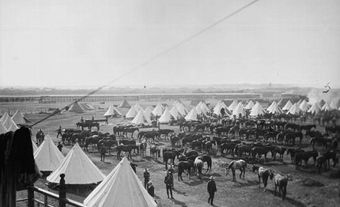
Margaret Macdonald had found her calling in military nursing. Not long after her service among American veterans of the Spanish-American War, she became one of 12 Canadian nurses to serve in the South African War (Boer War). The first contingent of Canadians, including four nurses led by Georgina Fane Pope, left Canada in October 1899. MacDonald and three other nurses joined the second contingent, which set sail on the Laurentian in January 1900. In her first year-long tour of duty, she served at hospitals in Rondebosch, Kimberley, Bloemfontein and Pretoria. The facilities were often temporary, and most patients were suffering from diseases like typhoid and dysentery. In 1902, Macdonald returned to South Africa, where she served from March to July at a 600-patient hospital in Harrismith.
Did you know?
Margaret Macdonald and Dr. John McCrae were shipmates on the Laurentian and became friends during their time in South Africa.
Panama Canal
After Margaret C. Macdonald returned from the South African War, she split her time between work in New York and visiting friends and family in Bailey’s Brook. In 1904, she was offered a position in Ancón (Panama City), nursing workers involved in the construction of the Panama Canal. There she dealt with construction accidents and the ever-present threat of diseases such as dysentery, tuberculosis, enteritis, yellow fever and malaria. MacDonald herself fell ill with malaria in April 1905; about a year later, she returned to Canada.
Permanent Army Medical Corps
In 1906, Georgina Fane Pope and Margaret Macdonald became the first two full-time nurses with the Permanent Active Militia Army Medical Corps (renamed the Canadian Army Medical Corps in 1909). Canada took over responsibility for the Halifax garrison from Britain in 1906 and both Pope and Macdonald were appointed to the garrison hospital. Unlike military nurses in other countries, Macdonald and Pope were commissioned officers in the medical corps.
In 1909, Macdonald was posted to the military hospital in Quebec City. In 1911, she was sent to England from June to late December to study British plans for mobilizing military nurses.
First World War
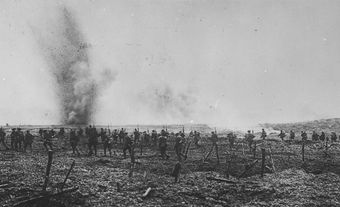
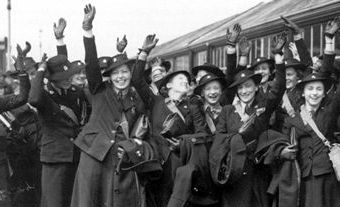
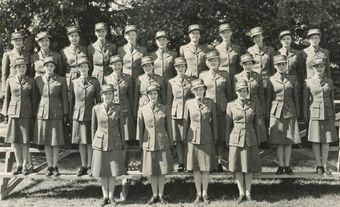
When the First World War broke out in August 1914, Margaret MacDonald was ordered to mobilize and train 100 nursing sisters. These nurses would accompany the first contingent of the Canadian Expeditionary Force (CEF). At the time, there were only five nurses in the CAMC and 50 in the reserves. In the first month alone, approximately 1,000 women from across the country applied for service. Macdonald selected and trained 100 nurses, most of them single women between the ages of 21 and 38, who were graduates of approved nursing schools. She was then ordered to join them as matron of No. 1 Canadian General Hospital. Macdonald and the first contingent of nursing sisters embarked on the Franconia on 3 October and arrived in England later that month.
Did you know?
Margaret Macdonald’s formal attestation paper for the Canadian Expeditionary Force gave her birth year as 1879 – not 1873, the actual year of her birth. Without this change, she would have been too old to serve overseas, as the age limit was 38.
Matron-in-Chief
Soon after arriving in England, Margaret Macdonald realized that the nursing service would have to be expanded. She therefore proposed the position of matron-in-chief, after the British model. On 4 November 1914, Macdonald was appointed Matron-in-Chief of the Canadian Nursing Service, CAMC. In this position, she was responsible for all Canadian military nurses serving overseas during the First World War. She was also promoted to major, becoming the highest ranking female military officer in the British Empire.Macdonald left England on 27 November 1919 on board the Megantic. Although most nurses were demobilized after the war, Macdonald remained part of the CAMC. She was asked to produce a history of the wartime nursing service but discovered that many nurses were reluctant to share details of their experiences with her. Macdonald retired from the CAMC on 17 February 1923.
Honours and Awards
Royal Red Cross, First Class (1915)
Florence Nightingale Medal, International Committee of the Red Cross (1920)
Honorary LLD, St Francis Xavier University (1920)
National Historic Person (1982)