Share on Facebook
 Share on X
 Share by Email
 Share on Google Classroom
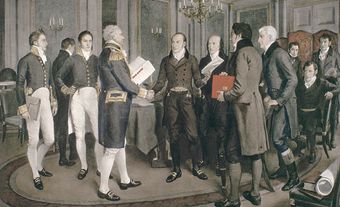
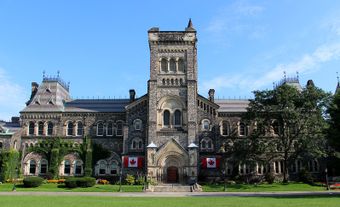
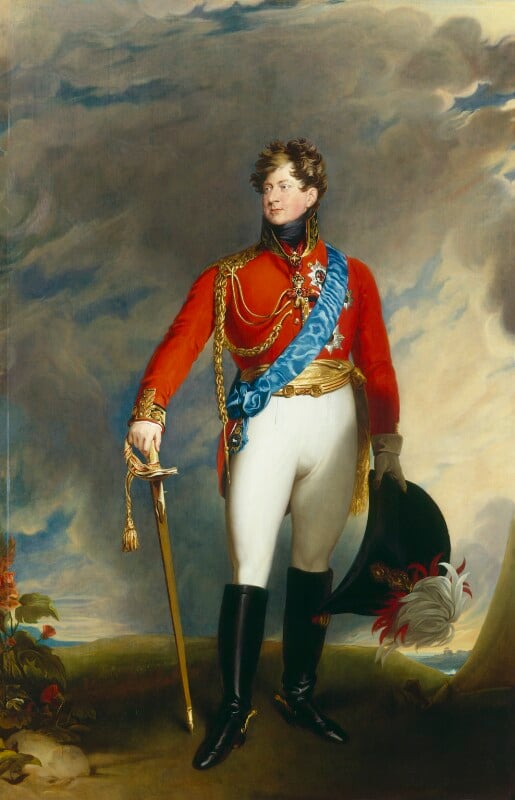
King George IV (born Prince George Augustus Frederick on 12 August 1762 in London, United Kingdom; died 26 June 1830 in Windsor, United Kingdom), Prince Regent of the United Kingdom from 1811 to 1820 and King of the United Kingdom and Hanover from 1820 to 1830. As Prince Regent, the future King George IV ratified the Treaty of Ghent that formally ended the War of 1812. As king, George IV issued a royal charter to King’s College in 1827, which eventually became the University of Toronto.
Early Life
Prince George was born at St. James’s Palace, the eldest of the 15 children of King George III and Charlotte of Mecklenburg-Strelitz. He received the titles of Duke of Cornwall and Duke of Rothesay at birth and became Prince of Wales and Earl of Chester on 17 August 1762. The young prince was educated at home by his governess Lady Charlotte Finch and a series of tutors, learning French, German, Italian, classics, mathematics, natural sciences, music and drawing. At Kew Palace outside London (now part of the Royal Botanic Gardens), George learned about gardening and agriculture.
Prince of Wales
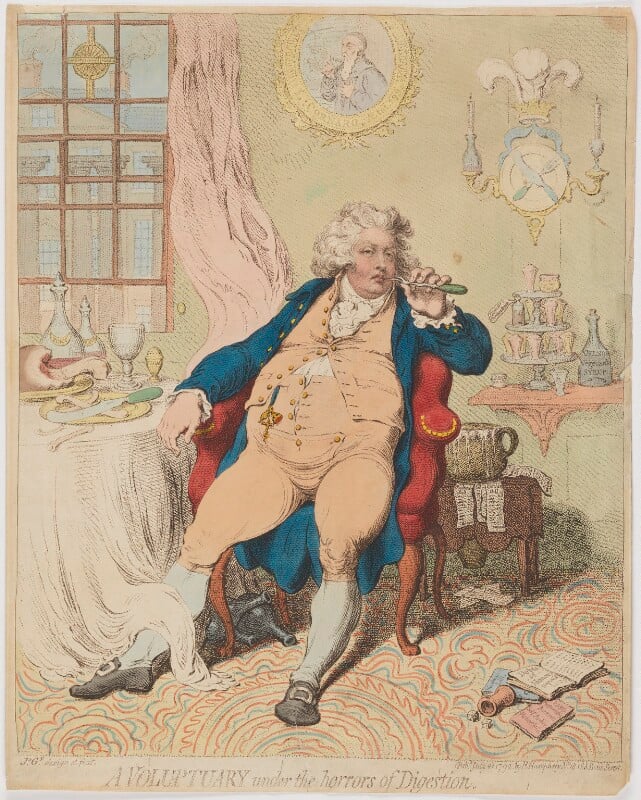
In 1783, the Prince of Wales moved into his own London residence at Carlton House. He was in frequent conflict with the king and queen, Parliament and the public because of his extravagant lifestyle, which included gambling, mistresses and spending large sums on gourmet food and drink, art collecting and French furniture. As prince and later as king, George was satirized in political cartoons for his expensive tastes.
As Prince of Wales, George befriended Thayendanegea (Joseph Brant), the Kanyen'kehà:ka (Mohawk) war chief who supported Great Britain during the American Revolution. Brant visited London in November 1785 to ask King George III for assistance in defending the Haudenosaunee (Iroquois) Confederacy from American attacks in the aftermath of the American Revolution. According to Brant’s biographer Isabel Thompson Kelsay, “The prince is said to have entertained [Brant] at dinner and to have taken him on some of his rambles about London to places ‘very queer for a prince to go to’ as [Brant] used to remark later in life.”
Relationships and Marriage
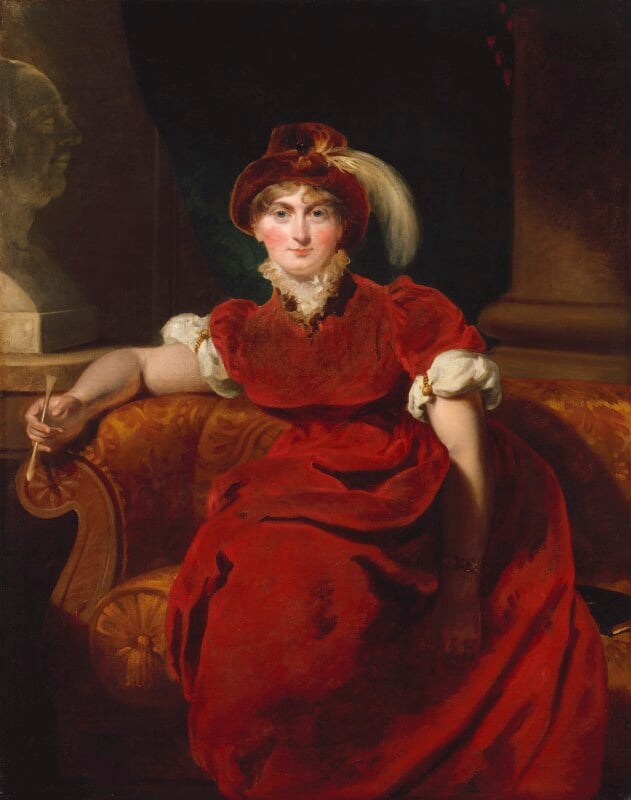
On 15 December 1785, George participated in a marriage ceremony with Maria Fitzherbert (1756–1837), a Roman Catholic widow. The marriage was illegal, however, under the terms of the Royal Marriages Act, 1772 because he did not have the monarch’s permission to marry. On 8 April 1795, George married his cousin Princess Caroline of Brunswick (1768–1821), a condition imposed by George III before he settled his son’s substantial debts. George and Caroline were estranged throughout their marriage and as monarchs. George banned Caroline from attending his coronation. George and Caroline had one child, Princess Charlotte of Wales (1796–1817), who married Prince Leopold of Saxe-Coburg-Saalfeld, the future King Leopold I of the Belgians (1790–1865), and died after giving birth to a stillborn son.
Prince Regent
In 1810, the Prince of Wales became Prince Regent, reigning on behalf of his father, King George III, whose mental health had deteriorated. As Prince Regent, George ratified the Treaty of Ghent in 1814, which marked the official end of the War of 1812. The Battle of New Orleans took place in 1815 before knowledge of the treaty had disseminated throughout North America. The Prince Regent took an interest in War of 1812 veterans, granting posthumous honours to Sir George Prevost. In 1816, the Prince Regent appointed Sir John Coape Sherbrooke, the governor of Nova Scotia during the War of 1812, to the position of governor-in-chief of Canada.
Accession
The Prince Regent succeeded to the throne as King George IV upon the death of his father in 1820. William Kingsford wrote in his 1897 history of Canada, “one hundred guns were fired in honour of the accession of George IV [in Quebec City] and he was publicly proclaimed king with the usual formalities, not simply in Quebec but throughout Canada.” In Newfoundland, the explorer William E. Cormack named a lake for King George IV in 1822, which is now part of the King George IV ecological preserve.
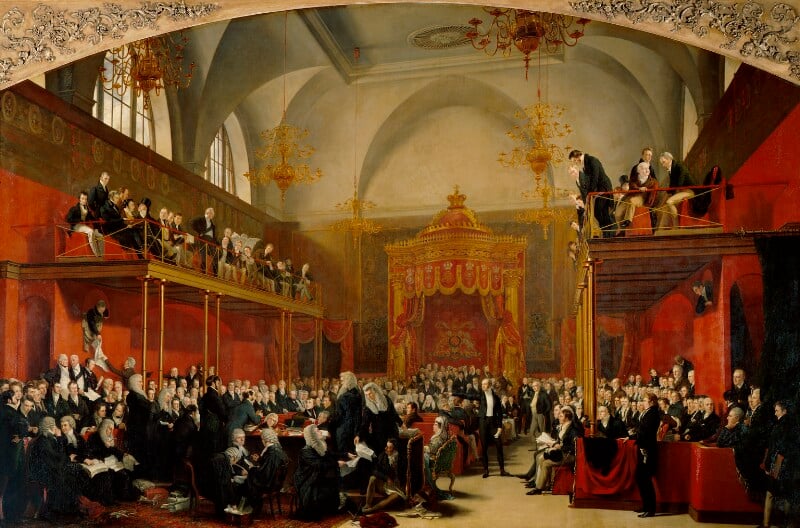
In the United Kingdom, the first year of George IV’s reign was overshadowed by his introduction of the Pains and Penalties bill into the House of Lords, an effort to divorce Queen Caroline that he withdrew in the face of widespread popular opposition. After Queen Caroline’s death in 1821, his reputation improved, and he became the first monarch to undertake an official visit to Ireland (1821) and Scotland (1822) in centuries.
University of Toronto
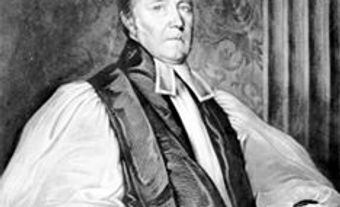
In 1826, Bishop John Strachan visited London, where he petitioned George IV for a university charter for the province of Upper Canada. On 15 March 1827, George IV issued a royal charter for the University of King’s College, which would be managed by the Church of England. On 31 December 1849, King’s College was replaced by the nondenominational University of Toronto. King George IV’s coat of arms and royal cypher are on the University of Toronto mace displayed at convocation ceremonies.
Death
George IV suffered from numerous medical conditions, including obesity, gout, arteriosclerosis and inflammation of the bladder. He died in 1830 of upper gastrointestinal bleeding caused by a ruptured blood vessel; an autopsy revealed a large tumour attached to his bladder. Since his daughter Princess Charlotte had predeceased him, George IV was succeeded by his younger brother, who became King William IV.