Share on Facebook
 Share on X
 Share by Email
 Share on Google Classroom
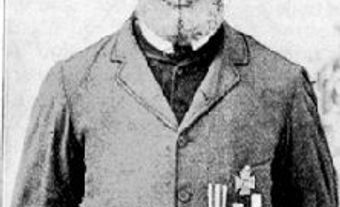
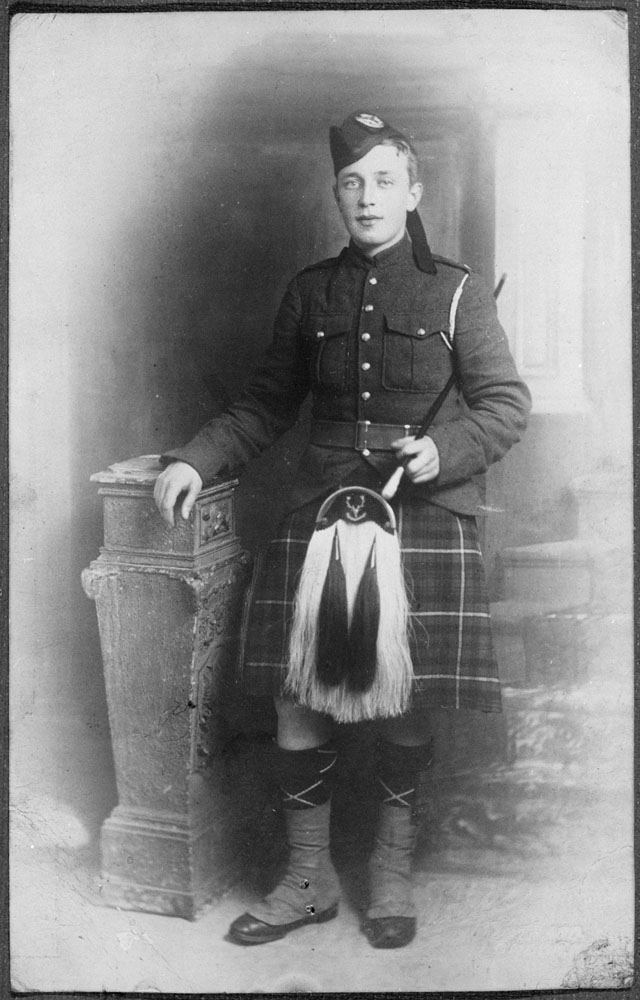
James (“Jimmy”) Cleland Richardson, VC, electrician, piper, soldier (born 25 November 1895 in Bellshill, Lanarkshire, Scotland; died 9 October 1916 near Courcelette, France). Richardson emigrated with his family to British Columbia shortly before the First World War. He joined the Canadian Expeditionary Force (CEF) in September 1914 and sailed with it to Britain the next month. Richardson deployed to France in early 1915 and fought in several battles before he was killed at Regina Trench in October 1916, during the Battle of Ancre Heights (see Battle of the Somme). For his courage during the battle, he was awarded a posthumous Victoria Cross (VC).
Early Life and Education
James Richardson was the son of police sub-inspector David Richardson and Mary (née Prosser). He was educated at Bellshill Academy, Auchinwraith School in Blantyre and John Street Public School in the Glasgow district of Bridgton.
The Richardson family emigrated to Vancouver, British Columbia, in May 1913 and later moved to Chilliwack, where his father became chief of police. Although he was a driller by trade, Richardson found employment as an apprentice electrician in Vancouver. While there, he spent six months in the 72nd Seaforth Highlanders cadet corps as a piper.
First World War
James Richardson joined the CEF at Camp Valcartier, Quebec, on 23 September 1914 and was posted to the 16th (Canadian Scottish) Battalion. The 16th was largely formed of soldiers from four Scottish militia regiments: the Seaforth Highlanders (Vancouver), the 50th Gordon Highlanders (Victoria), the 79th Cameron Highlanders (Winnipeg) and the 91st Argyll and Sutherland Highlanders (Hamilton).
After rudimentary training at Valcartier, Richardson sailed from Quebec City to Britain in October as part of the 30,000-man strong First Canadian Contingent. The Canadians spent a wet and miserable winter training on Salisbury Plain while living in substandard accommodation.
Western Front
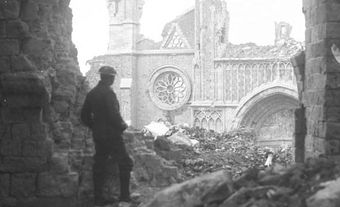
James Richardson deployed to France with his battalion in February 1915 as part of 3rd Brigade of the Canadian Division. A couple of months later, on 22 April, the Germans launched a major attack against the Allied lines in Belgium’s Ypres Salient, including the first large-scale poison gas attack in modern history. Although pushed back, the Canadians held firm. This was the beginning of the reputation they established during the war for tenacity and bravery. (See Canada and the Second Battle of Ypres.)
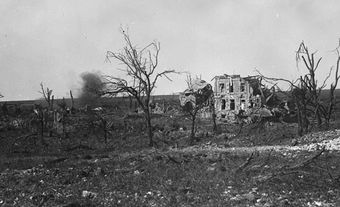
Richardson fought at Ypres and in the battles that followed. On 1 July 1916, the Allies launched a major attack in the department (district) of the Somme in northern France. The results were devastating for the British and in late August, General Haig called the Canadian Corps to the Somme, now three divisions strong.
Regina Trench
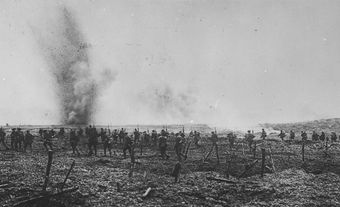
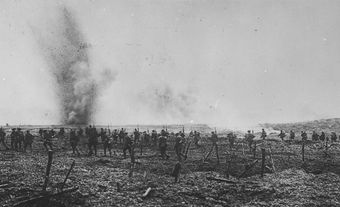
As the Somme Offensive ground on into the fall, the Allies made slow progress but suffered heavy casualties. In October, they launched a renewed offensive, including several attacks on the next line of German defences — the Regina Trench system, one of the most formidable defensive positions in the Somme.
On 8 October, the 16th Battalion was ordered to attack Regina Trench, but James Richardson was not part of the assaulting troops. He protested so loudly that his commanding officer relented and gave him permission to join the attack. During that attack, Richardson’s company ran into uncut wire and was pinned down and subjected to intense rifle and machine-gun fire.
Richardson, company commander Major George Lynch, and Company Sergeant-Major Arden Mackie climbed out of their trench. They were halfway to the enemy lines when Mackie asked Richardson why he was not playing his pipes. The piper responded by saying that he had been told not to do so until ordered by the company commander.
When the trio reached the German barbed wire, they were shocked to discover their artillery had not cut it. Mackie ran ahead to look for an opening but could not find one. By now, the rest of the company had come forward, only to be on the receiving end of heavy German rifle fire and hand grenades.
Mackie was going to suggest Lynch take cover, but the major fell with a bullet in his chest. Richardson tried to help, but it was too late; the company commander was already dead. Richardson realized how serious the situation was and asked Mackie if he should play his pipes. “Wull I gie them wund [wind]?” the piper inquired with his heavy Scottish accent. “Aye mon,” came the reply, “Gie ’em wind.”
Richardson stood up and coolly paraded up and down the Canadian line for some 10 minutes, playing his bagpipes and ignoring enemy fire. His courageous example — coupled with the stirring skirl of the bagpipes — so inspired Richardson’s comrades that they rushed the wire and successfully stormed the German position.
Later that day, Richardson and Mackie joined a grenade attack that captured two Germans but wounded Mackie. Richardson was ordered to take Mackie for medical help and escort the prisoners to the rear. The group had only gone about 180 metres when Richardson realized he had left his pipes behind. He returned to retrieve them over Mackie’s objections and never rejoined his fellow soldiers.
Richardson was initially listed as missing in action but later officially presumed to have died on 9 October. He was awarded a posthumous VC for his courageous actions that day.
Missing
James Richardson’s body and his bagpipes remained missing for some time. The piper’s remains were discovered in 1920 and were buried in the Adanac Military Cemetery near Courcelette (Adanac is Canada spelled backwards).
The location of Richardson’s bagpipes remained unknown for much longer. They had been recovered from the battlefield by a soldier who was a teacher and donated to his school in Scotland. They were discovered there in 2002 and an investigation confirmed they were Richardson’s pipes. An anonymous benefactor purchased them, and they have been on display in the British Columbia Legislature since 2006.
Memory
James Richardson’s VC is currently held by the Canadian War Museum. In October 2003, the Piper Richardson Memorial Statue was installed on the grounds of Chilliwack’s original city hall, today the town’s Museum and Archives.