Share on Facebook
 Share on X
 Share by Email
 Share on Google Classroom
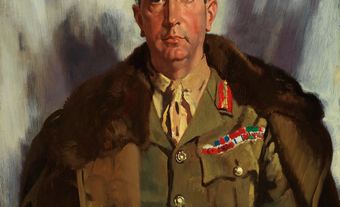
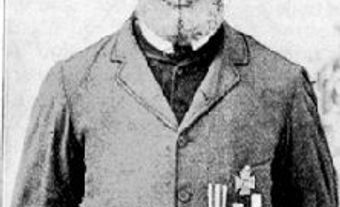
Edward Donald Bellew, VC, civil engineer, public servant, soldier (born 28 October 1882 in Bombay, India; died 1 February 1961 in Kamloops, BC). Bellew served in the British army prior to the First World War but subsequently resigned his commission in 1903 and moved to Canada. He joined the Canadian Expeditionary Force (CEF) in 1914 and fought at the Second Battle of Ypres in April 1915. Bellew was captured, but later repatriated due to poor health. He took up employment in Canada again until his retirement in 1922.
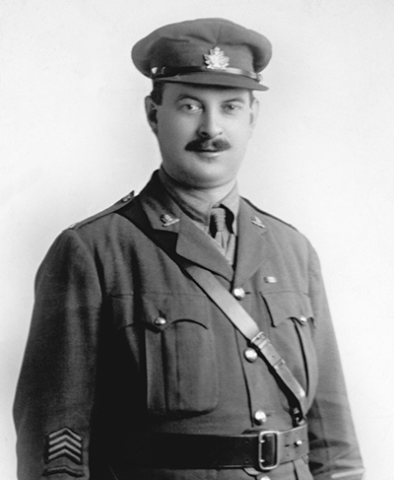
Early Life and Education
Edward Bellew was the son of Surgeon Major Patrick Francis Bellew and Sophia Elizabeth (née Fordyce). The elder Bellew had been commissioned in the Bengal Medical Department in 1854, retired from the medical service in 1882, and returned to Britain. This was the same year as Bellew was born, which may account for his noting “the high seas” as his place of birth in his service records.
In Britain, Bellew’s mother died when he was three. His father remarried later that year, to Letitia Louise Box, a singing and dancing teacher. The family moved to Devon, where Bellew attended Blundell’s School in Tiverton. He then went to Clifton College in Bristol from 1897 to 1900.
Military and Civilian Service
Edward Bellew entered the Royal Military College at Sandhurst in 1900. While there, he won championships in heavyweight boxing and rugby football. On graduation, Bellew was commissioned into the 2nd Battalion, Royal Irish Regiment on 8 May 1901. Shortly afterwards, he married Charlotte Murial Rees in London on 24 August. Bellew served in India and Afghanistan until he resigned his commission on 26 August 1903.
In 1907, the couple emigrated to Canada. Bellew worked in northern British Columbia for three years as a prospector and explorer before joining the Provincial Forestry Service. In 1912, he transferred to the Dominion Civil Service, where he became assistant to the district engineer of public works, employed on harbour construction at New Westminster.
First World War
On 10 August 1914, a few days after the First World War broke out, Edward Bellew was commissioned into the 11th Irish Fusiliers of Canada as machine gun officer. When the CEF assembled at Valcartier, Quebec, later that month, Bellew transferred to the 7th (1st British Columbia) Battalion.
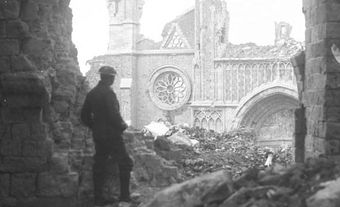
Bellew sailed to Britain in early October and trained on Salisbury Plain that winter under terrible conditions. The Canadians lived in tents, which provided little protection from the cold, rain, fog and mud. In February 1915, Bellew and his unit were sent to France and deployed into Belgium’s Ypres Salient with the rest of the Canadian Division.
Western Front
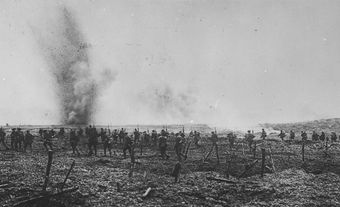
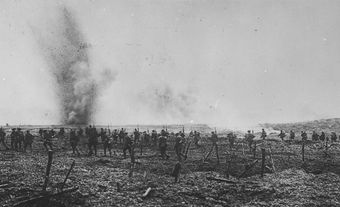
On April 22, the Germans initiated the Second Battle of Ypres, supported by the first-ever use of chlorine gas on the Western Front. On April 24, the Germans launched their second gas attack against the Allied lines. (See also Canada and Gas Warfare.) During the attack, the Canadians suffered heavy casualties, but Edward Bellew’s section of two machine guns temporarily halted the enemy’s advance near the town of Keerselaere.
Reinforcements were sent to Bellew but were wiped out by enemy fire. With the German attackers only 90 metres away, Bellew and a sergeant decided to fight it out to the last. The sergeant was soon killed and Bellew was wounded and suffering from the effects of gas. When his ammunition ran out, Bellew smashed his machine gun with a rifle and was taken prisoner.
Prisoner of War
The Germans charged Edward Bellew with breach of the laws of war, maintaining that he continued to fire after part of his unit had surrendered. He was found guilty at trial and sentenced to death. As Bellew was about to be executed, he protested to the German commander that word of the execution would certainly get to the Allies, and reprisals against German prisoners would inevitably follow.
Bellew was subsequently retried, acquitted and sent to a prisoner of war camp in Saxony, where many other wounded Canadian soldiers were held. Bellew was moved through six different camps in Germany over nearly three years. When a neutral Swiss medical commission assessed the prisoners’ condition in December 1917, Bellew was chosen for internment in Switzerland. His wife, who had been living in London, joined him there and cared for him.
Bellew was finally repatriated to Britain in December 1918. On arrival, he was admitted to a London hospital, suffering from neurasthenia (physical and mental exhaustion), bronchitis, sciatica and gas poisoning. Now a captain, Bellew returned to Canada in March 1919 and was released in November.
Post-War Life
Details of Edward Bellew’s heroic actions were known to military authorities during his imprisonment, but they decided not to announce his Victoria Cross (VC) until he had been released. In March 1920, he received his VC from the area commandant for Vancouver, instead of the lieutenant-governor, Edward Gawler Prior, who had become ill before the ceremony.
Bellew returned to the public works department and was employed as an inspector of dredging on the Fraser River. He retired in 1922 to a ranch at Monte Creek, British Columbia, and to pursue his interests in fly fishing and gardening.
Bellew was also a committee member of the Victoria Cross and George Cross Association. In 1960, he was invited to the association’s reunion in London, England. Although he was in poor health and advised not to go, he attended the event. On his return to Canada, he suffered a stroke and died in the Royal Inland Hospital in Kamloops, British Columbia. Bellew was buried in the city’s Hillside Cemetery.
Memory
Besides the VC, Edward Bellew was awarded the 1914-15 Star, British War Medal 1914-20, Victory Medal, King George VI Coronation Medal (1937), and Queen Elizabeth II Coronation Medal (1953). On his death, the medals were passed to his brother-in-law, who sold them at a Sotheby’s auction on 5 July 1974 for £6,000, at the time a record price.
Bellew’s medals were eventually presented to the Royal Canadian Military Institute, Toronto, where Bellew had been a life member. Sometime between January 1975 and 22 July 1977, his VC was stolen. It has never been recovered.