Share on Facebook
 Share on X
 Share by Email
 Share on Google Classroom
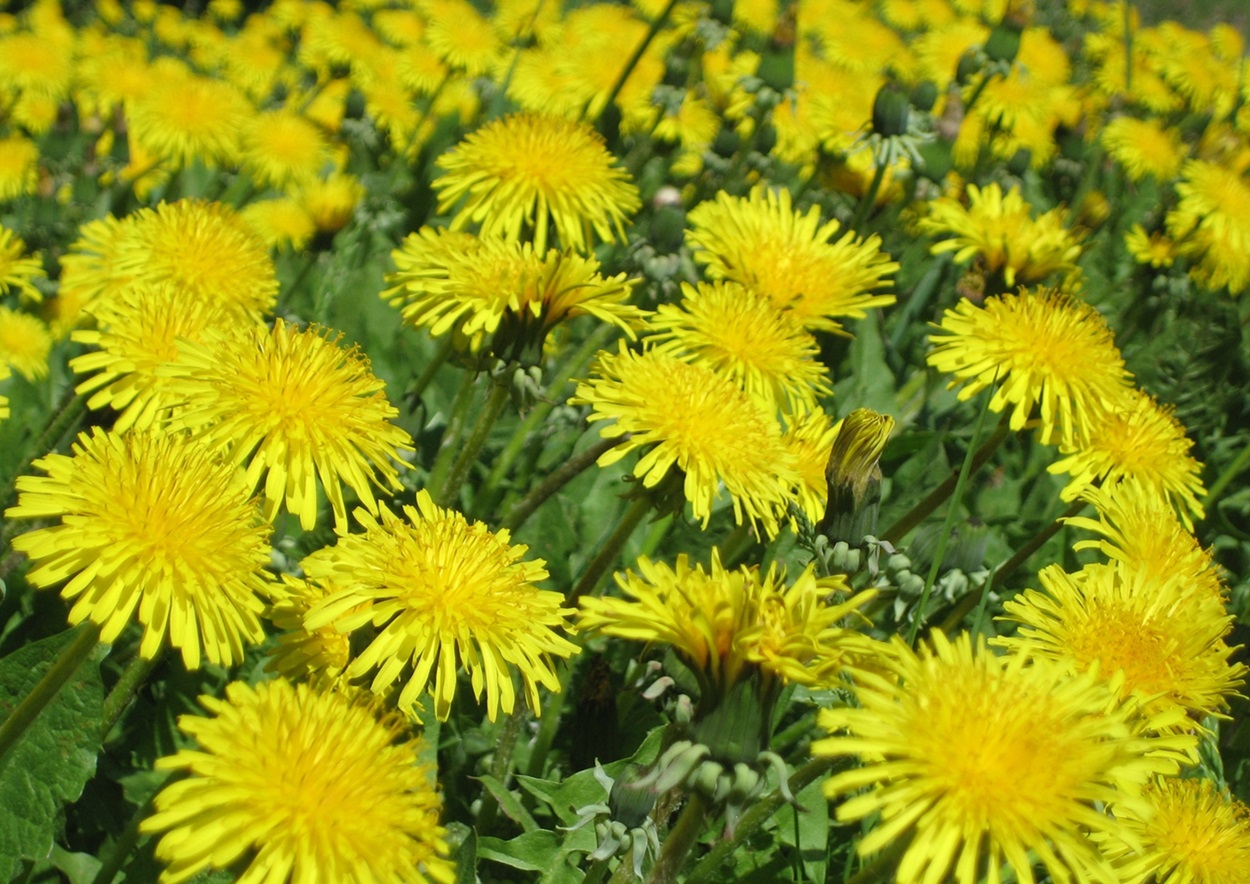
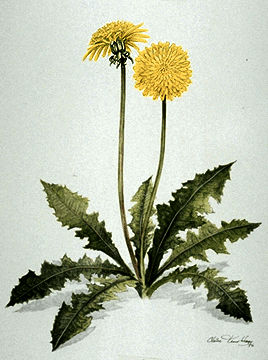
Dandelions (genus Taraxacum) are perennial, herbaceous plants of the family Asteraceae. Over 1,000 species have been named. Because dandelions reproduce without fertilization, innumerable variants have arisen. The name dandelion comes from the French dent-de-lion, meaning "lion's tooth." Common dandelion (Taraxacum officinale) has many names, including blowball, faceclock, dumble-dor (Newfoundland) and pissenlit (Quebec).
Common Uses
Common dandelions are native to Europe and are often considered farm and garden weeds in North America. However, their golden yellow flowers provide nectar for innumerable pollinating insects (see Pollinators in Canada) and their achenes, food for many birds. Much of the plant is edible. Leaves are high in vitamin A, iron, phosphorus, calcium and potassium, and are among the best sources of copper known. Valued for its medicinal properties, the dandelion has been used to stimulate the kidneys and to combat liver disorders, weak digestion, anemia and eczema.
Each mature flowerhead produces approximately 180 wind-dispersed, seedlike achenes. Preferring moist, grassy places and disturbed sites, dandelions occur from sea level to subalpine elevations.