Share on Facebook
 Share on X
 Share by Email
 Share on Google Classroom
William Lishman, environmental activist, sculptor, inventor, filmmaker (born 12 February 1939 in Toronto, ON; died 30 December 2017 in Scugog, ON). Lishman is best known as the first person to conduct an aircraft-led migration of birds. In 1993, piloting an ultralight airplane, he guided 18 geese on a migration from Ontario to Virginia. This event inspired the development of similar techniques to establish safe migratory routes for endangered species of waterfowl around the world. In addition to his work with birds, Lishman was a renowned sculptor, inventor and filmmaker. His life was the inspiration for the 1996 Hollywood movie Fly Away Home. Lishman received the Governor General’s Meritorious Service Medal in 2000.
Early Life and Education
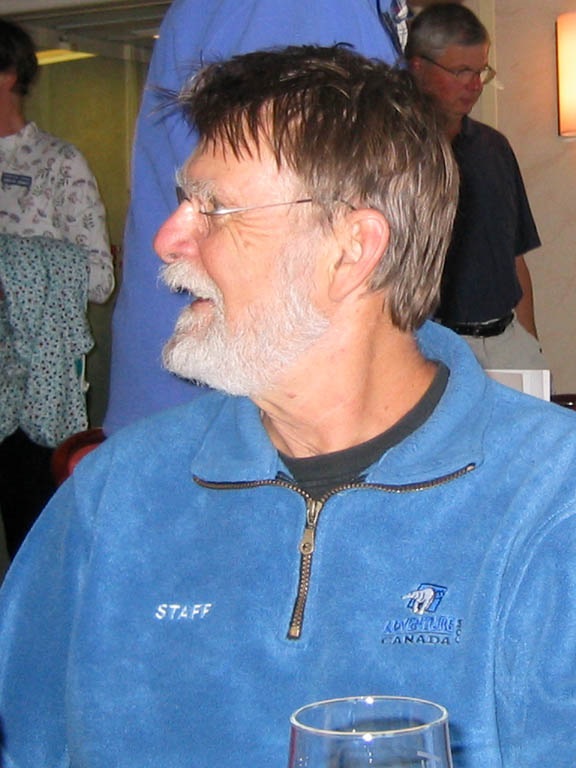
William Lishman was born to Myra Cronk and Alan Lishman in 1939. He was raised on a dairy farm in Pickering (now Ajax), Ontario, with two sisters: Alaine and Louise. His father, Alan, taught Bill how to use farm machinery and to design and build his own inventions. His mother, Myra, held a master’s degree in biology from the University of Toronto.
When Bill was growing up, many species of migratory birds would visit the farm. Watching them fostered his fascination with birds and flight. “I longed to be up there with them to see the world from their vantage and to discover the places where they went,” he wrote in his autobiography, Father Goose.
In public school, Lishman learned to make gunpowder; he was eventually kicked out of Pickering High School in Grade 11 for an incident involving a large explosion. He then finished high school by correspondence. Lishman briefly attended the Ontario College of Art and would later receive honorary doctorates from the University of Ontario Institute of Technology and Niagara University in New York state.
Sculpting Career
After high school, Lishman studied sculpture for a semester at the Ontario College of Art. Although he earned good grades, he was a self-described “terrible student” who preferred to teach himself outside of school through trial and error, likely in part due to his dyslexia.
Working out of a former blacksmith’s shop in Pickering, Ontario, Lishman began to produce sculptures from wood and metal. He supported himself by selling souvenir carvings to tourists or craft shops.
In 1966, during a trip to an artist’s colony in Mexico, Lishman met his wife, Paula, who was studying weaving and fabric arts. They moved back to Canada together and married.
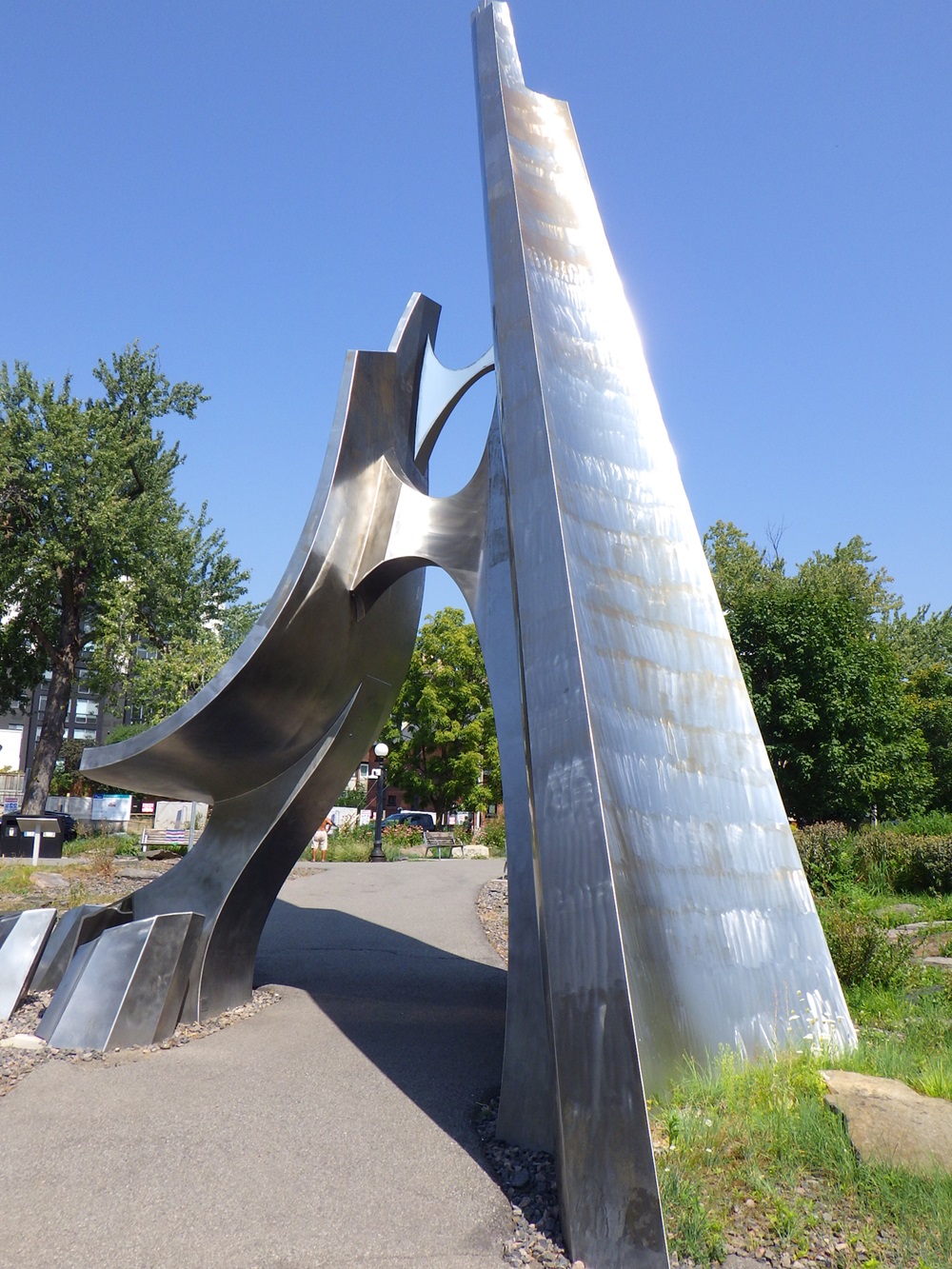
Lishman continued to make sculptures throughout his life, mostly with repurposed metal. Some of his public works include a 26-m-high tower, representing transportation, for Expo 86 in Vancouver, and a 13-m-high stainless-steel iceberg, installed outside the Canadian Museum of Nature in 2015.
Aviation
At the age of 13, Lishman joined the Royal Canadian Air Cadets 151 Squadron in Oshawa, where he learned about various aspects of flying. He passed his ground-school exam, making him eligible for flight training. Lishman then discovered he was partially colour-blind — at the time, the air force did not accept colour-blind applicants.
Lishman’s desire to fly persisted, and in the late 1970s, he became a pioneer of ultralight aviation in Canada. Ultralight aircraft are lightweight, one or two-person planes. Inspired by the American aviator John Moody, who had crafted an ultralight plane using a hang-glider and a go-kart engine, Lishman designed and built his own ultralight and began to fly regularly. In his autobiography, he described the experience of soaring in an ultralight as “the realization of mankind's age-old dream of bird flight.”
In 1985, Lishman had his first experience of flying with birds. While gliding low over a farmer’s field, he accidentally startled a giant flock of ducks into flight, and found himself surrounded by them, flying as a part of the flock. Lishman wrote in Father Goose that, after this encounter, he found himself “craving to spend more time with these creatures in their element, and experience the world from their vantage again.”
Work with Birds
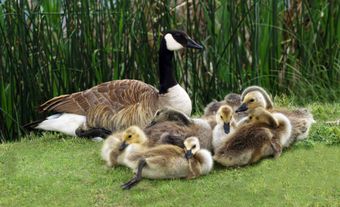
Lishman began to replicate his experience of flying with ducks, now using Canada geese he had raised himself. The geese were reared to believe that Lishman and his plane were their “parents,” and so would follow behind their flight path.
Lishman’s efforts, which he filmed and publicized, received attention from scientists, who realized that this technique could be used to teach birds new migratory routes. As a part of Operation Migration, a non-profit that he co-founded, Lishman successfully trained geese, and later whooping cranes (an endangered species), to follow his plane on cross-continental migrations.
Lishman was the first person to lead a migration of birds in an airplane. The 1996 Hollywood movie Fly Away Home was based on Lishman’s work with geese.
Personal Life
Bill Lishman married Paula Vockeroth (born 1949) in 1968. Paula was a fashion designer who developed a unique method for knitting and weaving with fur, and ran a successful clothing company. They had three children: Aaron (1972), Geordie (1975) and Carmen (1983).
In 1990, Lishman finished work on his family home, which he had designed himself. It is an underground structure built into the top of a hillside in Scugog, Ontario, an area the Lishmans called Purple Hill. The rooms in the house are entirely circular and have no right angles.
For his work with Operation Migration, Lishman received the Governor General’s Meritorious Service Medal in 2000. He died of leukemia in his home on 30 December 2017, at age 78.