Share on Facebook
 Share on X
 Share by Email
 Share on Google Classroom
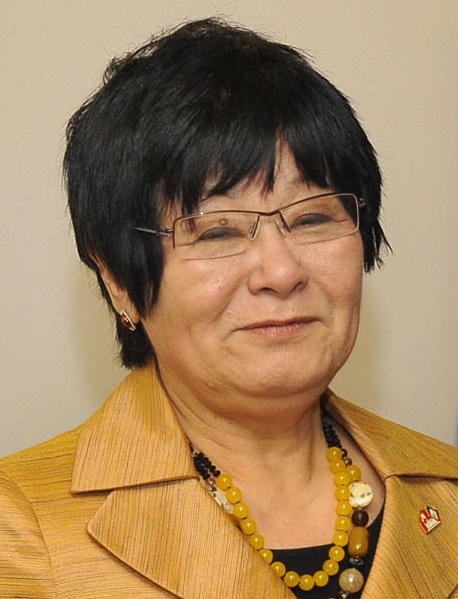
Beverly Joan “Bev” Oda, politician, broadcaster, teacher (born 27 July 1944 in Fort William, ON). Bev Oda was the first Japanese Canadian member of Parliament and Cabinet minister in Canadian history. She represented the riding of Durham for the Conservative Party of Canada. Oda held a number of ministerial portfolios, including Canadian Heritage, Status of Women and International Cooperation. In 2012, she left politics after a controversy about her spending was made public.
Early Life and Education
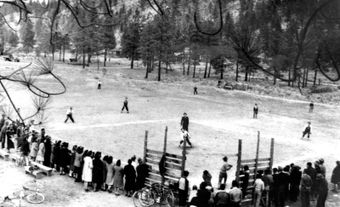
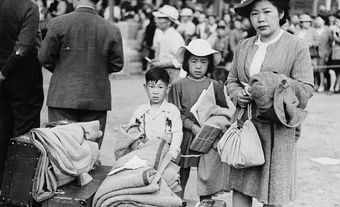
Bev Oda is a sansei ― a third-generation Japanese person in Canada. (See Japanese Canadians.) During the Second World War, the Canadian government interned both of her parents. (See Internment of Japanese Canadians.) Her mother went to Bay Farm in British Columbia. Meanwhile, her father worked on a beet farm in Southwestern Ontario. Later on, he moved to Fort William (today, part of Thunder Bay), Ontario to be a millworker. It’s there that he and Bev’s mother met.
In 1944, Bev Oda was born in Thunder Bay. When she was five, her family relocated to Toronto. They lived in Kensington Market and Etobicoke before settling in the Clarkson neighbourhood of Mississauga. She attended Lorne Park Secondary School.
Growing up, Oda had a number of odd jobs, like working at a dry cleaner. She also worked at the Canadian National Exhibition and the province’s tourism bureau.
Oda attended the University of Toronto, pursuing a Bachelor of Arts. Afterwards, she went to Lakeshore Teachers’ College, at what is now Humber College.
After her studies, she started to work as a teacher in Mississauga for six years. However, in 1973, she switched to a career in broadcasting at TVOntario.
Broadcast Career
Bev Oda worked at TVOntario before working at Rogers as a videotape librarian and eventually vice president of programming. Later on, Oda became the senior programmer at Citytv. Eventually, Oda moved to OMNI Television and the Global Television Network.
From 1987 to 1993, Oda was a commissioner with the Canadian Radio-television Telecommunications Commission. There, she participated in a number of major regulatory decisions. These included the introduction of long-distance competition in telecommunications and the deregulation of the broadcasting industry. Crucially, Oda chaired the Commission’s task force on reviewing sex-role stereotyping. This initiative aimed to assess and improve the portrayal of women in the media.
In 1995, Oda joined CTV as a senior vice president. She retired in 1999.
Oda also served in a number of national and international industry organizations, including Canadian Women in Communications and the Canadian Association of Broadcasters. In 2003, she was inducted into the Canadian Broadcasters Hall of Fame.
Political Career
For years, Bev Oda volunteered for the Progressive Conservative Party and various other local organizations in Durham Region. (See Conservative Party.) In 2004, she came out of retirement to run for federal office. She ran as a Conservative candidate and defeated the Liberal candidate Timothy Lang. In the process, Oda became the first Japanese Canadian member of Parliament.
In November 2004, Oda introduced Bill C-333, the Chinese Canadian Recognition and Redress Act, to Parliament. The bill would’ve recognized the injustices done to Chinese immigrants by the head taxes and exclusionary legislation. (See Anti-Chinese Immigration Policies in Canada.) It sought to provide redress to the Chinese community. C-333 also aimed to improve education on Chinese Canadian history. However, in November 2005, Liberal prime minister Paul Martin’s government lost a vote of confidence. As such, Parliament was dissolved, and Bill C-333 was not passed.
In the 2006 general election, Oda was re-elected, and the Conservatives formed a government. Prime Minister Stephen Harper made Oda the minister of Canadian heritage and status of women. She thus became the first Japanese Canadian member of Cabinet. In 2007, she became the minister of international cooperation.
Scandals
A number of scandals followed Bev Oda throughout her political career. In 2006, the Liberals found out she had spent $5,500 on limousine rides in Halifax during that year’s Juno Awards. Oda was forced to pay back $2,200 to taxpayers. Moreover, she was accused of hiding another $17,000 of limousine expenses that she billed to taxpayers.
In 2011, a well-established foreign aid agency, KAIROS, lost its funding after a handwritten “not” was added to a Canadian government document. The addition suggested that the aid agency no longer fit with the Canadian International Development Agency’s mandates. When pressed on the matter, Oda said she did not know who made the change. However, she later changed her position and stated that she had made the decision. Opposition members of Parliament argued that she misled Parliament. They pressed the Speaker to rule on whether Oda had acted in contempt of Parliament. A committee was charged with presenting a report on the matter to Parliament. However, the committee was a day late and an election was called. The report was not released.
In the 2011 election, Oda was able to keep her seat in the House of Commons.

In April 2012, Oda had to apologize due to a scandal relating to travel expenses. These related to her claimed expenses for a June 2011 trip to London, England. While there, Oda was initially supposed to stay at the hotel hosting a conference that she was attending. However, she had her staff rebook her at an upscale hotel costing $665 a night. Oda ended up having to repay taxpayers. Additionally, one of the biggest controversies to come out of this scandal was Oda expensing for a $16 glass of orange juice. Three months after her apology, Oda resigned from government and as an MP.
After retiring, Bev Oda told the CBC that she could “hold up [her] head proudly” and that her only regret during her time in government was not spending more time with her family.